


“It’s a really visible representation of what a lot of people in our community deal with on a daily basis,” Davis said at the time.
As the annual event prepares for its fifth anniversary, much has changed. The local Morningside Shelter has merged with the Brattleboro Area Drop In Center to form the Groundworks Collaborative — its new motto promises “Basic Needs Met with Dignity” — that Davis leads.
But while local programs for emergency, transitional and permanent housing are working more efficiently under one roof, advocates still face the challenge of finding enough affordable options for low-income people, especially with the recent closure of Brattleboro’s winter shelter due to the sale of its host First Baptist Church building.
“The shelter remains without a permanent home for next season, which makes this community campout all the more poignant,” Davis said recently. “All we have to offer is a tent.”
A new report shows the problem extends statewide. A “point in time” count taken this winter found nearly 70 percent of Vermont’s homeless in an emergency shelter or motel room paid for by the state or other sources, 20 percent in transitional housing and 10 percent in no building at all.
Of the 1,225 Vermonters reported homeless — up 11 percent from 1,102 in 2016 — nearly 10 percent are veterans, 25 percent are children, another 25 percent have experienced domestic violence, 15 percent have a physical disability, almost 30 percent have severe mental health problems, and an unknown percentage live outside for lack of any other place.
From November to April, Brattleboro’s emergency shelter averaged 20 nightly occupants. But such facilities — which host homeless people who are on waiting lists for more permanent programs or don’t qualify because of drinking or drug use — are open only during the winter, leaving many to fend for themselves on couches or in cars or tents each spring, summer and fall.
“People camp out wherever they can,” said Davis, whose 30-bed year-round facility is always full and has a waiting list that equals its number of clients.
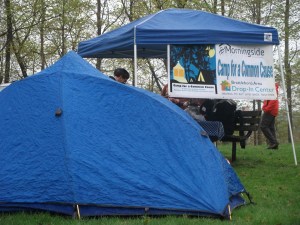
Event organizers don’t set a rain date, as the homeless must deal with whatever the weather. As a result, participants one year attempted to sleep through thunder and lightning.
One night outdoors, they add, isn’t the same as trying to live a life there. A homeless man who slept at a past event said he could do so only because organizers had permission. The next night, he was left to hike a half-mile into nearby woods to hide from anyone wanting to arrest or attack him.
“I struggle every day to eat, shower, do laundry and the other normal things people don’t even think about,” the man said.
This weekend’s event is just one way advocates hope to raise awareness. They also are encouraging the public to donate tents, money and time to local shelters, as well as to call for more affordable permanent housing, jobs and counseling.
“It just underscores the point that a lot of people don’t have the security of a warm, safe place to sleep,” Davis said of the annual public campout. “Working together as a community, we know we can do more for our neighbors in need.”
