


“There’s no question it is a model that works,” said Jolinda LaClair, the governor’s director of drug prevention policy. “It’s a model we’re going to look to replicate across the state.”
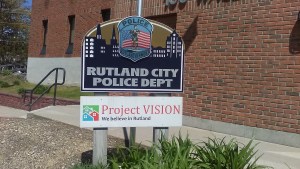
LaClair spoke Thursday at a meeting in Rutland of Project Vision, a coalition of community groups, churches and government agencies that banded together to provide a comprehensive solution to problems caused by opiate abuse in the city.
Project Vision started in 2012. Its membership now tops 300 people from more than 100 agencies and groups.
“You’re ahead of the curve,” LaClair told about 75 people gathered for one of the two monthly meetings the group holds. “This is what we have to do — we have stand up in each community and commit to work together.”
In addition to meeting and talking on a regular basis through Project Vision, social workers, mental health providers and others respond to some of the police calls to help people in need access services much earlier in the process.
LaClair, who most recently served as the deputy secretary of the state Agency of Agriculture, Food and Markets, in her new role will oversee the Governor’s Opioid Coordination Council. She will also work to implement drug prevention strategies in cities and towns around Vermont.
The council is made up of 21 members from different fields and perspectives from across the state, including Attorney General TJ Donovan and Rutland Mayor David Allaire.
Part of her mission in her new role, she said, is to break down “silos” and better leverage public, nonprofit and private sector resources, with a focus on state agencies.
For example, LaClair said, syringes left behind from drug use can be found on playgrounds, streets and backyards.
“We have a needle disposal problem,” she said. “We need disposal containers. There is not a statewide program.”
To help address the issue, LaClair said, she is bringing together officials from many state agencies, including Health, Human Services, Transportation, and Buildings and General Services, as well as community leaders.
“We will come up with a program,” she said, adding that the group started forming two weeks ago.
LaClair said in her job she will work to help set and meet short-term and long-term goals, as well as assist in developing policy. The Governor’s Opioid Coordination Council held its first meeting this week.
“There’s a practical approach that I’m bringing to this, and I really believe there are smart people that have ideas to do things better,” she said.

Louras, who served 10 years as the mayor, lost his re-election bid for another two-year term to David Allaire, a longtime city aldermen. Allaire was sworn in as mayor in March.
“It’s not one person’s award,” Louras said, adding that it is a collaborative approach that has made Project Vision successful.
“This is yours even those it’s got my name etched in it,” the former mayor told the group. “Keep up the work in making all the difference in the world.”
Allaire and Louras, who only months ago engaged in a spirited mayoral campaign, shook hands after the award was announced.
The new mayor said he looks forward to the program continuing to build on its success.
“There are so many issues that a new mayor has to confront when he comes in and be concerned about,” Allaire told the crowd earlier in the meeting, “but one of them was not what was going on with Project Vision and the Rutland City Police Department.”
Joe Kraus, Project Vision chair, led the meeting. He told LaClair the group stands ready to assist any way it can.
“We wish you nothing but great success in bringing down those silos,” he said. “If there’s any place in the world where I think this has a reasonable chance of happening it is Vermont.”
