


The closure was supposed to be temporary. Within weeks, however, Vermont’s oldest residential drug rehab program had imploded, taking down an affiliated outpatient program and leaving recovering addicts in the lurch and state officials scrambling to pick up the pieces.
Maple Leaf Treatment Center in Underhill was a crucial component of Vermont’s drug treatment system. Its 41 inpatient beds — in close proximity to Burlington — accounted for 30 percent of the beds statewide.
Residential rehab programs give people space to examine their lives and a break from the hamster-wheel hunger to score drugs and stave off dope sickness, said Gary De Carolis, executive director of Burlington’s Turning Point Center, which helps people in recovery.
Maple Leaf’s closure earlier this year coincided with reports that opiate overdose deaths in Vermont spiked by 38 percent in 2016, from a total of 75 to 104, according to Health Department figures.
Deputy Health Commissioner Barbara Cimaglio said Maple Leaf’s undoing was a surprise but that other programs are stepping into the breach.
However, the combination of a bedrock rehab program closing and the spike in overdose deaths left many people worried that a bad situation was getting worse.
Burlington Mayor Miro Weinberger has repeatedly cited the growing number of overdose deaths as evidence that, despite good intentions, the state has done too little to address the crisis.
For members of the public concerned about property crime, the waste of tax dollars or the loss of loved ones to overdose, the question is simple: What comes next?

Hitting a saturation point
As the opiate addiction became an epidemic crisis in the past decade, Vermont shifted away from incarcerating drug users to putting them into treatment.
That has meant increased access to the maintenance medications methadone and buprenorphine.
The drugs stave off opiate withdrawal, and if taken properly they don’t give people the high they experience with heroin or misused prescription painkillers.
Officials developed the “hub and spoke” model for treatment. Large methadone clinics, or hubs, serve thousands of opiate-addicted patients. As their lives stabilize, people ideally transition to physician practices — the spokes — where they are typically prescribed buprenorphine.
The use of medication to treat addicts grew out of efforts to prevent overdose deaths, and it follows a basic harm reduction principle: Drug users have to be alive if they are to recover.
The state has also made naloxone, the opiate overdose reversal drug, widely available.
The research is unequivocal, experts say: Without access to treatment medication, people addicted to opiates are at greater risk of death.
Today, more than 1 percent of Vermont’s population is taking maintenance medication for an opiate addiction. One expert estimates that could be as high as two-thirds of the addicted population in the state, a rate that’s drawing national attention.
Still, roughly 200 people are on a waiting list for the hub clinics, and there is widespread agreement among policymakers that Vermont should keep expanding the system until treatment is available to everyone.
There is some evidence that the medicated treatment system has reduced overdose deaths.
Figures show that from 2010 to 2015, Vermont had a slower rate of increase in overdose deaths than the other New England states. While the spike in 2016 is troubling, Cimaglio said, it does not necessarily indicate a trend.

Burlington Police Chief Brandon del Pozo said he believes the state’s effort to make naloxone widely available led to a plateau in Vermont’s overdose death rate, which actually decreased from 2013 to 2014. In all other New England states the rate increased, in some cases dramatically.
To fully address the crisis, Del Pozo says the state must offer medication-assisted treatment to all addicts, immediately. He believes the waiting list for treatment has exacerbated the crisis.
While naloxone has saved lives, it has not stemmed the heroin epidemic, he says.
That’s because the increased availability of naloxone coincided with an ongoing rise in the number of heroin users in Vermont and the availability of fentanyl, a powerful synthetic opioid, which is often found in the street heroin supply. Heroin mixed with fentanyl has increased the number of overdose deaths.
Del Pozo said he suspects naloxone has reached a point of diminishing returns.
“Causality is a difficult thing to tease out, but it does seem to me like naloxone had a very good effect, and now the momentum of the opioid epidemic has overcome it,” he said.
The hub-and-spoke model of ongoing medical treatment with opiates may be reaching a similar point.
“We just won’t know until we have no waiting list,” he said.
At the same time, there is a perception that the system is easily gamed by addicts who aren’t ready to give up chasing highs, a view that threatens to undermine public support for the state’s response.
The emphasis on medication is also feeding into an ideological divide in the recovery community over the role maintenance drugs should play in sober living, according to experts and former drug users.
Costly but cost-effective
The medications that fuel the hub-and-spoke model are a growing expense for the state.
Vermont’s Medicaid program bought $63.1 million worth of Suboxone — a brand name for buprenorphine — from 2005 to 2015. That’s more than Medicaid paid over the same period for antidepressants and drugs that treat attention deficit hyperactivity disorder.
Though the maintenance drugs are costly, medication-assisted treatment may be cost-effective, figures from the state suggest.
The average annual cost to treat one patient with addiction medication is $4,800. Inpatient rehabilitation typically lasts just a fraction of a year — less than three weeks on average. The average cost in a given year for a patient who receives inpatient treatment is $4,900.
The state started paying for shorter rehab stays in 2013. That’s when Vermont adopted a 15-day limit on what Medicaid will pay for. People can apply to extend their stay, and most requests are granted, bringing average stays closer to 18 days, according to Cimaglio.
Several people interviewed for this report said Vermont’s limit is problematic. Among them is Marvin Ventrell, executive director of the National Association of Addiction Treatment Providers. “That’s an inadequate amount of time to address the chronic nature of the disease,” he said.
Cimaglio said the policy mirrors what private insurance companies have done for years. In Maine, where no such limit exists, the state sometimes pays for inpatient stays as long as 180 days, according to Cimaglio. That’s costly and doesn’t make clinical sense for most patients, she said.

The 1 percent
Close to 6,000 people currently are prescribed methadone or buprenorphine through the hub-and-spoke system, according to the Health Department. That figure only includes spoke patients on Medicaid, meaning the total is likely much higher.
Richard Rawson, a former director for the University of California at Los Angeles Integrated Substance Abuse Programs, is studying Vermont’s system. He believes the total number is between 7,000 and 8,000 addicts.
There is no official state count of the opiate addicted population. Rawson estimates that a total of between 15,000 and 20,000 Vermont residents are addicted to opiates.
Rawson says Vermont’s hub-and-spoke approach is gaining national attention.
The 21st Century Cures Act, a law Congress passed last year, made $1 billion available for state drug treatment grants focused on opiate addiction. Rawson said at least 10 states are applying for grant money to replicate the hub-and-spoke model, including California.
Even as other states prepare to follow Vermont, there is no data showing whether the model is leading to a broad range of positive outcomes for drug users.
“If you’ve got thousands of people in opioid treatment, are those people overdosing less, committing less crimes, feeling less depressed, working more and getting incarcerated less?” Rawson asked.
He said he hopes to provide some answers, as the state recently engaged Rawson, through the University of Vermont, to study patients in the hub and spoke system. He expects to publish findings in the fall.
“The public wants (drug users) to go into some place and come out sober, tax-paying, non-criminally involved citizens,” Rawson said, but he added that is not how addiction recovery works.
Val Velasquez, 33, of Newport, is currently part of the 1 percent in Vermont on maintenance medication.
She said she started abusing prescription drugs when she was 11. Her mother was a pain patient with a variety of medical conditions, Velasquez said.
“Typically in my house if you had a headache or something like that, it wasn’t like ‘Here’s Tylenol,’ it was like ‘Here’s a Vicodin,’” she recalled in an interview, referring to the powerfully addictive drug.
Velasquez began using heroin at 18, she said, and wound up doing things that she had always promised herself she would avoid: leaving her kids in front of the television so she could shoot up; committing crimes to support her habit.
Before landing in prison, Velasquez cycled between medication-assisted treatment, rehab programs and the drug life, achieving “brief bouts of sobriety” but always returning to addiction.
Sober 10 months now, Velasquez found the motivation to get clean only after her younger sister died in a drunken driving accident. “I think I felt a lot of guilt because she wasn’t an addict. It was almost like God had chosen the wrong person,” Velasquez said.
Her sister was a mother too, and the loss forced her to confront the possibility of her own children growing up without a mother if Velasquez died of an overdose or some other drug-induced accident.
“At that point I decided to be sober for me. So this is the first time I’ve ever really said I’m going to do this, and I’ve put my recovery before everything,” she said.
Before, it was more as though Velasquez was pursuing sobriety to get other people off her back: “It was Probation and Parole, or my partner, so he would get off my case, but it was never because I really wanted to be clean and sober,” she said.
Velasquez said she’s taking the lowest possible dose of methadone to stave off cravings, with the eventual goal of abstinence.
Cimaglio said there’s no evidence suggesting a person should or should not stay on treatment medication indefinitely. It’s a personal choice that people should make with their doctor, she said.
“A lot of it comes down motivation,” she said, adding that it should be possible to get off treatment medication if they want to. At the same time, “If somebody feels like they really can’t do this without medication, we don’t want to tell them they can’t have it,” she added.
Research shows that people receiving medication-assisted treatment are less likely to relapse the longer they stick with it, according to Rawson.
“When they should get off the medicine is still an unanswered question, and there’s very little data to serve as a guide,” Rawson said. There’s another problem: “We also don’t have good data on how to get them off the medicine,” he added.
Maintenance medication is clearly part of the solution for some people, said Ventrell, from the treatment providers association, but in his experience, “It’s pretty rare to see someone fully addicted to opiates recover without abstinence.”
‘Catch-22’ of abstinence vs. maintenance
Ron, 58, who preferred his last name not be used, is a peer support worker at the Turning Point Center in Burlington. Ron said he used heroin on and off since the 1970s. At one point, he said, he was clean for two decades.
Then one day he was hanging out with a friend who was shooting dope, and Ron decided to join him. “I was off to the races,” he said. Now clean for 17 months, Ron said he agrees with Ventrell when it comes to abstinence.
“The pharmaceutical companies, they not part of the solution. They part of the problem, because every time you turn around they pushing something new,” he said.
Ron said it’s harder to kick Suboxone than heroin, because the withdrawal is far worse. It’s also common knowledge in the recovery and drug using community that it’s an easy medication to tamper with and abuse, he said.
He got into recovery without medication and initially said he believes others should do the same. If you’ve gone through detox and a residential program, then “meetings should be your Suboxone,” Ron said.
Ron says a friend has taken Suboxone every day for the last 10 years. Ron said his friend needs the drug to function, and without it he wouldn’t have the energy to get out of bed and go to work.
Asked if he thought his friend’s lifestyle was acceptable, Ron said: “No, but it works for him, so who am I to say. That’s the Catch-22 to it. That’s the reality. Imagine if he don’t take it?”
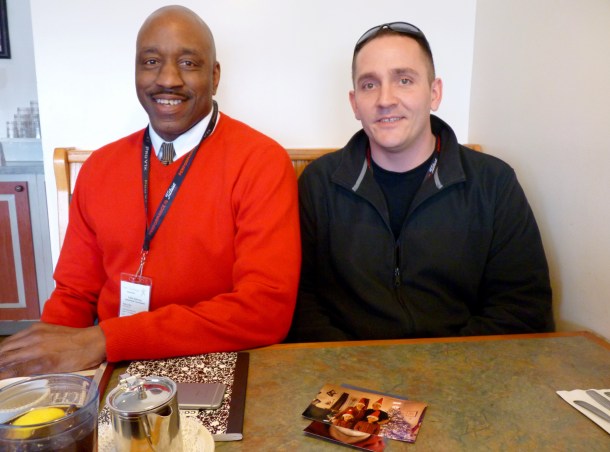
Charles Woods and Robert Giles are both former addicts who got clean without treatment drugs. In a recent interview, they said they fear the state’s focus on medication-assisted treatment is coming at the exclusion of other avenues.
Woods and Giles work for the nonprofit Teen Challenge Vermont, an abstinence-only residential drug rehabilitation program in Johnson that also helps young men with behavioral issues.
It’s a faith-based organization with outlets across the Northeast. The program involves a yearlong curriculum, throughout which participants earn greater freedom to go off-site, the two men said.
When they go out in the community to do fundraising or hand out literature, people will often tell them they’re on Suboxone or methadone. When those people hear that Woods and Giles are both sober, and that they got clean without maintenance drugs, the reaction is often disbelief, Woods said.
“It’s like they don’t know it’s possible or don’t believe you,” he said.
No ‘magic pill’
Velasquez said she feels conflicted about treatment medication, too. For some people it’s a crucial part of their recovery and a tool they may rely on for the rest of their lives. But she said going clean is more complex than getting off the drugs and that replacement drugs are “not a magic pill that’s going to get you sober.”
She’s also aware of the perception that medication-assisted treatment is a free and legal high, and she understands why some view it that way. Before she got serious about recovery, she said, that’s how she looked at maintenance drugs.
While she was in treatment, it was easy for Velasquez to fake withdrawal symptoms and fool doctors into upping her dose of methadone, she said.
“I was going and dosing daily, but I wasn’t working a program. I wasn’t going to meetings. I mean if I’m honest about it, I was using it as a backup” in case she couldn’t find drugs on the street, Velasquez said.
It can take years for people addicted to opiates to attain the stability it takes to manage their disease, Cimaglio said. During that time, it’s common for them not to take medication as directed or to miss appointments.
The same is true for diabetes or hypertension patients who skip medication or don’t follow a doctor’s instructions to exercise or eat healthy food, Cimaglio said.
“Patient difficulties that are features of their disease are not routinely considered ‘abusing the system’ unless there is criminal intent to divert medication,” Cimaglio said. When that happens medical providers can go to the police, she added.
Whether the abuses amount to criminality or not, Giles said he frequently sees what he would term abuse of the system. That occurs when addicts are tempted to buy diverted Suboxone, or people are given increasingly high doses of methadone instead of being tapered off over time.
Hub clinics need Drug Enforcement Administration certification, and the agency regularly inspects them, as do other federal and state agencies. Hub clinics monitor dosing in some cases, and patients can lose privileges if problems occur, Cimaglio said.
Despite safeguards, an entire subculture, complete with its own vernacular, has sprung up around gaming the drug treatment system.
Velasquez said she recently asked her doctor to switch her from Suboxone to methadone, because she was having money trouble. She said she was feeling the urge to “cheek” her dose, the practice of placing a Suboxone strip in one’s cheek so it doesn’t melt, to later sell or abuse it.
Methadone is administered as a liquid, so it can’t be tampered with in the same fashion.
Suboxone strips can be dried and snorted or liquified and injected. They sell for about $30 on the street, and just 2 milligrams of an 8 milligram strip, if tampered with, can get an addict high.
The extra cash would have been a boost in the short term, but she said she knew she would end up with cravings that could lead her back to heroin, which can cost as little as $5 a bag or individual dose.
Velasquez is motivated to stay sober, and her doctor understood the situation, but it’s an example of how the black market for buprenorphine complicates treatment for those living marginally who are struggling to stay clean.
The Health Department and the Board of Medical Practice have protocols to help doctors ensure patients are using maintenance drugs properly, and doctors can get in serious trouble if their patients are diverting doses. Still, a recent Seven Days report highlights the pitfalls doctors face in treating addiction.

Services need to ‘wrap around’ for recovery
For Velasquez, getting clean was the easy part, she said. The hard part is staying clean. To do it, she’s relied on a support system that isn’t available to everyone trying to recover from an opiate addiction.
Velasquez applied to Northern Lights from prison. It’s a sober living home in Burlington where residents are required to obey house rules and follow a strict regimen of counseling, meetings, work or volunteering, and random drug testing.
It’s a program run by the Department of Corrections, Howard Center, Vermont Works for Women, Mercy Connections Inc., Lund Family Center and the Burlington Housing Authority.
Those who complete the program earn a Section 8 subsidized housing voucher. Stable housing and job prospects are key to making lifestyle changes that are necessary for recovery, experts say.
Northern Lights provides the type of “wraparound services” Cimaglio said the state would like to offer to addicts lacking personal wealth or a family support structure.
Velasquez said she’s lucky to be in the Burlington program but wishes she could see her children in Newport more often. The sober living options in the Northeast Kingdom are extremely limited, she said.
Through Northern Lights, Velasquez started volunteering at the Turning Point Center in Burlington. The experience convinced her that recovery takes counseling sessions as well as medication to stay clean.
Medication alone, she said, can’t end the cycle of relapse and deprivation she endured for years.
Addiction is a chronic disease with biological, psychological and social components, Ventrell said, and all of those factors need to be addressed for a successful recovery.
The Turning Point Center helps Velasquez deal with the social isolation of recovery. People can’t go back to friends who are still using, and they’ve often burned bridges with family or friends, she said.
There are 12 Turning Point centers statewide. It’s a network of community spaces where those in recovery can attend meetings, connect with services, take exercise classes, look for work or just share a cup of coffee in the fellowship of other people walking the same path.
De Carolis, the executive director of the Turning Point Center in Burlington, said the state increased the annual grant to the network of recovery centers during the Shumlin administration. The $110,000 received helps pay bills, but even with private fundraising, De Carolis said, the center cannot offer good staff benefits.
A possible next phase
“What we want for people is to get as well as they can, not just for them to be maintained,” Ventrell said. “We want more for patients than ‘not dead.’ ‘Not dead’ is a good start, but it shouldn’t be the end goal.”
Cimaglio said Vermont is working toward a comprehensive drug treatment system that helps address all the factors that contribute to addiction, but the hub-and-spoke model was a necessary first step.
“I think because we were so overwhelmed so quickly with the problem, there’s always a need to ensure people are getting the counseling and the wraparound services that they need” for a successful recovery, she said.
Rawson said the next phase that has to happen represents another opportunity for Vermont to be a leader in treating opiate addiction.
In his mind, what needs to happen is the development of stronger links between the medical community operating the hub-and-spoke model and the recovery community helping former addicts stay sober.
That work has already begun. In a $2 million application under the 21st Century Cures Act, Vermont is proposing to place peer support workers in emergency rooms.
De Carolis said emergency rooms are not designed to meet nonmedical needs for comfort and counsel. Having someone at the bedside who understands what it is like to have overdosed could make a difference in a crucial moment, he said.
Woods, with Teen Challenge Vermont, agreed. “I was in the ICU for seven days (after an overdose) and I got zero counseling. They gave me a list of places to call and sent me out the door.”
Some of the federal money, if it’s awarded, will also go toward community-based prevention projects and education at adult learning centers.
Velasquez believes there needs to be a renewed focus on prevention.
“We live in a society where no one wants to deal with anything until it becomes a problem,” she said, but if more people understood opiates and addiction, it’s possible fewer people would get caught up in the first place.
Velasquez said she was willing to share her story to improve public understanding.
“You open yourself up to judgment, and to people judging you extremely harshly,” she said. “At the same time, you have to consider the persons that are struggling with addiction or that might be in similar situations, and you can potentially be beneficial to what they’re going through.”
