


Charles Greeno III has sued the department in federal court in Rutland, seeking unspecified damages. Greeno, who has threatened filing such a suit for several months, finally did it this week.
“It was a last resort. Filing a lawsuit is not something Mr. Greeno wanted to do,” said Matt Hart, an attorney representing Greeno.
“They basically forced him out of business,” Hart said of city police. “By their selective enforcement of their policing policies, which we believe are racially motivated, they drove him out of business.”
Rutland City Police Chief Brian Kilcullen, contacted late Wednesday afternoon, declined to comment on the lawsuit.
“I’m not going to respond at this point,” the chief said.
Kilcullen did say, “We absolutely did not target African-Americans. The facts will be argued in the appropriate forum.”

It is known, says the seven-page lawsuit, as a nightclub that plays dance music and “caters to the hip hop culture,” featuring DJs from New York and Boston, often attracting a lot of African-American patrons from around the area.
The filing states that problems started in the summer of 2012 when Greeno said his established was “set upon by approximately 24 heavily armed” local and federal law enforcement officials as part of what police called Operation Fed Up.
“The officers surrounded the outside of The Local and remained there until every patron had left,” the lawsuit states.
A police officer told Greeno that law enforcement wanted to make “its presence known (to) all the drugs dealers that go to The Local,” according to the lawsuit.
Then-Police Chief James Baker told Greeno that his bar catered to the “wrong kind of people,” the lawsuit states.
Greeno, according to the lawsuit, asked what he meant, and Baker allegedly told him, “You know exactly what I mean and who I am talking about, they take the train up here, sell their drugs and dance with white girls.”
Baker, contacted Thursday, declined to comment.
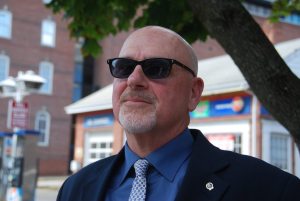
In an attempt to work with police, the filing states, Greeno joined Project VISION, a collaborative effort among state and local agencies, nonprofit organizations, businesses and officials working to reduce crime and drug activity in the city.
Despite those efforts, Greeno alleges that officers continued to target African-American patrons of his nightclub for the next three years, while police officials told him they were conducting “data driven policing.”
During that time, according to the lawsuit, The Local’s business steadily declined.
“Mr. Greeno was advised by many of his old patrons that they just didn’t want to go to his bar and have to walk through the gauntlet of police or that if you went to The Local the police would target you as a drug user or dealer,” the filing states.
When Kilcullen was hired as police chief in 2015, Greeno says he met with him and expressed his concerns with the department’s alleged tactics.
“Rutland City Police Chief Brian Kilcullen(’s) response was that it was data driven, he did not see any problems and that he personally has shut down many bars that he didn’t like,” according to the lawsuit.
Greeno says he also went to other city officials, who all told him that it was a police matter, and they deferred to the police chief.
Soon after, the lawsuit states, the police presence increased, with cruisers parking in front of the nightclub, with their blue lights on, and only outside The Local, not other bars in the city.
“In February 2017 as a direct result of the unlawful and discriminatory policing policy being selectively enforced against Mr. Greeno,” Hart wrote in the lawsuit, “Mr. Greeno could no longer financially keep his bar open and he was forced to close The Local suffering significant economic damages.”
In addition to the Police Department, according to the filing, state liquor enforcement officers stepped up their presence at The Local.
An incident in May 2016 landed The Local before the Vermont Liquor Control Board.
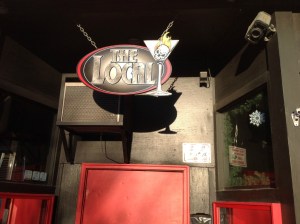
“Although we find serious violations here, and there is considerable enforcement history, there appears to be increased efforts with our regulations and cooperation with law enforcement,” that decision read.
“For those reasons, a sanction such as revocation or a lengthy suspension as (the Department of Liquor Control) seeks is not warranted at this time. We conclude instead, that a 21-day suspension of Licensee’s liquor licenses is appropriate.”
Hart said Wednesday that incident took place in a parking lot across the street from The Local and that his client decided against continuing to fight that case.
“We think part of it, the reason why the liquor board was taking a certain position,” Hart said, “was at the behest of the Rutland City Police Department.”
The attorney said it’s not individual police officers he has a problem with.
“We’re not saying they are a racist police force,” he said, adding he believes there are many “outstanding” officers in the department.
“They don’t set policy,” Hart said of individual officers. “It’s a policy that has been adopted, whether it’s a fear of drugs, or fear of black people.”
“The Police Department didn’t really learn from the Todd incident,” he added, referring to a lawsuit filed against the city by former police officer Andrew Todd, who alleged racial discrimination in the department. Todd eventually settled the case in late 2015 for $975,000.
“Maybe it’s not as in your face as it used to be,” Hart said, “but it’s still there.”
Earlier this week, a new owner sought to open a new bar under a new name, The Nite Lite, at the site of The Local on Merchants Row. The city’s Board of Aldermen unanimously rejected the request for liquor licenses.
Board members cited past problems involving police interactions as well as noise complaints at the location as reasons for turning down that request.
“That is a very hot spot that deserves some time to cool off,” Alderman William Notte said, explaining his vote.
