

This is a key week regarding the future of new rules on net metering that some legislators consider flawed.
The Legislative Committee on Administrative Rules determined March 2 that the Public Service Board had overstepped its authority with one of the rules the board adopted Jan. 1.
This week the PSB will say whether it intends to make changes lawmakers requested in the rules, which govern small-scale renewable energy production.

Also this week, two legislative committees will consider whether to write new laws to supersede the rules.
Vermont’s net metering program lets businesses and individuals with renewable energy generators — typically solar panels — pay some or all of their electric bills with credits for power they produce but don’t use.
The Public Service Board recently performed a fairly extensive rewrite of the rules for Vermont’s net metering program, and those new rules took effect at the beginning of this year.
But some legislators say the rules don’t match the intent of the legislation that ordered the board to write them.
On March 2, the Legislative Committee on Administrative Rules voted against endorsing a portion of the new rules, while accepting the rest.
The rejected section is called Rule 5.125. It would change the terms that apply to net-metered systems built before this year. The rules committee determined such a retroactive change would violate state law, said LCAR’s chair, Sen. Mark MacDonald, D-Orange.
“The objection … is based on Vermont statute, (which says) you can’t rewrite a deal you’ve made after you’ve made it,” MacDonald said.
The deal he referred to has to do with what are known as non-bypassable charges, found on an electricity bill.
Electricity bills currently contain two types of charges: one for the amount of electricity a customer uses, and another for fixed costs associated with delivering that power.
Under the Public Service Board’s new rules, net-metering customers can’t pay off the fixed costs using credits. Instead those charges, as of Jan. 1, became “non-bypassable” for new net-metering customers, meaning credits can’t be used to pay them.
The PSB would make those costs non-bypassable in 10 years for customers with net-metered systems installed before 2017. But those systems were built under a set of rules that allowed the entire bill to be paid using credits.
“There was no authority for the board to set a time limit on the availability of those benefits,” LCAR attorney Aaron Adler wrote in a letter that committee sent to the Public Service Board on March 2.
Public Service Board attorney Jake Marren argued before LCAR legislators that the board did have the authority to set down a time limit on bypassable charges.
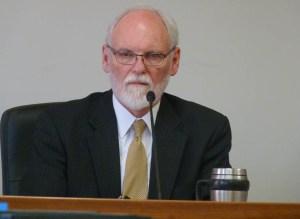
“The board doesn’t view this as being a retroactive application of law,” Marren said. “The changes that this rule will effect will affect net metering that occurs in the future — in fact, 10 years in the future — for those pre-existing customers, so the board does not believe it is taking something that happened in the past and changing the rates for things that haven’t passed.”
The Public Service Board will supply a response to LCAR’s letter, and to its objections to the board’s rules, at the next LCAR meeting. That will be Thursday at 8 a.m. at the Statehouse.
The PSB may either rewrite the rules according to LCAR’s recommendations, MacDonald said, “or they can say, ‘We want this to go into effect.’”
The board has most commonly in the past simply rewritten rules according to LCAR’s recommendations, he said.
LCAR also had asked the two committees with jurisdiction over the rules — Senate Natural Resources and Energy, and House Energy and Technology — to review the rules to ensure they all match legislators’ intentions.
Lawmakers have complained that the rules arrived a year late, and that the Public Service Board ordered them into effect without first vetting them before legislators, as intended.
The Legislature, in Act 99, directed the PSB in 2014 to draft rules for implementing a new net metering program by Jan. 1, 2016, after a public hearing and comment process. Legislators hoped to review the rules through the 2016 legislative session before ordering the board to begin a formal rulemaking process.
Lawmakers have the authority to write new laws that will supersede the rules, MacDonald said.
The legislative rules committee accepted provisions addressing the siting of renewable energy projects and other matters.
The net metering rules require many new solar projects to be built in places like gravel pits, brownfields and parking lots. This addresses what many municipalities wanted — fewer solar arrays in cow pastures — but is expected to increase the cost.
The rules also address the assets called renewable energy credits for wind, solar or hydro. The credits represent the renewable quality of power produced that way.
Under the new rules, utilities will purchase most of the credits from net-metered power produced in Vermont. This will effectively increase the amount of electricity that is deemed renewable within the state but is also predicted to push rates up, especially if renewable development continues at the current pace.
But advocates of renewable energy say development will slow substantially under the new rules, for reasons that include reduced compensation and limited eligible locations.
The new rules will pay less to producers of new small-scale (up to 500 kilowatts) renewable energy projects than they had gotten previously.
