


[T]he State Board of Education postponed a vote on contentious draft rules for private schools after the chairman struck a deal with the governor that spotlighted the jockeying that has gone on.
Many expected the board Tuesday to approve the newest version of the rules that would change the way private schools are approved by the state to accept students using public tuition dollars.
But members indicated they wanted more time to work toward agreement with private schools and analyze enrollment data. Had they approved the regulations Tuesday, they would have gone to the Interagency Committee on Administrative Rules for approval to move to the public stage of rulemaking.
“This has been a long process … but in order to get it right, I think we need to continue working on some of these areas, specifically around special education and open enrollment,” Vice Chair Sean-Marie Oller said after hearing the latest changes to the draft. She added that the board needed the Education Agency’s input.
How to make that happen was a matter of disagreement.
Chairman Stephan Morse has said that in August, then-Gov. Peter Shumlin told the agency it could no longer work with the board on the rules. Morse saw that as bowing to the private school lobby.
Board member Bill Mathis presented a motion Tuesday postponing action on the rules until April, so the subcommittee working on them can have more meetings with stakeholders, the secretary of education and agency staff. The motion sought to “request” the administration to allow the secretary to work with them.
Morse balked, supporting a different motion that set the date in May and didn’t include the confrontational line.
Morse said he had met with Gov. Phil Scott and told him they would not vote on the draft rules Tuesday and the governor gave permission for the secretary and agency to provide some technical assistance.
Oller said the board, as a politically independent body, didn’t need to make a deal.
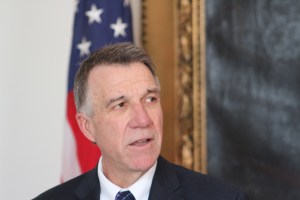
“Well, I did make a deal yesterday,” Morse said. “I thought it was in the best interest of getting this issue resolved.”
The board changed the motion, dropping the line, and voted to reconsider the rules at its May meeting.
“This is a bad day for all Vermont kids,” Oller said, referring to making a deal instead of asking for the help. It was about the principle, according to Oller, who said this has come about because the secretary of education’s position was politicized when it was placed under the governor’s purview.
Oller and Morse are both stepping down at the end of February.
The agency will be asked to weigh in on the patterns that have emerged in the enrollment data.
Oller said the fact that the agency hasn’t been allowed to talk to the board about its own data has been a hindrance to the rules process. “That is exactly the thing that has put us behind the 8-ball,” she said.
Mathis said that at the last meeting private school representatives questioned some of the data. “I think it is a fair question to ask. If there is other information to bring forward, bring it forward and we will put it on the table,” he said.
Morse said he was encouraged by recent meetings with the private school stakeholders. “We have come to some understandings, but there are still areas that need some work,” he said.
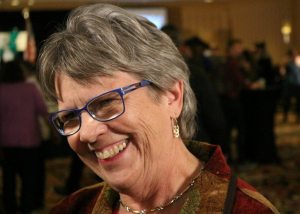
The board itself was challenged before it got far into the meeting Tuesday. Attorney Deb Bucknam, who opposes the private school rules, questioned the validity of any decisions made that day. She said the board had violated its rules by not posting its agenda two weeks in advance. She also threatened to sue the board for not responding in a timely fashion to her public records request.
Although the board’s rules say it should post an agenda two weeks early “whenever practical,” the rules are not statute. The open meeting law says the board has to post an agenda 48 hours prior to the meeting, which it did.
Bucknam’s public records request should be replied to within three days of its receipt.
“Someone contact me before I file a lawsuit,” Bucknam said.
The Agency of Education provided Bucknam’s letter written Jan. 13 with a “date received” stamp of Jan. 17. On Jan. 18, Judith Cutler, the public records officer at the agency, wrote to Bucknam invoking 1 V.S.A 318(a)(5) and asking for 10 days to reply because of the “voluminous amount” of data requested.
Bucknam asked for all records concerning the rules, including correspondence between the agency, the board, state and federal agencies, lobbyists and private citizens. She also asked for personal financial information for every board member, all records that had to do with each of their appointments, and more.
On Jan. 30 the agency responded with an estimate of $1,418 to begin the research and asked if Bucknam was still interested in pursuing it. The agency had not heard back from her until her appearance Tuesday.
Board member Bonnie Johnson-Aten said Bucknam’s concerns reinforce the board’s desperate need for staffing. Since it has none, the Agency of Education has to deal with these things. “This is just one more example, one more reason why staffing the board would be really helpful,” Johnson-Aten said.
