

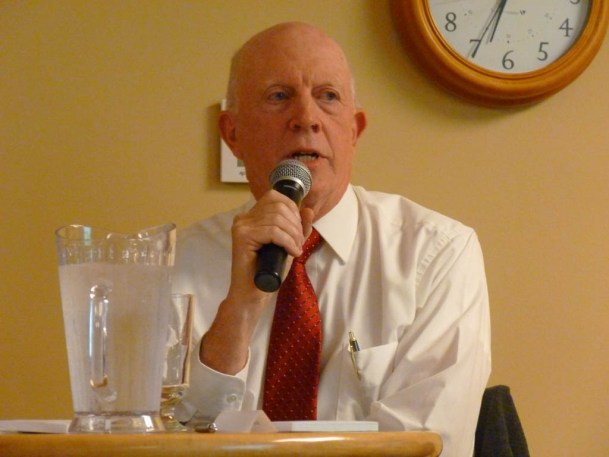
Rep. Bob Frenier, R-Chelsea, looked on Thursday from his seat on the House floor as lawmakers agreed by voice vote to the “policies and procedures” for recounting the votes that led to his election.
Former Rep. Susan Hatch Davis, P-Washington, who a judge ruled lost her seat to Frenier by seven votes, had challenged the election, petitioning the House late last year to take up her case.
“I would have liked to have had a roll call vote so the people who voted for this could be interrogated at town meeting,” said Frenier, who has been critical of the process leading to the recount. “I think people will be appalled when they really get all the facts.”
Hatch Davis did not attend Thursday’s session but said after the House agreed to conduct the recount that she was happy with the decision and would accept whatever results it brings.
No recount date was set Thursday, but lawmakers talked earlier this week about starting Wednesday, with it possibly stretching into the next day.
Discussion over the “policies and procedures” for the recount was short Thursday, less than 30 minutes, unlike the more than five hours the House spent earlier this month debating before voting to conduct the recount.
The full House agreed to adopt the rules, with no changes, as recommended by the House Government Operations Committee, which developed them.
Despite the swift approval and little discussion, the session still featured some of the claims of partisanship that have underscored the new recount debate, punctuated Thursday by Rep. Thomas Terenzini, R-Rutland Town.
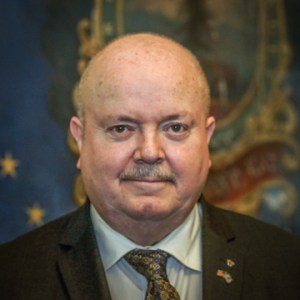
“I would have to agree that he did speak directly to motive, which is against the rules of the House,” House Speaker Mitzi Johnson, D-South Hero, responded. “The member from Rutland Town should avoid assigning motive for any action on the floor.”
Terenzini then spoke again, saying the House needed more ethics training.
“Because,” he said, “this body has no ethics.”
Terenzini’s comments Thursday followed a remark he made on the House floor earlier this session aimed at members of other parties.
“I just want to tell the Progressives and the social Democrats that there is a new sheriff in town at 1600 Pennsylvania Ave.,” he said, referring to Republican President Donald Trump.
Another Republican who spoke Thursday struck a different tone.
House Minority Leader Don Turner, R-Milton, told his fellow lawmakers that while he “solidly” opposed the recount, he would support adopting the rules. “We do have to get this issue behind us,” he said.
The recount has angered Republicans who claim Democrats and Progressives are trying to make it harder for them to sustain a governor’s veto.

Democrats and Progressives say they are trying to make sure the voters of the Orange-1 District can have confidence in the results of the election. They also say state law regarding recounts does not adequately address the visual inspection of ballots that are counted by tabulators.
The Vermont Constitution allows for the House to hold a new recount but does not provide any instruction in how to carry it out.
Hatch Davis petitioned the House seeking the new recount after results on Election Day, a recount in Orange County and a judge’s ruling left her still trailing Frenier.
The set of rules contained in H.R.10 and adopted Thursday provides protocols including how to collect the ballots at the district’s six town offices and how the memory cards from the tabulators will be handled.
Two memory cards, one that will be used for the new recount and the other serving as a backup, will be kept in a locked drawer in the office of the Montpelier police chief prior to the start of the recount.
The recount will take place in Room 11 of the Statehouse, with separate areas for the recount team and the public to keep them from mixing.
“The sergeant-at-arms and Capitol Police will keep order in the recount room,” Rep. John Gannon, D-Wilmington, who helped draft the rules, told lawmakers Thursday.
A 23-member panel of House members will conduct the new recount, with 11 Republicans and a total of 11 Democrats and Progressives.
Rep. Maida Townsend, D-South Burlington, chair of the House Government Operations Committee, will lead the panel.
Townsend will be assisted by the leaders of the Republican and Progressive caucuses in the House. Those three members will have the final say over any contested ballot, with the majority ruling.
Before a ballot reaches that stage, another team of lawmakers will look at the ballots to make sure the oval next to a candidate’s name is completely filled in before they are placed in the tabulator. Legislators will hand count those lacking the filled-in oval.
If that team of lawmakers can’t agree on the voter’s intent, that’s when it heads to Townsend and the leaders of the Progressive and Republican caucuses for a final determination.
