


[C]OLCHESTER — The decision to cease operating drug treatment programs at one of the state’s key centers has left doctors and state officials scrambling to help patients left in the lurch.
Close to 160 opioid-dependent patients receiving buprenorphine and counseling through Maple Leaf Associates outpatient services, known as the Bridge program, will now need to make other arrangements to continue their medication and therapy.
Deputy Health Commissioner Barbara Cimaglio said Friday that the abrupt closure — state officials were notified late Thursday — had created an “emergency” situation.
Officials, she said, were still weighing how best to proceed.
“We’re doing everything that we can to work with both the Maple Leaf leadership, the board, the physicians and the community to make alternative arrangements” for those patients, Cimaglio said in an interview.
“We’re reaching out to all of the key community partners to see how they can help us in this emergency,” she added.
The two physicians whose medical licenses Maple Leaf relied upon to provide buprenorphine prescriptions to their outpatient clients are willing to continue serving those patients, although it’s unclear where counseling and other support services will be provided, Cimaglio said. She said the state is asking other providers to “step into the breach” created by Maple Leaf’s closure.
“We do not have a finalized plan, but there are a lot of different options that we’re currently looking at. The top priority is making sure those patients don’t lose their connection with their physician,” Cimaglio said.
It’s also unclear how those physicians would bill for their services without Maple Leaf’s administrative structure.
Abrupt closure is ‘absolutely inexcusable’
“This is absolutely inexcusable,” said Dr. Deb Richter, of the board’s decision to close without giving her, their staff or the state any notice.
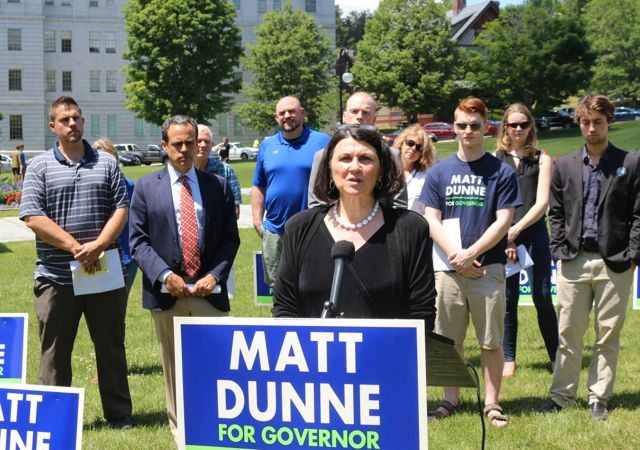
Richter is one of the two physicians working with Maple Leaf. She was not employed by the treatment company, but had a contract to provide addiction medicine services.
“These patients need to know that we will make provisions for them to be seen. We will not let them go without their medicine, but I need a place to see them,” Richter said Friday morning.
Richter, who like officials at the Health Department, was notified about the closure late Thursday, said she’s been working frantically to ensure no disruption for her patients.
“This board does not seem to understand this is medical treatment. These are opioid dependent patients who need access to their medication,” Richter added.
Board President Jeffrey Messina did not return calls Friday asking for comment on the decision to close. He has declined repeated requests for comment and interviews from VTDigger for six weeks.
A company spokesman, Ken Liatsos, emailed the following statement on his behalf, “MLTC is working carefully with ADAP to ensure as smooth a transition as possible.”
In a statement provided to other media outlets, the board said, “We are heartbroken by this turn of events and are considering every option and opportunity to be able to reopen the facility to serve the recovering community.”
The Underhill center closed in mid-January for what Maple Leaf officials said would be a 30-day period while they addressed staffing shortages. An outpatient facility in Colchester continued to operate but is now shutting down as well.

State officials have said the board’s decision was unexpected, and no state agency was directing them to close. The Alcohol and Drug Abuse Programs Division was planning a site visit to the Underhill facility on Monday to determine if it was ready to reopen.
Current and former staff have said the shortages were due to poor management and a hostile work environment. An investigation report from the Division of Licensure and Protection released in January found allegations of harassment that were not reported to state officials as required by law and other violations.
The Maple Leaf board’s decision to close indefinitely also raises questions about how the state will meet demand for inpatient drug treatment.
Long-term solution for inpatient treatment unclear
Maple Leaf Treatment Center in Underhill was one of three inpatient treatment facilities in the state, and its 41 beds made up 30 percent of statewide capacity.
Serenity House in Wallingford has 24 beds and Valley Vista in Bradford has 71 — with an additional nine beds for adolescents. Valley Vista is the only adolescent program in the state. The state has also been making referrals to Phoenix House in Dublin, New Hampshire.
Current and former employees say staffing shortages were the result of poor management and a hostile work environment.

Health Department officials say there are as many as 50 people waiting for inpatient treatment, which is typically reserved for people with acute needs who may need mental health or medical services in addition to help with their addiction.
Cimaglio said as of last week people were waiting close to a week for placement in an inpatient program, but now the wait has ballooned to “maybe two weeks or more.”
“We know it’s getting longer, so we’re taking this with a great deal of urgency to get more beds online,” she said.
Cimaglio said Health Department officials are looking at other out-of-state options as a temporary solution, but they’re also focused on finding a way to increase Vermont’s inpatient drug treatment capacity.
It’s also important for people seeking help for themselves or a family member to know there are many options for counseling and therapy in the community through organizations like Turning Point Center and others, she said.
Those services can help people stabilize while they look for a physician that will treat their addiction or for a bed at an inpatient facility to open up, Cimaglio said.
Valley Vista ready to expand to meet needs
Rick DiStefano, co-owner and clinical director at Valley Vista, said he was saddened by the news of Maple Leaf’s closure and his company has made clear to state officials they’re prepared to help pick up the slack.
“We feel saddened that after 60 years a facility with an outstanding record that has had so much success treating alcoholism especially has had to close its doors,” DiStefano said.
Maple Leaf was one of the oldest substance abuse treatment facilities in the country, DiStefano said. It was opened in 1956 by a group of Burlington businessmen who has struggled with alcoholism, according to its website.
It’s closure has put pressure on the existing services at Valley Vista, creating an “extensive” waiting list for their services, DiStefano said.
Valley Vista owns a building in Vergennes, a former nursing home, that is “turn key ready” to open as an inpatient facility, DiStefano said, though it would need a state license before it could begin taking patients.
“My understanding is there are a number of ways to proceed including emergency measures that would allow that to happen quickly if the state felt that’s what was necessary,” DiStefano said.
Cimaglio said she was aware of Valley Vista’s proposal for an inpatient facility in Vergennes, but said discussions were too preliminary for her to comment further.
She did confirm that a facility can be licensed quickly. The Health Department and the Division of Licensure and Protection would both need to visit the site and determine if Valley Vista has enough workers and a safe and secure facility.
“If there’s a possibility of a facility that’s turn key ready, we can go out there within a day or two,” Cimaglio said.

