


The analysis, completed by University of Vermont researcher Stephanie Seguino and Cornell University’s Nancy Brooks, included data from 29 municipal, county and state law enforcement agencies in Vermont for 2015. It’s the first statewide study of racial disparities in traffic stops.
Black and Hispanic drivers in Vermont experience “significant disparities in treatment” by police compared with white and Asian drivers, Seguino said in a presentation at UVM.
Black drivers are nearly four times as likely to be searched than white drivers after a traffic stop and are arrested at a rate nearly twice that of white drivers, according to the study.
Hispanic and black drivers are more likely to get a ticket if they are stopped by police than Asian and white drivers, according to the report.
Statewide, police search black drivers after a stop at a rate of 3.6 percent, nearly four times the rate for white drivers. Hispanic drivers are searched nearly three times as frequently as white drivers, and Asian drivers are searched less often than whites.
However, though they are searched more often, black and Hispanic drivers are less likely to be found to be carrying contraband than white or Asian drivers, according to the report.
Officers record the race of the driver in any traffic stop based on their own perception.
Seguino said the data is a “fundamental tool” for law enforcement agencies. She said researchers aimed to use a simple methodology to allow police agencies to monitor their data over time.
“I liken this to going to the doctor,” Seguino said. “It is a diagnostic tool that can be used relatively easily to assess performance.”
She urged regular analysis of traffic stop data going forward.
“The real issue here is that as a country we have a problem of racial disparities,” Seguino said. “The question is not do we have them or not. Are we making progress going forward?”
Seguino said the data likely show that bias is at play in policing in Vermont.
“There may be some explanation for some of the disparities, but in large part my sense is that a good deal of these disparities is due to implicit bias,” Seguino said.
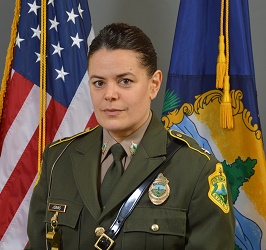
Some of the 2015 data was incorrectly coded to include tickets that came out of an officer response to an emergency call or a crash, rather than a stop at the discretion of the officer. She said the state police agency has worked to improve data collection methods to ensure information is more accurate.
“We all want the numbers to tell us a story that we can truly take meaning from,” said Jonas, the agency’s director of fair and impartial policing and community affairs.
She also voiced concerns about the quality of the data from other law enforcement agencies in the state. One important step for police across Vermont is to ensure officers are better trained in recording data, she said.
Seguino said that although there may be some problems with the data used in the analysis, she does not expect that to have a significant impact on the disparities found.
“The disparities are so large my guess is they are not going to go away with any improvements in classification,” Seguino said.
Karen Gennette, of the Crime Research Group, said the report brought the issue of racial disparities in policing “to the forefront.”
However, she said she believes it is important to distinguish between disparities and bias.
“Bias can be a reason for the disparities in the data, but there are also other reasons for disparities in the data,” she said.
For example, she said the report didn’t include commuting population and resident analysis. Burlington has thousands of people commuting in, she said. “That is going to impact the traffic stops that they have in their community,” she said.
Lia Ernst, staff attorney for the American Civil Liberties Union of Vermont, said the revelations in the data are not new.
“These data just show what black and brown Vermonters have long known from years of experience. Biased policing in Vermont is real, it’s pervasive throughout the state, and it’s getting worse over time,” Ernst said.
“It’s long past time for agencies to deny that this problem exists, and now the question is what are we going to do about it,” she said.
Ernst said that data collection and training for police officers about implicit bias is just the first step in tackling the problem. A critical next step is ensuring that officers are held accountable and disciplined when they are found to be discriminating.
She urged agencies to collect data at the level of individual officers.

“It’s fine to say that we have a problem, but now we can measure against that to say how are we doing on an annual basis,” Donovan said.
Donovan said he does not have concerns about the integrity of the data used in the analysis.
“It is about lowering those numbers,” he said. “It’s about making sure that people are treated fairly and feel that they’re being treated fairly.”
He said he’ll work with the Vermont Criminal Justice Training Council and with law enforcement agencies where resources may be scarce to improve data collection.
Both Ernst and Donovan said they liked a recommendation Seguino made to hold brief but frequent trainings in implicit bias for officers, a model that they said could be both more practical and more effective.
Mark Hughes, of the racial justice organization Justice For All, noted that traffic stop data is still not available from dozens of Vermont law enforcement agencies, and he called for improved collection and access to that information.
He said raw data from police should be available to the public and updated often.
Hughes said the data from police tell just part of the story and that more data should be collected throughout the criminal justice system.
