

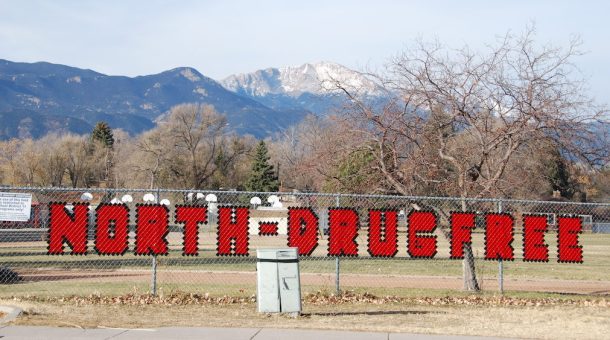
Editor’s note: Reporter Elizabeth Hewitt spent a week in Colorado earlier this month to look at lessons learned in the state that first opened legal recreational marijuana sales. Vermont lawmakers are expected to consider similar legislation in January.
[C]OLORADO SPRINGS — Before Colorado’s legalized, regulated marijuana system opened in January 2014, the Colorado Springs school system braced itself.
“We just really didn’t know what to expect, but we knew that there was a potential for increase in use,” said Devra Ashby, public information officer for the district.
Access to marijuana by young people was and remains one of the key concerns about legalization in Colorado. Now, nearly three years after sales began, surveys do not suggest the change of policy precipitated a significant uptick in youth use. But players on all sides agree that data is still too new to know what the long-term impact will be, and that normalization of pot could have significant effects for young people.
About 28,000 kids attend the more than 55 schools of Colorado Springs School District 11.
The district has seen an increase in the number of infractions at school relating to narcotics. In the 2013-2014 school year, there were 80 incidents. That increased almost 50 percent to 119 in the 2014-2015 school year and further to 129 during the last school year. The majority of those involved marijuana, Ashby said.
Vanessa Vatalaro, a counselor in the school district, said perceptions of marijuana among young people she works with were shifting before legalization occurred. She points to medical marijuana as the root of a belief among high school students that pot is “more of a holistic drug than a street drug.”
“Kids really just don’t think it’s a big deal,” she said, noting that some students she’s spoken with see cigarettes as worse.
Vatalaro said she hears concerns from parents or friends that students might be using marijuana. In those cases, she approaches students to offer resources for support and suggests reasons they should stop using, she said.
Legalization has made the conversation about marijuana with young people more challenging, she said, because in some cases the student’s parents use it.
“The biggest problem is that there are so many more adults from all walks of life that are openly using now that kids are growing up watching parents and other relatives get high,” Vatalaro said.
Vatalaro said there is a risk that if young people think of marijuana, alcohol and cigarettes as “no big deal,” they might look to harder drugs to rebel.
“I do believe that we are each entitled to our own choices,” Vatalaro said. “However, we don’t have to make everything so easy to access, especially drugs.”
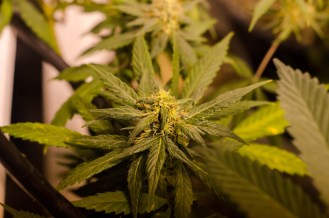
Teenagers are witnesses to a culture shift, she observed.
“Kids today will grow up with marijuana as a part of everyday life,” Vatalaro said. “In my opinion that is the biggest issue that legalization causes.”
The curriculum the school district uses to teach students about health and drugs has not changed notably since legalization, Ashby said. Marijuana use by those under age 21 in Colorado is still illegal, she noted, as it was before Amendment 64.
“We do talk about potential problems that student could encounter if they make unwise choices or the possibility of becoming addicted to any type of drug or substance,” she said.
Pot is not only discussed in health class. Amendment 64 features in classrooms as a lesson in civics and history, she said. “There’s a lot more robust conversation around the topic,” Ashby said.
“I’d say a majority of educators feel that it’s negatively impacting our state, our children simply because it’s opening up another substance, you know, for them to participate in,” Ashby said.
Cmdr. Sean Mandel, of the metro vice, narcotics and intelligence division of the Colorado Springs Police Department, said that since legalization, there has been a noticeable increase in the presence of marijuana in the city — even though, by municipal law, the community does not have any recreational retail outlets.

“I would definitely say that there is a lot more marijuana in our community,” Mandel said.
He said school resource officers report a definite shift among young people about pot.
“(Kids) say it clearly is a lot more accessible, a lot more prevalent,” Mandel said.
Dr. Larry Wolk, executive director and chief medical officer of the Colorado Department of Public Health and Environment, said during an interview in his Denver office that one of the primary concerns with legalization was that it would “normalize” marijuana, which would lead to high rates of use.
However, in a biennial survey of students completed in 2015, teenagers did not indicate they were using pot more than they did before legalization.
The Healthy Kids Colorado Survey, the equivalent of the Youth Risk Behavior Survey in Vermont, took responses from 16,967 high school and middle school kids in 2015 to questions about substance abuse.
The survey found that 38 percent of high school students said they had ever used pot, and 21 percent said they had done so in the last 30 days.
Wolk said that means 4 out of 5 students are not using marijuana. “That’s reassuring to us,” he said.
Over the last 10 years, the number of students who reported using within the past 30 days fluctuated between a high of 24.8 percent in 2009 and a low of 19.7 percent in 2013 — a margin the survey considered not to be significant. Colorado teenagers do report that marijuana is accessible.
“They acknowledge that they can access it at younger ages, and they acknowledge that they perceive it to be less risky,” Wolk said.
Wolk said public education efforts got off to a bumpy start in Colorado. The initial “Don’t be a lab rat” campaign the department launched emphasized the unknown impacts of marijuana and included TV ads and human-sized rat cages in public spaces in Denver.
That raised some issues, he said. For one, the cage invoked the imagery of incarceration. For another, the cages provided an attractive venue for tongue-in-cheek selfies.
The department launched a new campaign that Wolk said has been effective at reaching young people. It focuses on what young people may miss out on later in life if they start using marijuana at a young age.
“Youth don’t want to hear about how marijuana is bad for their developing brain,” Wolk said. “But they’re very sensitive to marijuana … getting in the way of what’s next.”

Meanwhile, Wolk cautioned about the impact that widespread acceptance of marijuana use could have on young people. “I still think we have to be vigilant with regard to the level of normalization that’s applied to this,” Wolk said.
He referenced a debate over allowing marijuana to be used more publicly. State law prohibits the consumption of pot in public places, including sidewalks, restaurants and bars.
Denver voters recently approved a measure that would let businesses such as restaurants allow marijuana use on the premises. Wolk and the department oppose efforts to loosen restrictions, he said, in part because increased public use could normalize that behavior for children who observe it.
Wolk said that just three years in, with only one set of data since legalization, it is difficult to discern any trends about how youth use of marijuana may shift in the long term. But for now, he said, there do not seem to be any fires.
“With the kids, they were illegally using before, but at least now you have a system in place that allows you then to collect taxes and use tax revenue to fund education programs and surveillance programs and regulatory programs,” Wolk said.
Dr. Sean LeNoue is an addiction psychiatry fellow at the University of Colorado who has been involved with the Substance Abuse Treatment, Education and Prevention Program in Denver. It provides mental health and substance abuse services to adolescents.
He said they see marijuana as a major factor for the young people involved with the program.
“It’s a very prevalent issue. We see it anecdotally, and we see it clearly in the diagnoses we’re treating,” LeNoue said.
According to Dr. Christian Thurstone, who heads the program, STEP doubled its capacity and its staff in 2012 and continues to have a waiting list. He reported that 95 percent of clients are referred to the program because of marijuana use.
LeNoue referenced a national survey by the federal Substance Abuse and Mental Health Services Administration — also cited by Rocky Mountain High Intensity Drug Trafficking — reporting that the number of Coloradans age 12 to 17 who said they had used marijuana in the last month increased 20 percent from 10.5 percent in the 2011-2012 survey period to 12.6 percent in the 2013-2014 period.
According to that survey, in 2013-2014, Colorado had the highest youth marijuana use rate in the country. Vermont ranked second.
(New federal data from SAMHSA published this week shows that in the 2014-2015 survey, use of marijuana among Colorado teens dropped. The survey found that 18.4 percent of 12 to 17 year olds reported use of pot in the last year, compared with 20.8 percent in the 2013-2014 survey. Those who used in the past month declined as well, from 12.6 percent in the 2013-2014 survey to 11.1 percent in the 2014-2015 survey.)
Some, including Wolk, argue the state’s data on youth use is more accurate, in part because the sample size is much larger than in the national survey.
LeNoue called for more of an effort to educate the public and young people about the impacts of marijuana use, and more investment in treatment programs. He also would like to see more restrictions on advertising to make products less appealing to young people. Laws already prohibit advertising targeting children, but LeNoue said the imagery used in ads now often seems to target young men.
“When we think about these developing brains, we know that exposure and continued use of marijuana in particular during this very critical time point can have profound effects,” LeNoue said.
Note: This story was updated Dec. 21, 2016 at 12:25 p.m. to include data from the 2014-2015 National Survey on Drug Use and Health.

