



[V]ermont regulators pressed FairPoint Communications on Thursday to explain why it repairs outages for businesses faster than for residential customers.
The Public Service Board and its staff asked the company to justify its request to eliminate a regulation that requires it to fix about two-thirds of phone outages within 24 hours.
The hearing was part of an ongoing case in which the company is arguing for less regulation and the Public Service Department, which advocates for utility ratepayers, will only agree to lower one regulation in exchange for tightening others.
FairPoint is asking regulators to judge them on how many landline phone troubles it can repair in 48 hours instead of 24 hours. Additionally, the company does not want to be measured based on how it repairs for businesses versus residential customers, according to testimony during the hearing.
The department has proposed allowing the company to lift the 24-hour restriction on some customers, but only if the number of phone lines that have to be fixed in 48 hours is substantially increased, and only if the company is subject to additional fines.
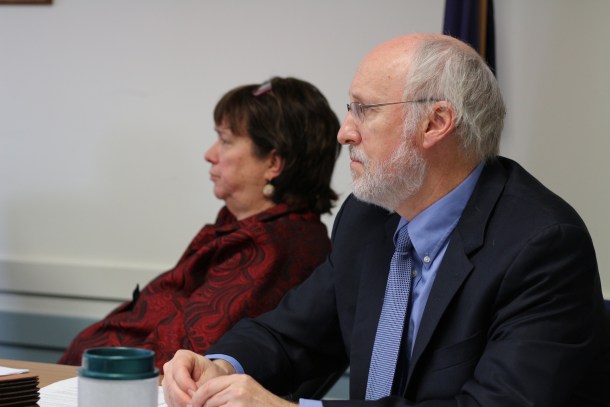
“One of the things that jumps out at me when I look at the (24-hour-repair metric) is that FairPoint has consistently been able to hit the business metric and consistently has had problems with the residential metric,” said John Gerhart, a staff member for the Public Service Board, at the Thursday hearing.
According to data submitted during the case, FairPoint has been able to repair troubles within 24 hours for between 89 percent and 93 percent of business customers with landlines — compared to between 45 percent and 75 percent of residential customers.

That follows the same trend that an expert for the Public Service Department testified to during the company’s original 2015 service quality investigation. The expert testified that “business customers are offered a higher priority than residential customers.”
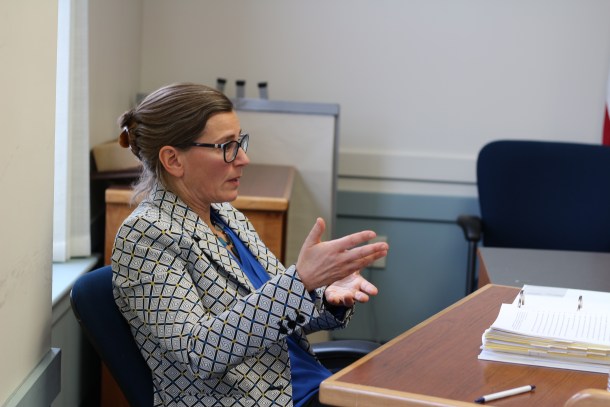
Beth Fastiggi, the state president for FairPoint, told the board that the company can reach a higher percentage of business customers because there are fewer of them. She said the bulk of customers are residential.
FairPoint had 84,459 residential customers and 51,574 business customers at the end of 2015. During a yearlong period that ended Sept. 30, FairPoint reported 15,522 troubles for residential customers, and 1,609 troubles for business customers.
“We have fewer business customers, so a smaller number is likely more easily manageable,” Fastiggi said. She also said the company has to look at “how we’re balancing that whole workforce” among business and residential phone customers and business and residential Internet customers.
Fastiggi said the residential customers do not always insist that their phone lines be repaired within 24 hours. She used the example of a customer who called in at 2 o’clock in the afternoon, and the company sending out a technician around 5 o’clock the next day.
“The customer says, ‘OK, thank you,’” Fastiggi said. “We send the technician out. They fix it at 4:30 in the afternoon. The customer was satisfied, but we missed that cleared in 24 (hours) objective.”
Sarah Hofmann, a member of the Public Service Board, also challenged FairPoint’s request to be judged using a blended rate of how many phone troubles it fixes for both residential and business customers combined.
“Isn’t it also somewhat masking when you just look at the total number, what’s happening to the residential customers?” Hoffman asked. “Business is getting the benefit, and you can kind of mask what’s happening to the residential customers.”
Fastiggi said the company wants to continue reporting separately the troubles it clears for residential customers and for businesses. She said the difference is the company wants to be regulated based on the blended number.
“It still gives the folks who are worried about those kinds of customers the ability to measure and see the trends,” Fastiggi said.
Hearings on the matter concluded Thursday, and the Public Service Board will decide on the case.

