

Editor’s note: This article by Matt Hongoltz-Hetling was first published in the Valley News on Nov. 23, 2016.
With the deep freeze of winter just starting to settle on the region, people everywhere — fuel dealers, social service organizations, firewood salesmen and consumers — are keeping one anxious eye on their thermometers, and the other on fuel prices as they try to figure out whether they’ll be among the season’s winners or losers.
The prices of fuel oil, propane, kerosene and diesel are all down, but because the upcoming winter is expected to be so much colder than last winter, residents are expected to spend much more on keeping their homes warm than they did last year, according to the latest monthly fuel price report from the Vermont Department of Public Service.
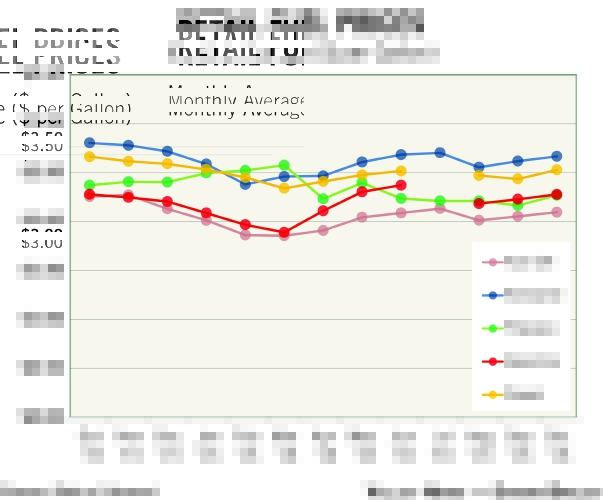
The report puts the October price of No. 2 fuel oil at $2.10 per gallon, down 7 percent from the same time last year. Propane is down 5 percent, to $2.27 per gallon.
“We’re about where we were last year,” said Matt Cota, executive director of the Vermont Fuel Dealers Association.
For consumers, steady fuel prices might still result in a big increase in home heating costs.
“Average household expenditures for heating oil, propane, and natural gas are 38 percent, 26 percent and 22 percent higher than last winter, respectively,” according to the state report, which noted that the expenses are expected to be in line with five- and 10-year averages.
Chris Goeppner, lead pastor at the Riverbank Church in White River Junction, said that the church winds up responding to requests from members for help with their heating bills every year.
It’s difficult to juggle that with other financial demands, he said.
Craig Skirvin, who fields those requests as the church’s care pastor, said he saw a decrease in those requests during last year’s warmer winter.
He’s not sure what to expect this year.
“We take them as they come in and help them as much as we can,” he said. “Usually they’re choosing between food and heating and they have kids. Other times, people have gotten sick and they lost their job and they’re out of work.”
Right now, the phones of fuel dealers are ringing off the hook, said Cota.
“Most of our guys are out straight. Our really busy season is October and November. When we get that first freeze and that first bitter cold, their systems are taxed,” Cota said.
Cota said last year’s unusually mild winter led to a lot of trickle-down effects on the region’s economy: ski areas suffered, municipal stockpiles of salt were only slightly depleted, plow drivers got less work and homeowners were able to spend their heating bill savings in other ways.
“It’s a good and a bad,” Cota said. “There’s a lot of different things happening.”
One good effect of the warmer weather and lower prices is that it lessened demand on the federal Low Income Home Energy Assistance Program.
As a result, Gov. Peter Shumlin announced earlier this month that the average benefit for the 21,500 low-income Vermont households who take advantage of the program will increase from $699 to $865 this year.
A total of $18.9 million in federal funds will go to the program in Vermont this year; in the more populous New Hampshire, a total of $25 million was awarded, and the average benefit is $645.
“Most Vermonters will get a higher fuel benefit this year because fuel prices have remained steady while caseloads have been going down,” said Agency of Human Services Secretary Hal Cohen, in the written announcement.
The Tri-County Community Action Program, which administers LIHEAP locally, is holding on-site outreach for fuel assistance on Dec. 6 and 27 at its Lebanon office on Mechanic Street. Those who would like to apply for the program are asked to call 603-968-3560 to schedule an appointment.
But Cota said that many homeowners entered this winter in a better position than in an average year, because last year’s winter left them with more oil or firewood in reserve.
And that’s bad news for fuel dealers.
“We’re in a volume business,” he said. “If you sell less volume, it’s more of a challenge to pay your mortgage, pay your truck loan, pay your employees. Our warmer winters are very difficult for our member organizations.”

Larry Sprague, who owns Sprague’s Firewood in Woodstock, said that, despite the stockpiles of last year’s wood he sees stacked in driveways, business is up this year.
“It’s been better than last year, but not as good as what I’m used to seeing,” Sprague said.
That’s because firewood, like oil, is subject to a wide range of factors. For one, Sprague said, he’s in competition with other home heating methods.
“I think oil prices being low hurts firewood guys,” he said.
Sprague says he sells between 500 and 700 cords a year, at a current price of $225 for green wood and $300 for seasoned.
Those who heat their homes with wood may be making out better than others, according to the state report. It finds that a cord of green wood, sold at an average price of $277 a cord, results in a final cost of $17.21 per million BTUs, a unit of heat measurement.
Though the report cautions that its price estimates are based on a small sample size, it found that wood is a cheaper alternative than natural gas ($17.67 per million BTUs), fuel oil ($18.85 per million BTUs), propane ($30.96 per million BTUs) and especially electricity ($43.46 per million BTUs).
Sprague said that, in addition to consumer demand and weather trends, his business is especially sensitive to the needs of the region’s pulp mills, which tend to determine both the availability and the price of wood from local loggers.
“The logging companies and the trucking companies have contracts with the pulp mill. That’s their primary goal, and we get what’s left over,” Sprague said. “And they want us to pay the same price as the pulp mill.”
Cota said that, while lower fuel prices leave some residents better-situated, there’s always a segment of purchasers who struggle to keep a full oil tank at any time of year.
“Some people pay as they go,” he said.
In the end, he said, those people wind up paying more for their heat, because a full oil tank discourages condensation, which can decrease efficiency, rust a tank and cause equipment to wear out more quickly.
While fuel costs continue to be a large part of the average New Englander’s budget, that’s less true than it once was, according to Cota.
He said warming regional temperatures, and increases in efficiency, technological advances and home weatherization efforts are all having a long-term impact on the industry.
“Forty years ago, the average New Hampshire home used 1,500 gallons of heating oil,” he said. “Now, we’re at 700 gallons per home. We fully expect that before too much longer, we’ll be at 500.”
He said many fuel dealers are responding to that trend by diversifying their services and shifting to a broader suite of home energy services, rather than simply selling oil.
