

[A] panel is recommending that the state reduce the amount of money it borrows for the next two-year capital budget cycle by 8 percent.
The Capital Debt Affordability Advisory Committee recommended last month that Vermont take on a maximum of $132.5 million in debt in the next biennial capital bill, which funds state infrastructure projects by issuing bonds — a reduction of almost $12 million from the current capital budget.
The capital bill predominantly funds infrastructure projects, such as repairs to state buildings, that are expected to have a lifetime of about 20 years.
The budget for the current and last fiscal years was $168.5 million, with $144 million coming from bonds.
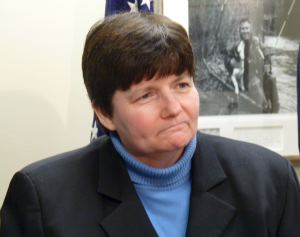
State Treasurer Beth Pearce likened the process of state bonding to spending money on a credit card.
“We think it’s time for the state to tighten up its credit card a little bit,” Pearce said Thursday.
The committee, Pearce said, is tasked with evaluating what is an affordable amount of debt for the state to take on. The Legislature has historically always passed capital budgets that bond within the committee’s recommendation, she said. Other members of the committee include Auditor Doug Hoffer and David Coates, a retired partner at KPMG.
While issuing bonds can be financially wise, she said, the practice must be managed responsibly.
“We need to recognize that it’s not a revenue source,” Pearce said. “It is a financing tool to leverage a revenue source.”
Pearce said the recommendation is based on what the committee believes will be best for the long-term financial security of the state.
Capping the amount Vermont bonds over the next two years will help to maintain the state’s bond rating, she said.
According to a September 30 letter from the committee, Vermont maintains bond ratings that are “the highest in the Northeast.”
In September 2015, Moody’s Investors Service and Fitch Ratings both rated Vermont at their highest levels. Standard & Poor’s recently reaffirmed Vermont at the second-highest rating, according to the letter.
Bond ratings are important for ensuring Vermont has access to the bond market, and a strong bond rating means the state must pay a lower interest rate when it borrows, Pearce said.
Ultimately, how well Vermont manages its bonding impacts all Vermonters, she said. It has an effect on everything from lowering the burden on Vermont taxpayers to spurring economic development, she argued.
Sen. Peg Flory, R-Rutland, who chairs the Senate Institutions Committee, one of two legislative panels charged with crafting the capital bill, said that legislators were told to expect the bonding recommendation to decrease.
“Not that I’m happy, but it’s not a huge surprise,” Flory said.
Flory said that the recommendation is likely to impact what she says is an increase in requests to fund IT (information technology) projects out of the capital bill, rather than other sources, in recent years.
Legislators “questioned the suitability of it being in the capital bill,” Flory said. As software rapidly evolves, there are concerns that IT projects may not have the lifespan of items typically funded by bonded dollars.
“Well, that’s not where the money is going to be in the next capital bill, I’m afraid,” Flory said.
Flory added that the state is still recovering from the damage left by Tropical Storm Irene in 2011. Projects including a lab for the Agencies of Agriculture and Natural Resources lab in Randolph and a fish hatchery in Rockingham have not yet been completed.

