

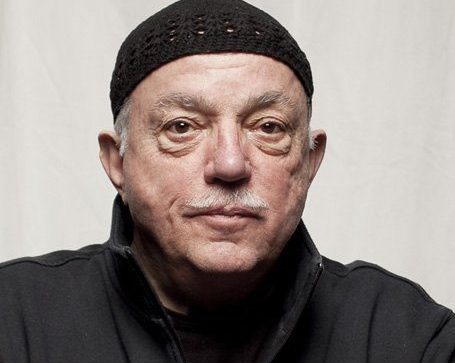
[D]uring what he called “this sweet first green of spring,” Vermont poet and playwright David Budbill spoke of falling into a different season.
“The major thing that I’m dealing with is my Parkinson’s disease,” he said in April in an interview posted on his website. “It has incapacitated me and made me incapable of all the things I used to love to do.”
Then Budbill thought for a moment.
“Now that’s not entirely true,” he amended. “I was able to finish a novel and a short story and a collection of poems …”
All of which the Wolcott writer was preparing to publish before his death of progressive supranuclear palsy Sunday at age 76.
Born June 13, 1940, in Cleveland to a streetcar driver and a minister’s daughter, Budbill went on to become a high school track star, a New York City seminary student, a teacher at a historically black Pennsylvania college and, in the late 1960s, a “back-to-the-land” Vermonter.
Budbill built his own house, worked on a Christmas tree farm, played myriad musical instruments and cut his own wood and weeds from a vegetable garden, all while writing 10 books of poems, seven plays, two novels, two children’s books, a collection of short stories and the libretto for an opera.
Budbill performed his work — most notably “Judevine,” a stage version of his narrative poems about the heart and hardship of northern Vermont life — everywhere from small-town schools and prisons to big-city performance spaces in two dozen states.
As he noted in one: “What seems real one moment is fiction the next/and gone out of existence the moment after that./Nostalgia is the greatest enemy of truth,/and change our only constancy.”
Garrison Keillor, for his part, has read nearly three dozen of Budbill’s poems on his national public radio program “The Writer’s Almanac.”
Several of the author’s last works are set to be published posthumously, including the novel “Broken Wing,” coming in November from Vermont’s Green Writers Press, and his poetry collection “Tumbling Toward the End,” coming in February from Copper Canyon Press.
Budbill died in the presence of his wife of 50 years, Lois Eby, and their daughter, Nadine. He is also survived by a granddaughter, other relatives and in-laws, “many good friends and readers of his work, his work itself, and the woods where he loved to be,” his obituary says.
Budbill’s family will scatter his ashes amid his favorite white pines around his Wolcott home of 45 years. A celebration of his life and work will be announced next year.
The April interview posted on the author’s website ends with a friend sharing “one of your loveliest recent poems”: “Pare everything down to almost nothing/then cut the rest,/and you’ve got/the poem/I’m trying to write.”
“That’s beautiful,” the friend told Budbill, “and maybe you’ve finally written that poem.”
“I guess so,” the author concluded.
