

[F]or the third year in a row, health care reform companies in Vermont did not earn incentive payments that the federal government offers them to save money when they treat Medicare patients.
The companies are called accountable care organizations, or ACOs. They represent groups of doctors and health care systems that, while they may work for separate companies, are legally allowed to come together under the ACO to coordinate patient care without violating antitrust laws.
Nationally, more than 400 ACOs participate in the program, and they saved a cumulative $466 million in 2015. Nationally, 125 saved enough money to get the incentive payments, and another 83 saved some money but not enough to get the incentive payments.
Vermont’s two major ACOs — OneCare Vermont and Community Health Accountable Care — did not save money for the Medicare program in 2015 as part of the Medicare Shared Savings Program run by the U.S. Centers for Medicare and Medicaid Services.
The 2015 data represents the third year in a row since the program started that Vermont’s major ACOs were not able to earn incentive payments. Both major ACOs saved money in 2013, but not enough to earn incentive payments. They were also unsuccessful achieving savings in 2014.
Community Health Accountable Care, or CHAC, includes all of Vermont’s community health centers and a handful of small hospitals. It represented 6,600 Medicare patients in 2015. The organization’s target spending was $52.5 million, but it spent $56.7 million, an overage of 7.8 percent. However, the amount spent per Medicare patient was just $8,585, well below what other ACOs spent
Kate Simmons, the spokesperson for Community Health Accountable Care, said even though the organization didn’t save money, it provided high-quality care. “Our high quality score is a testament to CHAC’s vision of better care for individuals and better health for populations,” she said. “We will continue to work hard on initiatives and collaborations that will improve the quality of health for the people we serve.”
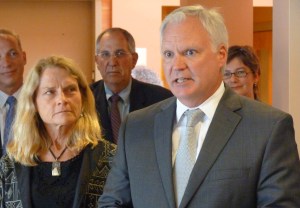
Todd Moore, the chief executive officer of OneCare, said it has historically been difficult to save money on Medicare patients because the doctors in his organization spend so little money on the patients to begin with. The Medicare savings can only be achieved if OneCare saves money based on the previous spending rate for Medicare patients.
OneCare was founded by the UVM Medical Center and Dartmouth-Hitchcock Medical Center and is now led by UVM Medical Center. It includes most of Vermont’s large hospitals.
Dartmouth-Hitchcock withdrew from another ACO program nearly a year ago, according to a report from The Dartmouth, a student newspaper. The New York Times reported Sunday on the hospital’s withdrawal from the Pioneer ACO because of inadequate cost savings.
In 2015, according to the Medicare Shared Savings results, OneCare represented 55,800 Medicare patients. The organization’s spending target was $484.9 million, but it spent $511.8 million, an overage of 5.6 percent.
However, each Medicare patient treated through OneCare cost an average of just $9,166. Accountable care organizations across the country — including ones that got incentive payments for saving money — spent an average of $10,299 on each Medicare patient.
Moore said both OneCare and CHAC provide some of the highest-quality care in the country at some of the lowest costs. The two are on track to merge into one company, called the Vermont Care Organization, so there will be only one ACO in Vermont to get payments through the proposed all-payer model.
Moore said he looks forward to the all-payer model. The model would give OneCare monthly payments for treating Medicare patients starting in 2018 that would increase by at least 3.5 percent every year.
The base amount would likely be higher than the amounts that have been planned for the past three years under the Medicare Shared Savings program. If OneCare can treat patients cheaper than that higher amount, it will be able to keep the additional Medicare money. If the doctors can’t treat the patients for a lower amount of money, the organization would not get additional money.
“Three years in a row we haven’t managed to beat the national rate of growth, and part of all-payer model is going to peg us into living within the national rate of growth in a real way,” Moore said.
He said the doctors within OneCare are ready to take on the risk to live within the national rate of growth in Medicare spending.
Correction: Dartmouth left the Pioneer ACO in 2015, not OneCare, as originally reported.
