


[C]OLCHESTER — Independent doctors are fighting an uphill battle as they try to compete with two of the state’s largest hospitals.
Doctors have been seeking state approval for the Green Mountain Surgical Center for more than a year without success. That’s because the independent physician group is deadlocked in a regulatory battle with the Vermont Association of Hospitals and Health Systems and Northwestern Medical Center in St. Albans. The association and the hospital say the center would have “a direct negative impact” on the health care system.
The Colchester facility would offer basic surgeries and other procedures, such as knee surgeries, shoulder surgeries, hysterectomies, certain pelvic exams, colonoscopies and treatments for spinal pain.
Investors in the project say it would reduce wait times and save money for patients in the Burlington area. Numerous businesses and community organizations have written letters supporting the proposed surgical center.
The projected savings are based on lower fees for surgical services. Independent doctors charge insurance companies less than academic medical centers for the same medical services. Independent doctors also do not bill for “facility fees,” unlike academic medical centers and community hospitals.
Northwestern in St. Albans and the Vermont Association of Hospitals and Health Systems, which represents Vermont’s 14 hospitals, including the University of Vermont Medical Center, oppose the surgical center.
The hospital association has written in regulatory documents that the proposed project is an “unregulated ambulatory surgery center without any obligations to the Vermont community” that would have a “direct negative impact” on hospital finances, access to health services, health care costs and health care reform.
“Ambulatory surgery centers are only equipped to provide straightforward procedures to uncomplicated patients, and they usually focus on those services that turn a profit,” said Jill Olson, the vice president of policy for the hospital association.
“They would not offer critical medical services such as emergency care or mental health services,” she said. “Duplicating infrastructure and services that already exist will increase the total cost of the health care system for everyone.”
At the request of the hospital association’s lawyers, the investor group has submitted an analysis of how much business they would take over from neighboring hospitals and an extensive list of billing codes for the procedures that will be performed.
The investors said in regulatory filings they would take 14 percent of patient surgeries from the University of Vermont Medical Center and 3 percent from Northwestern Medical Center. The investors hope to get a permit by December and open in 2018.
Dr. Paul Reiss, an independent family doctor who supports the facility, said the hospitals “are definitely being anticompetitive.” He said the independent surgical center threatens to take away cash flow from hospitals, even though the doctors involved don’t stand to make a lot of money.
“One of the main reasons that there are physicians looking forward to this is that these centers have the ability to turn over their procedure and operating rooms very quickly and very safely, whereas often times in hospitals physicians have to sit and wait and twiddle their thumbs while they wait for the operating room,” Reiss said.
“It’s anybody’s guess what the Green Mountain Care Board will do with this,” he said. “It really is very surprising that the Green Mountain Care Board hasn’t expedited this process because this is an unmistakable and easy solution to one section of our health care budget that we’re paying much too much for.”
Jeffrey Tieman, the new CEO of the hospital association, said in a statement that the association’s concerns are about whether there is a need for the new facility.
“Our examination of capacity data at five hospitals in the area shows that there is more than adequate capacity today, and we expect that information to be part of our presentation to the Green Mountain Care Board as they debate whether this project would be in the public good,” Tieman said.
Doctors seek protection from retaliation
Amy Cooper, the executive director of HealthFirst, is one of the primary investors in the Green Mountain Surgical Center. She and Tom Dowhan, who owns the only other ambulatory surgery center in the state, an eye surgery center in South Burlington, are the only two people named publicly for their role in the surgical center.
The group of doctors investing in the project are referred to as “Physicians A-P” in public regulatory documents. They are largely represented through Cooper and their lawyers, who have fought for the doctors’ confidentiality in regulatory proceedings.
In the request for confidentiality, the group’s lawyer wrote: “The physicians are concerned that if their identities and surgery volumes are made public, they could be targeted for retaliation, lose privileges, or otherwise see their patient base eroded through anti-competitive behaviors.”
In addition to the promised confidentiality, the investors are protected by the name of the company representing the doctors on the application — ACTD LLC — which appears to be a limited liability company named using the initials of Cooper and Dowhan.
Cooper said in an interview that the doctors are not willing to talk to the news media, and she said the confidentiality measures are a “standard procedure in surgical center applications across all states because of the tension between hospitals and physicians who often plan these.”
“Those surgeons right now operate at the various hospitals in the state that have publicly stated that are opposed to the opening of this center,” she said. “They wouldn’t want their current places where they (rent operating rooms) to know that they’re interested in operating at a surgery center because it might create poor relations.”
That’s what Dr. Christine Murray says happened to her in late 2014, when she and a group of fertility doctors left the UVM Medical Center to open a new clinic in Colchester. The idea was to offer the same in-vitro fertilization service that they offered at the hospital, she said, but at lower prices for their patients, who often pay cash.
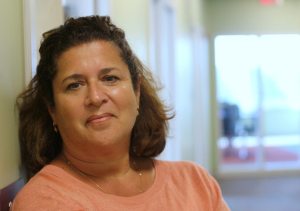
Within 10 days of opening, according to Murray, UVM Medical Center filed suit against the owners of the clinic for allegedly violating their employment contracts and looking at patient records that still belonged to UVM Medical Center. The attorney for the hospital was Eric Miller, who at the time sat on the hospital’s board of directors and is now the U.S. Attorney.
“We were pretty petrified because we had loans, and it’s just scary to be thrown a lawsuit like that,” Murray said. While the lawsuit was ongoing, the UVM Medical Center started referring fertility patients to Dartmouth-Hitchcock Medical Center in New Hampshire, according to WCAX-TV.
She said she and her business partner met with one of the top doctors still at UVM Medical Center to explore collaboration. “But somehow when it got to the level with the administration it just became very antagonistic and unpleasant,” she said. “It could’ve been great. It could’ve been great for the patients, it could’ve been great for the residents and the fellows.”
Murray said UVM Medical Center based its case on a complaint from a patient, who she said turned out not to exist. Murray said she and her business partner spent at least $70,000 on legal fees to defend themselves. Records from the Vermont Superior Court show the dispute ended in a settlement after four months of legal wrangling.
“It was a real nightmare for awhile,” Murray said. “Neither one of us were sleeping or eating well. It was awful. And to this day I don’t understand why they would do that to us. We were really important parts of that community there and we wanted to stay that way. But if you don’t play on their terms, it can be really devastating.”
Mike Noble, the spokesperson for the UVM Health Network, said: “What I can say is we have a legal obligation to protect patient confidentiality, which was at issue in this matter. There is no factual basis for the claim that the suit was retaliatory.”
Murray said she would likely use procedure rooms in the proposed ambulatory surgery center. Right now, she said she often has to book time in the UVM Medical Center’s operating rooms during one of the worst times in the week — on Thursday mornings, when medical residents are not available to be assistants.
“I have no issue with the hospital except I just don’t know why they can’t just be a hospital and focus on the things that a hospital should be doing,” Murray said. “Why do they have to have everything under their wing? I don’t understand that.”
Competition with UVM Medical Center
The UVM Medical Center got involved in the ambulatory surgical center case on July 29. The hospital does not have official party status, but it sent a letter to the Green Mountain Care Board to clear up what it called “inaccuracies” in ACTD LLC’s responses to questions from the hospital association.
In the letter, Diana Scalise, the vice president of strategic and business planning for the UVM Health Network, refuted comments from ACTD LLC that the investors were “still in the process of exploring what forms a collaboration (with UVM Medical Center) might take” and working with the hospital on an “ongoing” basis.
“UVM Medical Center is not engaged in any active discussions with ACTD LLC regarding joint venture opportunities or joint purchasing arrangements, both of which would raise legal concerns that would need to be carefully analyzed” based on the hospital’s nonprofit status, Scalise wrote.
“As a 501(c)(3) tax-exempt organization, any joint ventures we engage in must be in furtherance of UVM Medical Center’s charitable purpose, and any patient care joint ventures we enter into must adopt UVM Medical Center’s charity care policy,” the network wrote. “That may be difficult if the other party to the joint venture is a for-profit provider like ACTD LLC.”
The hospital’s parent health system received regulatory approval on Sept. 1 to own up to 25 percent of a for-profit drug-testing lab in Burlington. In a letter to regulators, a lawyer argued for the hospital system’s involvement because Burlington Labs was vital to the communities it serves in Chittenden Country.
Scalise also wrote that the hospital wants to update its own surgical rooms at the Fanny Allen campus in Colchester, and that the location ACTD LLC chose is a poor choice for a new surgical center. The hospital has not filed an application with the Green Mountain Care Board to update those facilities.
“ACTD LLC did not appear to believe that a collaborative approach based on UVM Medical Center’s current capacity and future plans for the replacement of its (operating room) facilities at Fanny Allen to be a potential way to address the needs they purport in their (certificate of need) application,” Scalise wrote.
Noble said of the hospital’s involvement: “We needed to clarify what we found to be inaccuracies in their (permit) filings. The letter speaks for itself regarding the details. Although we aren’t a party to this regulatory proceeding, if inaccurate statements are made about us, we’ll correct the record.”
Cooper contests that ambulatory surgical centers in other states routinely collaborate with nonprofit hospitals, and says her company brought a business expert with them to meet with UVM Medical Center about a possible arrangement between the LLC and the 501(c)(3). “It’s certainly still a possibility in our view,” she said.
She also rejects the idea that she’s in it for the money. “We are going to be a locally owned and locally operated small business that is going to provide a much-needed service to Vermonters,” Cooper said.
The business model, she said, would be “just like our local newspapers, our local dentists, our local grocery stores are all locally owned, for-profit small businesses, that are providing a much-needed service to Vermonters.”
