

SOUTH BURLINGTON — Many drug treatment programs in Vermont don’t routinely screen participants for the increasingly common, and sometimes deadly, synthetic opioid fentanyl, according to doctors and public officials.
People receiving methadone or buprenorphine to help reduce their opiate dependency are screened upon entry into treatment programs and periodically once they’ve started. Those tests, conducted on urine samples, are to ensure people are taking prescribed medication and abstaining from illegal drugs, as required by the programs.
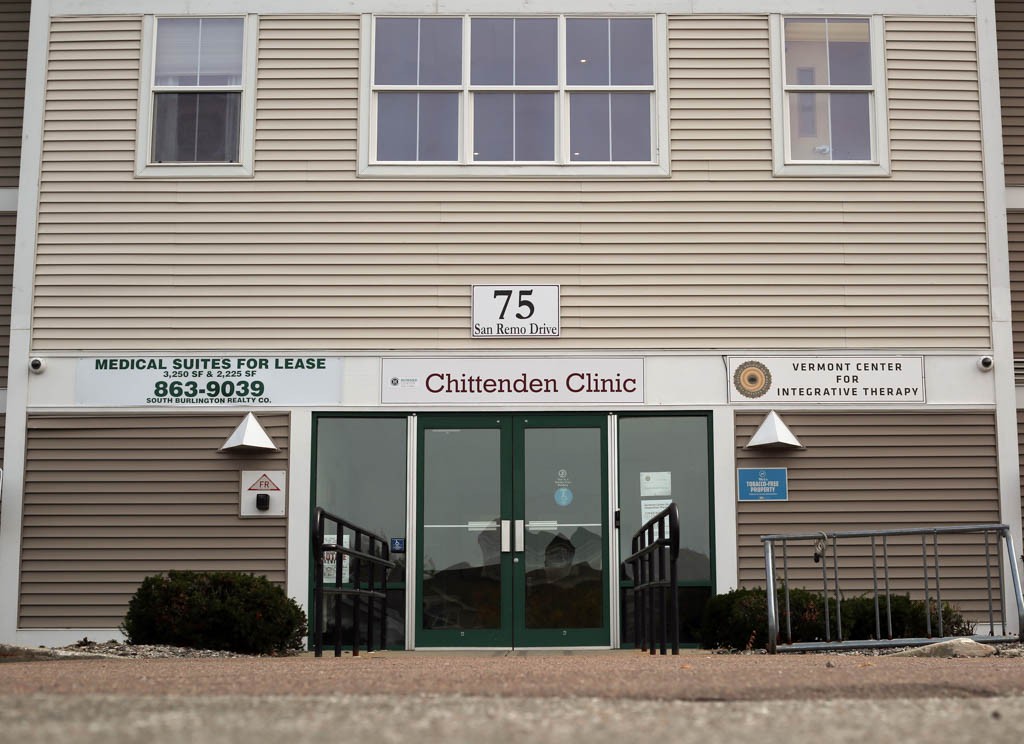
At state-supported treatment hubs like the Chittenden Clinic in South Burlington, the initial and subsequent random urine screens are not able to detect fentanyl. That’s potentially problematic, according to its medical director, Dr. John Brooklyn.
“If you’re not testing for fentanyl, you’re missing out on a possibly significant number of people who may still be using,” Brooklyn said.
Fentanyl is a growing public health threat, because it can be 50 to 100 times stronger than morphine. The drug is often added to heroin, but it’s also increasingly being sold on its own as heroin or as counterfeit prescription painkillers, according to law enforcement.
It’s used pharmaceutically to treat severe or chronic pain, and while the lozenges and patches prescribed by doctors are sometimes diverted for illicit use, the vast majority of fentanyl consumed by drug users is produced illegally, according to the Drug Enforcement Administration.
“Up until this point fentanyl hasn’t been an issue for us, but what’s been happening in New England and around the country is that fentanyl use has been skyrocketing,” Brooklyn said.

The increased presence of fentanyl is driving a surge in overdoses nationwide. A June DEA report said that fentanyl overdoses increased 79 percent from 2014 to 2015, and are likely underreported because not all medical examiner’s toxicology reports screen for fentanyl.
In Vermont, 14 of the 44 opiate overdose deaths in the state as of June involved fentanyl, according to health department figures.
The scourge is especially bad in the eastern U.S. where white powder heroin is the most common form of the street drug, because “fentanyl is most commonly mixed with white powder heroin or is sold disguised as white powder heroin,” according to the DEA report.
Routine testing for fentanyl in drug treatment programs could help Vermont collect valuable data and further ensure the integrity of programs designed to help users get clean, Brooklyn said.
“They want coroners and medical examiners to test for fentanyl, but that’s way after the fact. I’d like to avoid getting to that point,” Brooklyn said, referring to recent guidance from the federal Centers for Disease Control and prevention.
“Coming at this from a public health perspective, why would you not be testing for a dangerous drug that’s becoming increasingly common?” Brooklyn asked.
The problem is that, currently, in order to test urine samples for fentanyl, they need to be sent to a more sophisticated laboratory than the one at the Chittenden Clinic. Other hubs don’t even have their own labs and already send samples out to companies like Dominion Diagnostics and the embattled Burlington Labs, which have the ability to test for fentanyl.
Deputy Health Commissioner Barbara Cimaglio said that while fentanyl is a burgeoning public health threat, it’s not clear to her that testing every urine sample collected by treatment hubs for fentanyl would be a cost effective and clinically sound practice.

As an example, she said that physicians and counselors may find it unnecessary to test a longtime patient with a solid track record of compliance, but they might want to screen newer patients for fentanyl if they’ve missed appointments or are showing other signs of continued drug use.
The Health Department currently offers no official guidance to treatment programs on whether or not to test for fentanyl or how often, Cimaglio said.
But there’s nothing preventing treatment hubs that would like to routinely test for fentanyl from doing that, Cimaglio said. Medicaid, the low-income health care program, will reimburse for up to eight urine samples per patient per month to be tested at labs that can detect fentanyl.
However, Brooklyn said that Medicaid doesn’t cover the full cost of sending urine tests to outside labs, and so regularly testing for fentanyl would be too costly for the Chittenden Clinic.
Addiction medicine doctors employed by the University of Vermont Health Network also don’t regularly test for fentanyl, a spokesman said.
“The provider has to specifically want to know about fentanyl and then order it as a separate test,” said UVM Health Network spokesman Mike Noble, in an email, adding that the hospital system currently has no plans to start routine fentanyl testing.
Dr. Deb Richter, an addiction medicine doctor in central Vermont, said that one of the two treatment clinics where she works routinely tests for fentanyl but the other does not.
“Anything you add to that panel (of drugs screened in a urine test) costs more,” she said.
Anecdotally, it’s not all that common for her patients at the clinic that does regularly screen for fentanyl to test positive for the substance, Richter said. Fentanyl showing up in a urine sample is random and unpredictable, because users rarely know what’s in the drugs they’re taking.
“Sometimes a patient will come in and say they shot cocaine over the weekend, and then test positive for heroin and swear up and down that they didn’t use any heroin,” she said.
In such cases, it’s likely the person didn’t realize the drugs they bought were cut with another substance, Richter said. Cimaglio and Brooklyn attest to the fact that people buying drugs off the street have little certainty about what they’re getting.
The Health Department is currently developing strategies to respond to the emerging threat of fentanyl, Cimaglio said. Beyond its campaign to make the overdose reversal drug naloxone widely available, the department is looking at how to best track the presence of fentanyl in the illicit drug supply, but she’s not convinced that routine testing at treatment programs is the best way to do that.
“We’re really still in the process of looking at all the facts and the options available,” she said.
Cimaglio said it might make more sense to try and collect urine samples at low barrier clinics like Safe Recovery, the Burlington needle exchange, and other similar operations, because that would be a window into what drugs are circulating on the street.
The department is also considering whether it would be possible to set up a program where people can send the Health Department specimens of drugs they’re using to be lab tested, she said. That way people would at least know what they’re consuming, which could reduce the likelihood of overdose.
Cimaglio said she’s not sure if such programs exist elsewhere in the U.S. currently, but said that in the 1960s there were ways users could have their drugs tested to promote safe consumption.
Brooklyn said he believes it would make sense to implement routine fentanyl testing at the Chittenden Clinic. That’s because he’s concerned that desperate users might find a way to game the system if they know they’re not being tested for fentanyl.
He said colleagues from around New England have told him that they were shocked at its prevalence in patients when they began regular fentanyl testing, even among people whom they had long assumed were clean. Brooklyn said there’s no way to know whether that’s the case at his clinic without widespread testing.
He plans to order close to 100 fentanyl dip tests, which his lab isn’t approved to use in any official capacity for its treatment program, but which he hopes will give him some insight into whether patients who appear to be in compliance with the program are actually using fentanyl.
“If we test 100 and come up with nothing, great. It’s not a problem,” Brooklyn said, “But if we test 100 and find 5, 10, 15 test positive then we’ll realize many of our patients are still using.”
