


[F]ormer Wall Street executive Bruce Lisman sharpened his criticism of fellow Republican gubernatorial candidate Phil Scott as the two went toe-to-toe Monday night in a lively televised debate.
Lisman went after Scott beginning with the opening statement, questioning the lieutenant governor’s ethics and policy positions and criticizing him for not taking a strong stand on some issues.
Scott fought back and spent much of the hourlong debate defending himself. He charged that Lisman had misinterpreted his statements, was running a negative campaign and had taken the “low road.”
Lisman, his answers more clearly polished after months on the trail, rarely moved and looked directly into the camera throughout. Scott literally bobbed and weaved as he delivered many of his responses and spent a lot of his allotted time shooting down Lisman’s claims and explaining previous comments.
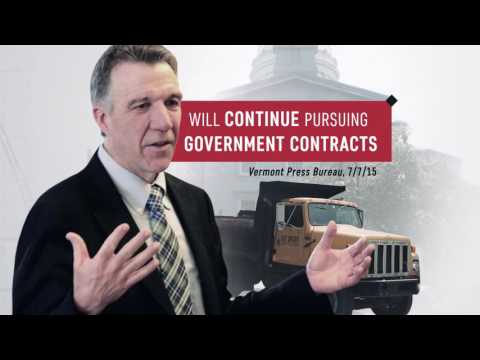
For example, Lisman criticized Scott’s plan to put his ownership stake in DuBois Construction into a “blind trust” if elected. The company has won numerous state contracts over the years. Lisman said most states prohibit any state business being done with a company owned by the chief executive. Scott labeled Lisman’s television ad on the issue, released Monday, “false and deceitful,” “not the Vermont way” and part of a pattern.
“I think Bruce has chosen the low road, the very low road. I think it’s politics as usual,” Scott said during the Republican primary debate on Vermont PBS. “He casts himself as an outsider, not the usual politician. He sure is acting like one of those typical D.C. politicians where anything goes and you have to tear down your opponent in order to make yourself look better.”
The lieutenant governor said he took “great exception” to Lisman’s assaults on his reputation and character.
Lisman said he was running a “campaign of real contrasts” and criticized the media for failing to raise the right questions or highlight Scott’s positions.
“Call me naive,” Lisman said. He said he thought the media would highlight Scott’s positions and their contrasts but instead, Lisman said, the presidential campaign of Sen. Bernie Sanders had taken much of the media’s attention.
He ticked off a series of claims, including that Scott had praised Democratic Gov. Peter Shumlin’s fiscal skills and said a single-payer health care system might work. He also maintained that Scott supported a new mileage tax on automobiles.
Scott said all of those comments were either inaccurate or had been taken out of context.
But Scott had to defend and explain himself several times, including his position on how automobiles should be taxed to pay for road maintenance. Scott said the country would inevitably move away from a tax on gasoline consumption to a system where people would pay based on mileage. But he said he would never support the proposal in Vermont unless it were part of a national effort.
Lisman also accused Scott of weak leadership, saying that after 16 years in public office Scott stood for little.
“I don’t believe he has strong convictions,” Lisman said at one point.
Scott stuck close to oft-repeated themes of making Vermont more affordable, growing the population to make public services more cost-effective and expanding the economy. He spoke frequently of building consensus.
Lisman was able to mention a scholarship program he set up at the University of Vermont and his tenure as UVM board chair during a question on college affordability. Scott did not mention charitable work he has done, including the Wheels for Warmth program that has helped many low-income Vermonters buy tires affordably and kept tires from being disposed of improperly.
When a viewer asked the candidates to pick two counties they would target for economic help, Lisman listed Windham and Bennington counties and discussed some of the specific businesses located there. Scott said the focus should be on lifting up the entire state and that he would not select any two counties in particular.
One area where they appeared to have a major policy difference was refugee resettlement, with Scott sounding more welcoming while Lisman said absolutely not unless the federal government develops a better screening program to weed out possible terrorists.
They largely agreed on how to handle the state budget, with both saying the rate of growth had to be reduced and kept in line with the growth in the economy.
Lisman said he would find savings with an audit of Medicaid, dropping Vermont Health Connect and moving to the federal exchange. Scott said Medicaid administration costs had gone from $30 million to $130 million a year and that efficiencies could be found elsewhere in state government. They argued over auditing Medicaid, with Lisman saying a review needed to be done while Scott said previous audits had been ignored.
Asked how they would deal with a Legislature largely dominated by Democrats, Scott said he would find common ground — “everyone has to be on board, pulling in the same direction” — while Lisman said the “shock” of his election would send the message “the people have spoken,” that lawmakers were out of touch and should support his proposals.
The two face off in the Aug. 9 primary.
Video of Monday’s debate on Vermont PBS is available here.
The candidates in the Democratic gubernatorial primary will debate Tuesday on Vermont PBS at 8 p.m.
