

[B]URLINGTON — Getting into an ambulance in the Queen City just got more expensive as the City Council approved higher fees for its ambulance services.
It’s the first time since 2012 that Burlington has adjusted its rates for ambulance services. The increase is needed to keep pace with the rising cost of medical supplies and other necessities and will help “offset other costs within the department,” according to newly appointed Fire Chief Steven Locke.
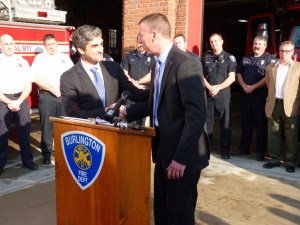
Locke said he also hopes the higher fees will help Burlington reduce its reliance on assistance from other towns or private ambulance services, such as UVM Rescue. The fees will help pay for more staff and possibly an additional ambulance.
“We’re seeing a pretty heavy increase in call volume to the point where we see a mutual aid ambulance in the city almost every day,” Locke said.
For basic life support services, the fee increased to $575, from $500. For the two-tiered advanced life support services, the lower tier — meaning fewer lifesaving interventions — increased to $625, from $590. The fee for the top tier of advanced life support services went from $625 to $775.
The mileage rate increased from $13 to $14.
Locke said in a memo to city councilors that the new fee schedule is comparable to those for other area municipal ambulance services.
That appears to be roughly the case, with some nearby communities such as South Burlington and Essex charging lower rates and others, such as Williston and Colchester, charging more.
For instance, the fee for basic life support services is $425 in South Burlington and $525 in Essex, while in Williston it’s $625 and in Colchester it’s $770, according to the towns and a survey put together by Williston Fire and Rescue, which is also considering increases in the upcoming fiscal year.
The Burlington Fire Department generates the lion’s share of its revenue from ambulance services, roughly $1.1 million of the $1.5 million the department brought in during the last fiscal year, according to Locke. The other income is from fire prevention services. The department’s annual budget is close to $10 million, he said, and is covered by the city.
Predicting how much more the fee increases will bring in is difficult, Locke said, and he declined to hazard a guess.
One factor complicating such an estimate is a new state tax on ambulance service revenue that took effect July 1, which could turn out to be a blessing for Burlington.
The 3.3 percent tax is expected to bring in more than $1 million statewide. That money will be matched by the feds and used to double what Medicaid, the low-income government health care program, pays for ambulance services.
Previously, Medicaid paid far less than what Burlington and other emergency service providers charged for ambulances services, and the higher Medicaid reimbursements are expected to more than offset what Burlington will pay in tax. Right now, Burlington collects roughly 75 percent of what it charges people for ambulance services, according to Locke, a figure that includes the underpayments from Medicaid.
Another factor that could increase ambulance revenue for Burlington is the expansion of its paramedic program. The department currently has six trained paramedics who are able to provide more advanced lifesaving techniques en route to the hospital.
Locke said three more emergency responders will start paramedic training in late August and the department will reach its goal of nine paramedics when they graduate a year later. That level of staffing will allow one paramedic in each ambulance.
That means residents will get better acute care in the ambulance, but it also means Burlington will be able to bill more patients at the higher advanced life support rates.
