

The state’s health care regulators are preparing to oversee accountable care organizations, the new entities started under the Affordable Care Act that will determine the future of health care in Vermont.
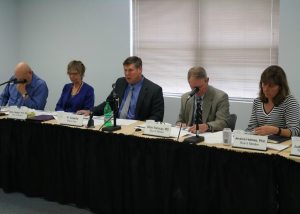
The Green Mountain Care Board currently has two main duties: to set the rates insurers charge for Vermont Health Connect insurance plans and to approve hospital budgets. Setting regulations for the new entities, called ACOs for short, has just begun.
The board is dedicating a portion of its weekly meetings to figuring out how they will regulate the ACOs. The rules are required under a new state law, Act 113, which the Legislature passed as a way to make sure consumers are protected as these new entities grow.
An ACO is a group of doctors that legally join together and agree to be held financially accountable for the quality of care they provide to patients. Three of them started in Vermont in 2014, and they have received extra payments from Medicaid as a reward for spending less money on health care than they would have without the ACO.
In the very near future, the administrative arm of the ACO will serve as an intermediary between doctors and insurance companies—the ACO will receive monthly payments from insurance companies and then pay doctors based on the quality of the care they’re delivering, rather than for each individual procedure they perform.
OneCare Vermont, owned by UVM Medical Center and Dartmouth-Hitchcock Medical Center, is on track to become the only ACO in the state that will be able to receive Medicare payments on behalf of doctors. OneCare has received a special designation from the federal government to do so. The other two ACO’s operating in Vermont have not.
The Shumlin administration is also deciding between two ACOs that have applied for a contract to be able to get these types of monthly payments for treating patients from the state’s Medicaid program. If the state selects an ACO, which many expect will be OneCare, the contract for this type of payment reform would start Jan. 1.
Additionally, the all-payer model that the Shumlin administration has been negotiating for more than a year is based on being able to use a single ACO in the entire state to handle payments from Medicare, Medicaid, and commercial insurance companies by the beginning of 2018.
The state submitted a “best and final offer” in those negotiations in April.
Al Gobeille, the chair of the Green Mountain Care Board, said the state has received an informal response on the offer but he cannot disclose what it is to the media.
The federal government declined to comment on the status of the deal, saying negotiations are ongoing. The governor’s spokesperson concurred: “Things are ongoing.”
“There’ll be ACOs, large ACOs, in the state whether we have an all-payer model or not, and this regulation will be necessary,” Gobeille said in an interview. “That’s why we really got into the minutiae (of Act 113) today—because the board has to understand that this has to be done by 2018, by the law.”
Gobeille instructed the board Thursday to continue figuring out how to regulate ACOs, but keep in mind that two different scenarios could evolve. He said either the board would need to make sure consumers are protected within the all-payer system, or, if they don’t get the greenlight from the federal government on that approach, they will need to regulate organizations like OneCare.
“If for some reason the all-payer model doesn’t happen, we still have (the designation that OneCare has), so you need to be able to envision a world where we have an all-payer model, or where we have the need to certify ACOs because” their doctors represent a lot of Medicare patients, Gobeille said.
Paul Harrington, from the Vermont Medical Society, told the Green Mountain Care Board on Thursday that it should continue discussing how to oversee these new entities, and not be afraid to have conversations about which regulations will overlap with the Department of Financial Regulation.
Harrington said those conversations about overlap are inevitable—because the board is going from working with ACOs “on a partnership basis” toward being an entity that regulates those entities.
“You’re going to start looking like DFR here,” he said.
