

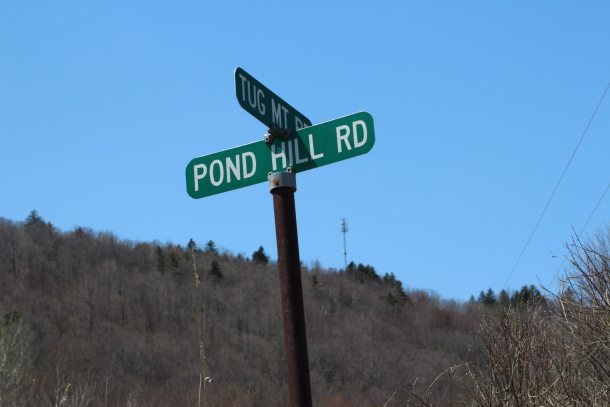
[L]UNENBURG — It looks like the middle of nowhere up here. But there’s a broadband signal on the main drag through town, and if you head about five miles up a dirt road you’ll see why.
At the top of Tug Mountain Road, next to a red-roofed house, there is a tower that emits 4G/LTE signals, making it possible for residents of this town of 1,300 to sign up for service through VTel Wireless, buy a router, and enjoy high-speed Internet in their homes.
While some residents of Lunenberg enjoy a strong signal, more than 4,000 households in Essex County depend on VTel Wireless service for broadband access, and there is no evidence, based on public documents, that shows everyone in this remote region of the state is being served.
Broadband access is not just a problem in Essex County. Residents in Windham, Windsor and Orange counties who rely exclusively on VTel have complained to the state, lawmakers and the media that they can’t get service to their homes and businesses.
Telecommunications companies say it’s too expensive to bring service to sparsely populated areas without government subsidies. In response, the U.S. Department of Agriculture’s Rural Utilities Service stepped in with grants and loans for companies that proposed expanding service to rural communities.
A large chunk of that funding came to Vermont. But even with government subsidies, state officials say the buildout of broadband infrastructure in certain rural areas in Vermont has been inadequate.

In 2010, the Rural Utilities Service awarded Springfield-based VTel $116 million to provide broadband to unserved communities in the Northeast Kingdom and Southern Vermont. Michel Guite, the CEO of VTel, said in an email last week that the company serves more than 250 towns in Vermont, and “has been massively transparent in all ways, regarding its (federally-funded) project and funding, as have all (U.S.D.A.) recipients.”
But Guite has declined to provide information to the state, lawmakers and the media that would show which addresses receive a strong signal through the VTel Wireless network. “We do not provide this data to anyone, friends included,” he told state regulators in March.
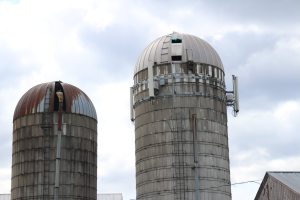
Documents from the state show that between 2011 and 2016, VTel Wireless received permits for 137 towers and antennas in Vermont. At least 28 of those permits were for addresses in more populated areas, including the Burlington area, Montpelier, Rutland and other population centers where the Public Service Department says there is competition among wireless providers. VTDigger visited more than a dozen of the permitted locations in Chittenden and Grand Isle counties where telecommunications equipment had been installed on poles, towers, rooftops and farm silos.
Rep. Laura Sibilia, I-Dover, said Friday that VTel didn’t prioritize rural areas, that “hardly any” of her constituents in Windham County are able to access service from VTel, and that the infrastructure that is in place provides “very spotty” service.

Sibilia said she can’t personally get service through VTel at her house, and she now wants to determine if other companies will bring wireless broadband to her constituents.
The Department of Public Service has nominal regulatory authority over broadband companies because of federal pre-emption laws, and consequently the state could not stop permits from being issued in more populated areas, according to Jim Porter, the state director of telecommunications and connectivity. Porter suspects as many as 60 other, smaller antennas could have been built throughout the state without his knowledge.
“VTel, certainly it appears, has built a statewide network … and certainly from my perspective, I’m not interested in towers that serve Burlington and Shelburne,” Porter said. “VTel did what everybody else has done, which is build where you’ve got dense population and lots of competition.”
Three years ago, the department made its own map, and derived a ratio of which permits were awarded for towers within the planned territory, as originally proposed by VTel, and which ones were awarded outside of the planned territory.
“It was like 2 to 1,” Porter said.
While state officials are unhappy with VTel’s wireless rollout, the USDA Rural Utilities Service is satisfied that VTel fulfilled its mandate. In an email, a USDA spokesperson said VTel “complied with the terms” of the award, “has built out 131 of the 134 wireless towers proposed, and was granted permission to forego construction of three towers.”
(Note to readers: Click on the [ ] icon in the upper righthand corner to view the maps in full.)
How the Wireless Open World project rolled out
On March 29, 2010, Guite applied for the company’s award package through the U.S. Department of Agriculture’s Rural Utilities Service. The project would “serve 61,497 homes in Vermont,” including “all of the 33,165 unserved households in Vermont,” according to the application.
“We see a strong need, and a useful future, for those small rural telephone companies” to “serve rural customers in ways the giants are less willing to do,” the application said.
The federal award was also supposed to pay VTel to bring fiber-optic cable to all of the homes it currently serves in the following areas, mostly in Rutland and Windsor counties: Springfield, Grafton, Chester, Saxons River, Hartland, Bridgewater, Killington, Cuttingsville, Middletown Springs, Wallingford, Mount Holly, Pawlet and Danby.
The Rural Utility Service awarded VTel an $81.7 million grant and a $35.2 million loan in 2010 to run fiber-optic cable to households and major institutions in the Springfield area and build 119 towers and antennas to set up a system of wireless broadband in the state’s most rural areas.
The money for the award came from the American Recovery and Reinvestment Act, the stimulus package meant to create jobs and pull the country out of the Great Recession. As part of the agreement, VTel had to “build out into service areas that were at least 50 percent unserved,” according to a USDA spokesperson.
In September 2010, Guite held a meeting at Vermont Technical College in Randolph with Sen. Bernie Sanders, I-Vt. He told the crowd that not “everybody” would be served by the Wireless Open World project: “When we say everybody — we mean pretty much, functionally, everybody — but it is complicated.”
An analysis of Public Service Board permits by VTDigger shows that at least 28 towers were installed in more populated areas of the state.
- The first three state permits VTel received on Aug. 10, 2011, were to build wireless towers in Colchester, which was not a part of the territory the state expected to see service in, according to data from the Public Service Department. The fifth permit, issued on Oct. 10, 2011, was for a tower in Charlotte. Between September 2012 and April 2016, VTel received permits for towers in Vergennes, Ferrisburgh, Addison, Bristol, Hinesburg, Richmond, Bolton and two in Milton. All of these communities are located in Addison and Chittenden counties — well outside the Northeast Kingdom and Southern Vermont regions where residents in a number of towns say they still don’t have adequate broadband service.
- In all, 21 of the state permits issued to VTel as of May this year were for locations in Chittenden County, according to data from Vermont’s ratepayer advocates at the Public Service Department. There are also two structures permitted and built in Grand Isle County — one attached to a farm silo and one attached to a typical cell tower.
- In Rutland County, the state awarded two separate permits in highly populated areas — one for an antenna in downtown Rutland, and another near a local pharmacy in the center of the city. VTel holds permits for a tower on Killington Peak, even though the town was slated to be served by VTel’s fiber-to-home service, and for antennas in Danby and Tinmouth, which are scheduled to get the same fiber-to-home service.
- And in downtown Montpelier, where VTel service was not expected to bring wireless service, there’s a tower inside the steeple of the local United Church of Christ on Main Street. Porter, the state’s telecommunications regulator, says the service may not be functional for all Montpelier residents.
Over the time period that the permits were approved, Guite gave a series of conflicting reports on the progress on the project. In 2014, Guite told VTDigger that the company had built 12 towers, and 157 towers more would go up in the next year. In 2015, he told the Valley News the project was “in final construction phase” and the company was finishing 135 towers.
On April 15, Guite told VTDigger there were 124 towers. On April 29, he told lawmakers there were 131 towers, and 123 were functional. In a May 3 letter to lawmakers, the VTel CEO wrote that the network “will consist of 152 wireless sites, 135 of which are providing commercial service today,” and the other 17 “primarily add more depth of coverage, rather than more breadth of coverage.”
Porter says he was aware for some time that VTel was intending to build a statewide network, including areas “outside of the VTel (award) territory.”
“That said, it certainly would have been our expectation that he would’ve prioritized the rural areas for which he received federal funding as much as he prioritized the other areas that he did not receive federal funding for,” Porter said.
Rep. Sibilia said service is spotty in her area. She tried to get service at her home in Dover but is not eligible, and she’s pleaded for constituents to give her feedback on whether the project is working.
“(VTel) just had announcements for Burlington two weeks ago, which I find to be ridiculous,” she said. “There’s so much competition that he’s competing there. There’s a lot of competition there. That’s not what those public funds were for. They came from the rural utilites service, rural being the operative word.”
“I think they have prioritized and completed, and as a for-profit business, I see no problem with that,” Sibilia said. “In terms of the wireless project, they absolutely should have been focusing on these rural areas first.”
“I’ve got a whole town that a very small amount of service in the village center, and pretty much everyone else doesn’t,” Sibilia said. “Three-quarters of the town was to have been covered by VTel. … Let’s solve the problem, Mr. Guite.”
Guite said in emails that data on where the company’s signal reaches is “widely known” and is “entirely consistent with hundreds of thousands of other 4G LTE sites” that other companies have. “There are spectrum differences, but the idea that the characteristics of a known radio are extremely confusing is erroneous.”
He said VTel, AT&T, Verizon, Sprint, and T-Mobile use “almost the same radios,” and the company has gone further to show who has coverage “to the level of half-football-fields, and to my knowledge no one else has done anything nearly as detailed.”
State wrangles with VTel for address data
Documents obtained through a request under the Vermont Public Records Act show that Guite did not cooperate with the Public Service Department’s requests for address-by-address coverage data. Documents also show that the department first asked for data back in August.
On March 7, Porter, the state telecommunications director, sent a letter to Guite asking which addresses in Wardsboro are served, “when service was initiated, and the speed of service available to residents.”
“Provision of this data will help to prevent funding of any overbuild within the covered territory,” Porter wrote. “In 2015 (the state of Vermont) requested this service provision and standard information, but the Department has yet to receive a reply from VTel. Please provide a response within 30 days.”
Porter says he has been seeking data showing which addresses in Vermont can use VTel’s wireless service, and which ones can’t. The department maintains maps of who is covered in order to give grants to companies to bring broadband to unserved areas.
Guite told Porter on March 8: “We do not provide this data to anyone, friends included, because (radio frequency) prediction models are so imperfect.”

Later that day, Guite said: “So far zero customers using our costly Wardsboro tower. Not terrible. We know it is difficult to complete. But the idea that Wardsboro is dying for more broadband seems a stretch.”
On March 10, Guite taunted Porter in an email about a story in the Valley News. “Jim, what happened with your wireless connection?” the email said. “You were the guy who was quoted in the Valley News saying we were unresponsive to your requests for wireless service.”
Another dustup surrounded requests for Guite to testify in front of the House Committee on Commerce and Economic Development. On March 17, Guite told the committee assistant he was unable to testify in front of the committee, and then said allegations that his company would not provide data were untrue.
Guite said the idea that VTel “refused to respond to data requests about their telephone company broadband coverage” was “baloney, balderdash, and bunc.” He said he is “delighted to talk about our GigE-to-every-home project,” which is separate from the Wireless Open World Project.
On March 18, Guite then emailed Porter saying that his chief financial officer had “no knowledge of being asked for any VTel telephone maps.” Porter replied with a letter from Aug. 14, 2015, in which the department asked all broadband providers, including VTel, to disclose address-by-address data.
On March 19, Guite sent emails expressing his frustration to several lawmakers, including Rep. Bill Botzow, D-Pownal, the chair of House Commerce, Rep. Mike Marcotte, R-Coventry, Senate President Pro Tem John Campbell, D-Windsor, and Sen. Alice Nitka, D-Windsor.
Guite asks lawmakers if they have any doubt about the company’s investments in broadband, given that the company has “sent mailings to every member of the Legislature,” and that “reports translated into multiple languages say that VTel’s broadband is by far the fastest in rural America.”
“May I respectfully inquire why it seemed logical to you to formally conclude that VTel has somehow declined to share this widely-broadcasted data with you, and with the state, and why would it be logical for you to invite me to drive 7 hours, to Montpelier and back, to discuss this further, after you have decided this matter to my company’s disadvantage?” Guite writes.
In another email, Guite said he was frustrated with the House telecommunications bill (most of which did not become law this year because of procedural issues) that would have reduced state funding to VTel if it did not provide the address-by-address data.
“I do not mind that the state of Vermont finds itself a frequent antagonist to most successful Vermont businesses and investors and that, over the 22 years I have been here, this antagonism has driven most of these businesses out of state,” Guite wrote.
On March 21, Guite clashed with Rep. Sibilia, who sits on House Commerce. She spearheaded a House resolution calling for a federal audit of Wireless Open World. (Federal officials have not yet responded.)
Sibilia asked Guite to provide her with data showing which addresses are served through the Wireless Open World Project. Guite then asked her “reply today, in 10 or so seconds (more always welcome) by simply listing the large wireless carriers” that gave her similar data.
“It’s been very frustrating,” Porter said in an interview. “We had two companies, FairPoint and VTel, both of whom we understand it was difficult for them to provide us address-based data with the speeds that are offered.”
“FairPoint is investing in the software that will allow them to report that to us next year, which is software we believe VTel already has,” Porter said. (VTel officials bring laptops to town meetings with software that helps residents determine whether their addresses will have a strong signal, Porter said.)
On April 28, Guite told lawmakers at a hearing that he can tell them who gets service “right down to a tiny neighborhood” but not on an address-by-address basis, as the department has requested.
In a letter May 3, Guite sent a letter to lawmakers offering more information. He said that the areas VTel serves “or will soon make available,” coverage reaches 95 percent of the square miles, 98 percent of the population and 98 percent of the total housing units.
Porter said VTel sent information to the Public Service Department in early May, but “it’s not terribly helpful, and we’ve asked them some follow-up questions.”
He said VTel sent data divided up into small blocks that the U.S. Census Bureau designates. He said the data is already provided to the Federal Communications Commission, but the FCC’s data-reporting requirements lead to “contaminated” data.
For example, if the address of one home in a Census block full of neighborhoods is served with broadband, the data says the whole Census block is served with broadband, Porter said, even if it isn’t.
Porter added that information about service in their service area is inherently unhelpful: “The Green Mountain National Forest is in the (VTel) service territory, and I don’t think there’s many locations there that are looking for service.”
“As I told somebody at the Legislature, that’s the question,” Porter said. “When (Guite) talks about ‘I built 150 towers,’ or whatever, the question is, ‘Where did you build them?’”
“VTel did what everybody else has done, which is build where there’s a dense population and lots of competition,” he said.
