

Editor’s note: This article is by Rick Jurgens, of the Valley News, in which it was first published Feb. 26, 2016.
SPRINGFIELD — Health Care and Rehabilitation Services of Southeastern Vermont posted a net loss of $638,000 in the fiscal year that ended June 30, bringing the agency’s volume of red ink to more than $2 million over the last two years.
The latest loss was disclosed in an audited financial statement provided this week to the Valley News by executives of HCRS, a Springfield-based nonprofit agency designated by the state to provide mental health care and services to people with developmental disabilities in Windsor and Windham counties.
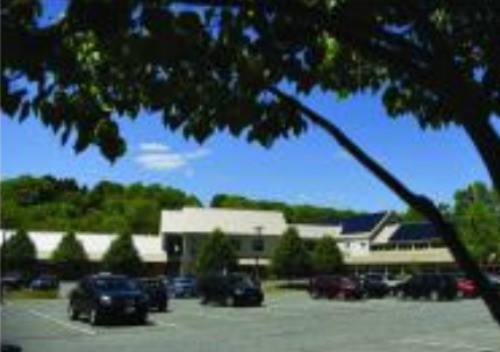
HCRS, one of many agencies wrestling with financial problems that they attribute to the Vermont’s failure to provide adequate support for safety-net services, has also found itself in the grip of some problems of its own making, including controversies over executive retirement payouts, losses in distant ventures and policies limiting public financial disclosures.
The provision of the audited financial statements fulfilled a pledge made in June by HCRS Chief Executive George Karabakakis and Board President Harold Johnson. Previously, HCRS’ policy was not to make available to the public its audited financial statements and governance documents.
Karabakakis and Johnson also pledged to begin “posting audited financial information on our website.” Karabakakis said Thursday that a page had just been added to the website with links to summaries of the agency’s financial reports and operating budget, a list of board members and instructions for members of the public who want to request the agency’s audited financial statement, conflict-of-interest policy and tax return.
The expanded disclosures came in the wake of controversy fueled by reports that HCRS had made a $686,000 payout as a retirement benefit to former Chief Executive Judith Hayward, funded a similar but smaller account for Karabakakis and racked up seven-figure losses in a low-profile venture operating group homes in California.
HCRS’ most recent audited statement showed a fiscal 2015 loss that was about 60 percent higher than Karabakakis estimated in November, when the agency laid off 12 people in an effort to cut expenses that he projected would be enough to enable the agency to break even during the current year.
In an interview Thursday, Karabakakis tempered his break-even promise. “We are hopeful that will occur,” he said. “We feel we made the necessary reductions.”
HCRS Chief Financial Officer Hal Moore said that the increase in the size of deficit, which before the audit had been measured at $428,000, reflected an additional $232,000 in medical claims against the agency that were identified during the audit. Those claims show up on HCRS’ books because the agency underwrites its employees’ health insurance.
Last year, the Valley News obtained HCRS’ audited financial statements reflecting results back to fiscal 2011, as well as related documents including board meeting minutes, through a public records request to the Vermont Mental Health Department.
Those documents showed that since the start of the 2011 fiscal year HCRS had grown rapidly but accumulated losses of $2.4 million. HCRS’ total spending on operations soared 54 percent, from $31.3 million in fiscal 2011 to a peak of $48.2 million in fiscal 2014. The agency posted deficits in four of the past five years.
HCRS’ money woes are an example of what Julie Tessler, the executive director of Vermont Care Partners, an organization of the state’s designated agencies, termed “across the board” financial strains on nonprofit caregivers.
“I couldn’t tell you any agency that is really on good, solid ground,” she said. “There are hundreds of people on waiting lists” for care, she added.
On Thursday, VCP held a news conference in Montpelier where advocates distributed a flier that found “an apparent state of denial” by state officials concerning the developmental and mental health needs of Vermonters and warned that caregivers are “now on the precipice where aspects of that system could begin to collapse.”
HCRS, which has offices in Windsor and Hartford in the Upper Valley, sails into the same financial headwinds that challenge all of the nonprofit agencies that hold primary responsibility for providing community services to Vermonters coping with mental illness, developmental disabilities or substance use disorders.
“Clearly there are systemic challenges that we face as a community mental health system,” Karabakakis said.
VCP is calling for the state to spend $4.8 million in fiscal 2017 to help finance a 3 percent cost-of-living pay increase to 13,000 workers in designated agencies. Currently, employees with master’s degrees earn about $35,000 a year on average, or about $13,000 less than their peers who work for state government. That wage spread has contributed to an annual turnover rate of 27.5 percent at the designated agencies, according to VCP.
At HCRS, the turnover rate was recently 24 percent, which means that the 575-employee agency had to replace more than 140 staff members in a 12-month period, Karabakakis said. That had an “impact on the quality of the relationships between the people we’re serving and our staff,” he said.
Joyce Dion, the president of United Nurses and Allied Professionals Local 5051, which represents about 70 professional employees at HCRS, said the wage crunch is real. “We are at a critical point in terms of our staff,” she said. “We have wonderful young people coming to the agency but they don’t stay.”
HCRS’ financial challenges have been worsened by some in-house choices, including decisions to fund executive retirement accounts and the failed effort to expand to California.
The fiscal 2015 deficit included $67,000 in additional “expenses related to the HCRS-West termination.” That pushed the total hit from HCRS-West, which was the agency’s label for its California venture, above $1.9 million. Moore said that no additional losses were expected from that operation, which was shut down nearly two years ago.
HCRS’ California venture and the size of the losses incurred there were not disclosed in the tax return that nonprofit agencies must make available to the public. The payment to Hayward was disclosed, but not explained, in the agency’s tax return.
Karabakakis and Johnson made their pledge to expand disclosures in a letter to the Valley News in which they wrote that HCRS had “instituted a new policy that makes financial information and governance documents available to the public on request, and we will be posting audited financial information on our website.”
In an interview, Karabakakis stressed that agency leaders are “making every effort possible to really change the culture (of HCRS) to one of openness and transparency.” Some of those efforts have been internal, including monthly staff lunches, a monthly employee newsletter, staff forums on such issues as safety and “cultural competence” and a staff intranet site with a “solution box” for employee suggestions. “If I am going to support the agency, lead the agency, I need honest, authentic feedback,” Karabakakis said.
The HCRS board has also established a human resources committee to review Karabakakis’ compensation and benefits and set up a process to evaluate his job performance. The committee, which includes Karabakakis and another executive as nonvoting members, will also discuss employee retention efforts and engagement through employee recognition, wellness programs, health care benefits and compensation.
About 90 percent of HCRS’ net revenue from providing services comes from the Medicaid program, a program funded by Vermont and the federal government that provides health insurance to low-income people.
A small portion of HCRS revenue — about 0.2 percent — comes from appropriations by towns. That revenue declined from $75,600 in fiscal 2014 to $61,000 last year. That decline resulted from no votes on appropriations in the towns of Springfield, Rockingham and Vernon, Moore said.
Among the Upper Valley towns that provided financial support to HCRS at Town Meeting last year were Pomfret ($979), Weathersfield ($2,145), Hartland ($3,453) and Hartford ($9,995). Such appropriations support “walk-in clinics for people that (would otherwise) fall between the cracks,” Karabakakis said. “It’s a small amount, but it’s an important amount.”
