


BURLINGTON — An opiate addict looking to go clean will spend close to a year waiting for treatment in northwestern Vermont.
That’s the most recent available data from the Vermont Department of Health regarding the Chittenden Clinic in South Burlington, the state’s largest treatment site.
The average wait includes pregnant women and injection drug users who are required by federal law to be prioritized for space in the intensive outpatient program that offers medication-assisted treatment.
Pregnant women must be afforded a spot within 48 hours, or offered treatment elsewhere. Injection drug users must be afforded a spot in 14 days, or offered interim services and treatment elsewhere within 120 days.
Officials with Howard Center, which operates the clinic, said they are often unable to get injection drug users into the clinic within 14 days.
The South Burlington clinic serves patients from Chittenden, Franklin and Addison counties. It is by far the busiest treatment hub in the state. Of roughly 400 people on waiting lists statewide, close to 300 want to get into the Chittenden Clinic.
State officials use the number of people waitlisted at the Chittenden Clinic, and similar clinics across the state, as a measure of the depth of the opiate crisis.
What is not as frequently discussed, however, is how long those people wait before treatment begins, and the effect that wait can have on whether they are successful.
In October, the average period a person had spent on the Chittenden Clinic’s waiting list was 358 days.
At the West Ridge Center in Rutland, the next busiest clinic as measured by the number of requests for treatment received monthly, the average wait in October was 35 days.
Next to the Chittenden Clinic, the longest average waiting time for treatment was 70 days at the hub in Newport run by BAART Behavioral Health Services. Health Department officials say that’s partly because the clinic there has had trouble keeping qualified staff.
WHAT IS MEDICATION-ASSISTED TREATMENT?
Medication-assisted treatment combines outpatient therapy and counseling with prescribed drugs, either buprenorphine or methadone, that deliver enough opioids to keep patients from experiencing withdrawal, but not enough to feel a high.
Patients typically start with methadone and transition to Suboxone, the most common brand of buprenorphine. Ideally, as patients stabilize they transition to getting their Suboxone from a primary care doctor.
That’s what the state refers to as its hub-and-spoke model, with the intensive outpatient clinics serving as the hubs, and doctors’ offices and community health centers serving as spokes.
While there are other options for people addicted to opiates, medication-assisted treatment is widely recognized as a highly effective starting point for recovery.

Tip of the iceberg
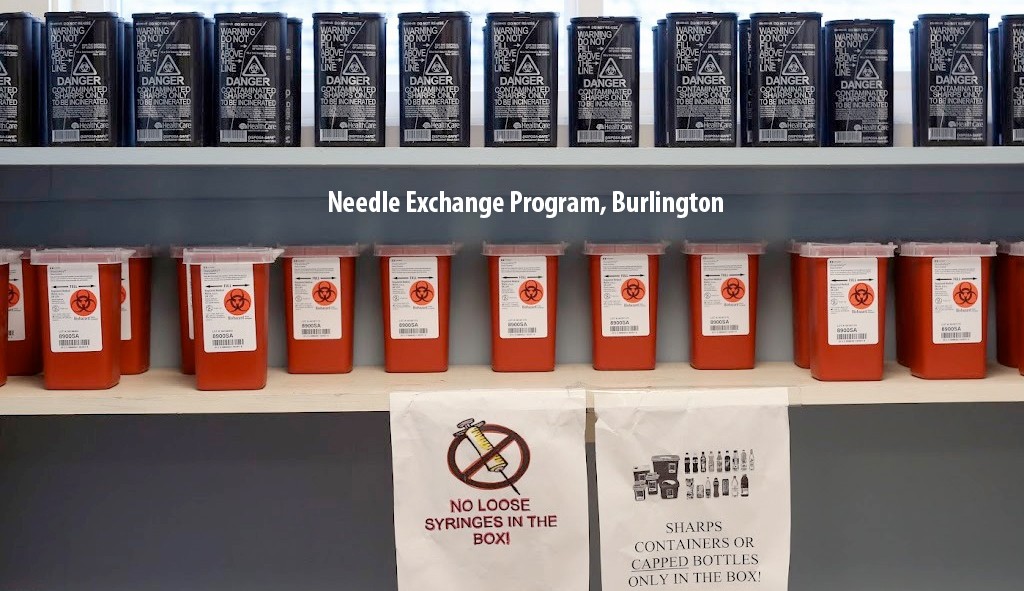
Several people have overdosed and died while on the waiting list for treatment at the Chittenden Clinic, according to Tom Dalton, coordinator of the Safe Recovery program in Burlington. It offers clean needles and other basic health services to drug users and helps those who are ready to seek treatment.
Dalton said the waiting list is a poor measure of the demand for treatment in the region, because many people are dropped from the lists — some without even knowing it. Others, discouraged by how long they’re told they will have to wait, give up on treatment, he said.
Bob Bick, CEO of Howard Center, which also operates the needle exchange, has likened the waiting list to the visible portion of an iceberg. What lies beneath the surface is the actual depth of the opiate crisis in the region, he said.
Deputy Health Commissioner Barbara Cimaglio acknowledged that waiting lists are an imperfect measurement of the demand for treatment, calling it a “blunt tool,” but she added: “It’s really all we have.”
Increasingly, she said, the state is trying to focus on “the bigger picture” — how many people are requesting treatment, and how to ease the flow of people through treatment from more intensive programs to ones that allow patients to continue treatment while leading relatively normal lives.
Howard Center and state officials say they are optimistic a recently adopted approach to assess the needs of people on the waiting list, to see if they can be helped elsewhere, as well as greater participation in opiate treatment by the University of Vermont Medical Center, will cut into a problem that has persisted despite increased public investment.
Howard Center officials say high turnover in the substance abuse treatment field, coupled with the continued unwillingness of many primary care doctors to treat opiate addicts, is frustrating that progress.
As a result, treatment capacity in the region continues to be outstripped by the demand for help.
“In a perfect world, we would provide treatment on demand, and that starts with building more capacity,” said Chittenden County State’s Attorney TJ Donovan, a member of the Governor’s Council on Opioid Abuse Prevention. The lack of access to treatment drives much of the crime associated with drug addiction, he said.
One way to create capacity is at the spoke level in doctors’ offices, say officials. The University of Vermont Medical Center has recently increased its efforts to help confront the problem after months of prodding from Howard Center, Burlington Mayor Miro Weinberger and others.
A UVM doctor recently started a clinic for close to 50 patients from the Chittenden Clinic who were ready to move on but hadn’t found a primary care doctor to treat them in an office setting. That clinic is expected to grow to 100 patients, according to Dr. John Brumsted, UVM Medical Center’s CEO.
The medical center employs 25 doctors certified to prescribe the drugs for medication-assisted treatment. That’s up from 14 in September.

A national push
After their first month, each physician could treat up to 100 patients. However, Health Department figures show that back in September, there was a total of only 30 doctors in Chittenden County offering medication-assisted treatment. Of those, more than half were treating fewer than 10 patients.
Catherine Simonson, chief of client services at Howard Center, said attitudes in the medical community toward treating opiate addicts still need to change.
“We need to break down stigma. Providers are still hesitant to do this work in an office-based setting, because they’re assuming people who need this will be disruptive or hard to manage,” Simonson said, adding that’s not always the case.
There is also a push at the national level to change federal laws preventing nurse practitioners and physician’s assistants from prescribing medication-assisted treatment drugs, which providers say would dramatically increase access in Vermont.
Simonson said Howard Center, Health Department officials, representatives from the medical center and other local treatment providers have begun meeting regularly as part of a triage team to determine if people on the waiting list can get help somewhere other than the Chittenden Clinic.

“We’re focused right now on pulling people off the waitlist in a more accelerated way,” Simonson said. Those meetings began in January and were touted by state officials as a significant step to reduce the unmet demand for treatment using existing resources.
Donovan said he believes the increased participation from the UVM Medical Center and other stakeholders will start to pay dividends soon, but he said there are still too many opiate addicts who can’t get help and are left to try to treat their addiction on the street, buying diverted Suboxone or, when they can’t find that, heroin.
“This problem requires a sense of urgency, and it’s not something that’s going to be solved overnight,” he said.

The waiting game
Dalton, the Safe Recovery coordinator, said steps could be taken that would immediately increase the likelihood people at the greatest risk of overdose get access to the Chittenden Clinic.
Too many people are dropped from the waiting list or never make it on at all, he said. Neither Howard Center nor state officials track the number of people dropped from the waitlist, they said.
The state and the clinic should do away with a requirement that people call the clinic to check in monthly in order to stay on the waiting list, Dalton said. People who don’t check in monthly are dropped from the list. Most have no idea they were dropped, according to Dalton.
Howard Center doesn’t call people or send them a mailing telling them they’ve been removed from the list. Most find out they’ve been dropped when they do eventually call asking about their place on the list, or when Dalton or another caseworker does so on their behalf.
Deputy Commissioner Cimaglio said the monthly check-in is a “program management measure more than a clinical measure” that is intended to ensure patients are ready and available for treatment should a spot open up.
“I don’t think dropping someone from the waiting list based on a technicality is the best way to honor their request for treatment,” Dalton said. “To a lot of people, getting dropped from the waiting list feels like a death sentence.”
It’s a requirement he said screens out many of the most vulnerable people seeking treatment. “If you are young, or homeless, or mentally ill, or in and out of jail, you are much less likely to get treatment,” as result of that requirement, Dalton said.
Simon said Howard Center relies heavily on Safe Recovery to stay connected with those vulnerable populations seeking treatment, but Dalton said depletion of his staff makes that difficult.
Safe Recovery lost much of its staff after a federal AIDS prevention grant ended, and although a new federal grant has allowed one part-time and one full-time worker to stay on as caseworkers, the program is much diminished, Dalton said.
His staff used to make regular trips to prisons in the region, to help prepare drug-addicted inmates for release. That’s something Dalton said he hasn’t been able to do in months.
