


In 2012 and 2014, judges ordered defendants in Vermont criminal cases to pay a total of $3.1 million in fees to cover public defender services.
But according to a report released Monday by State Auditor Doug Hoffer, the state collected less than a third of that sum.
The audit points the finger at the courts for the failure to bring in the full amount.
Under the U.S. Constitution and Vermont law, anyone charged with a crime has the right to have legal assistance, whether or not the person can afford it.
In Vermont, if a defendant’s income is 125 percent of the federal poverty level or above, that person is supposed to pay at least part of the average cost per case — often the minimum required payment of $50. In some cases, the judge waives the fee, if the defendant can’t afford the payment. The audit didn’t count the waived fees as uncollected.
Under Vermont law, defendants are supposed to pay for legal services in two installments. The first payment is due up front at arraignment; the second, within 60 days.
But the audit found that superior courts rarely collected the initial payment up front.
The court notifies defendants only once — at arraignment — of the fee they owe. After 60 days, the debt is referred to the Tax Department.
Of the $950,488 in fees collected in 2012 and 2014, less than half was collected by the superior courts. The remainder was collected by the Department of Taxes.
Hoffer made seven recommendations for improving the collection rate, including emphasizing the need to collect part of the fee up front; engaging in other efforts, such as sending out a bill, to collect the fees; and streamlining the record-keeping process with the Tax Department.
In a letter responding to the auditor’s report, Court Administrator Patricia Gabel and Chief Superior Judge Brian Grearson expressed concern that the report suggests the low rate of collection is due to lack of effort by the judiciary. They say the financial circumstances of defendants is a major factor as well.
Grearson and Gabel questioned the constitutionality of requiring upfront payment of public defender fees, because legal assistance is a right regardless of ability to pay.
“To insist on payment before appointment of counsel will have a deleterious effect on the existing assigned counsel process in Vermont,” the court officials wrote.
In their letter, the officials said courts cannot refuse to assign a public defender to somebody if that person can’t make an upfront payment.
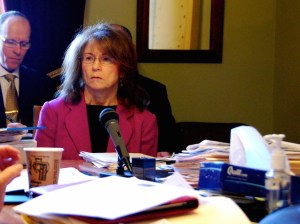
“Our research shows that we can’t make assignments contingent on the payment of fees,” Grearson said Monday.
Gabel and Grearson said the courts will develop a clearer system of collecting the payments.
The court officials also suggested giving the defender general’s office responsibility for collecting the fee. The public defender fees are a small part of the defender general’s annual budget. In fiscal year 2016, the fees contributed to a special fund that made up $613,000 of the department’s budget, with the remaining $10.3 million coming out of the general fund.
But Defender General Matt Valerio pushed back against the court’s suggestion that his office take responsibility for the fees. His office does not have the systems in place to take on that collection, he said, adding that it could raise ethical issues.
His office fulfills a constitutional role representing people who cannot afford to hire a lawyer. To add the role of bill collector would potentially lead to difficult situations, he said. A public defender could not refuse to represent somebody if the person showed up without a check, he said.
“Our job … as public defenders is to represent people,” Valerio said. “It’s not to collect money from them.”
Valerio said Monday that Hoffer’s conclusion about the amount of money collected didn’t surprise him and noted that the annual sum collected through the public defender fee has been more or less consistent over the last dozen years.

“I do think that the state as a whole can do a much better job of collecting this,” Valerio said.
Valerio said he’s long been a proponent of creating a system that is more reliable and consistent in collecting fees and revenue across state government. But, he said, a central issue in collecting public defender fees is the question of whether defendants have the means to pay.
“The bottom line is that the people in general don’t have the ability to pay those sums,” Valerio said. He noted that many of the people who receive legal assistance from public defenders are “living on the edge,” so that even a $50 fee may be too much.
But, he said, “those who can pay, should.”

