


https://www.flickr.com/photos/scubabrett22/
The most popular name invoked at the Statehouse this session likely won’t be a top party leader. Nor will it be a committee chair who does yeoman’s work on the budget gap. No, the name at the center of the legislative game may well be an outsider, otherwise known as Mary Jane.
There are 10 marijuana bills in play in the House and Senate this year. About half of the legislative proposals address legalization issues; the rest would expand medical pot statutes already on the books. Vermont lawmakers decriminalized small amounts of pot in 2013 and in 2014 authorized a RAND Corporation study that showed the state could generate between $20 million to $75 million from the regulation and taxation of pot.
In the past, House Speaker Shap Smith was the major roadblock to legalization, but last session he said he would not stand in the way of passage, and Senate President Pro Tem John Campbell has taken a similar stance.
Campbell has promised not to block legalization, but said he does not want to dedicate more than three weeks of work in the legislature discussing the pros and cons of pot brownies.
“We have too many issues this year,” he said, pointing to other legislative hurdles around the budget, education spending caps and the protection of state employees.
Gov. Peter Shumlin, meanwhile, is all for legalization. Shumlin has long supported the regulation and taxation of pot and has received major campaign contributions from the Marijuana Policy Project, a pro-legalization outfit based in Washington, D.C.
Support for the legislation from key leaders — tacit or otherwise — paves the way for legalization. Although there are a number of stops that will be made along the way that could spell trouble: The legalization bill will likely be taken up by five committees each in the House and Senate.
But mirror bills on the taxation and regulation of marijuana in both the Senate and the House, is a sure sign that enthusiastic Mary Jane boosters may well have a chance this session.
And lobbyists are well ensconced in Montpelier and are fine-tuning their arguments, pro and con, for the fuzzy green member of the Plantae kingdom. Matt Simon, New England political director for the Marijuana Policy Project, has moved to Vermont to advocate for legalization this session. Meanwhile, Smart Approaches to Marijuana, compares pot legalization to “big tobacco” and hopes to quash fast track regulation and taxation of marijuana.
The two main legalization bills in the Senate come from Sens. Jeanette White, D-Windham, and David Zuckerman, D/P-Chittenden. In the House, the lead sponsor is Rep. Chris Pearson, P-Burlington.

Zuckerman’s bill, which was introduced last session, focuses on how to tax cannabis. It also addresses how to regulate production, sale and use of the drug.
Zuckerman’s bill would set up a separate five-person marijuana control board, and impose a $50 per ounce excise tax on all sales. It would allow people age 21 or older to possess two ounces or three plants, while maintaining criminal penalties for quantities in excess of that limit.
White, who chairs the Senate Government Operations Committee, drafted her 40-page bill over the summer with Senate Minority Leader Joe Benning, R-Caledonia.
The White/Benning bill would also legalize use of the drug for Vermonters over the age of 21, by next summer. An additional year is given for the state to set up infrastructure for dispensaries and smoking lounges.
The bill prohibits the sale of edible marijuana products, and would establish a Cannabis Control Board through the state’s Department of Public Safety.
Zuckerman said sections of the two bills would likely be combined to create the most comprehensive legislation, acknowledging there would also be additional “aspects to unearth and explore” not contained in either draft.
“Whose bill moves doesn’t really matter to me,” he said. “The idea is to move the conversation forward and address concerns, and make sure we do it right.”
To do it right, the pro-pot people say, will require more than three weeks.
Legalization would create both a significant cultural and bureaucratic shift in the state, and multiple Senate committees are expected to weigh in on the matter, including Judiciary, Finance, Appropriations, Transportation Health.
“Frankly, if there is public interest in the bill and legislative interest, we need to do the bill properly,” Zuckerman said. “If [Campbell] is willing to direct all the chairs to focus on this first, that’s a realistic timeline.”
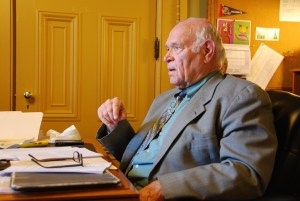
Judiciary chairman Sen. Dick Sears, D-Bennington, said he had a number of questions around legalization, and urged his colleagues to be “extremely cautious” in deliberations about the bills.
Sears also questioned Campbell’s three-week timeline, saying it was unrealistic.
“Three weeks should be good for Judiciary, but I’m not sure that’s enough time for all the committees,” he said.
The Questions
For Harry Chen, commissioner of the Department of Health, now is the time to answer as many questions about marijuana use as possible. That includes working to diminish any potentially negative impacts on public health should legalization occur.
The Health Department is assuming a pot bill will pass, and is working to develop a set of recommendations that will be ready for legislators to review by the start of the session.
The months-long process has included close review of more than 180 scientific studies, and frequent contact with administrators in states where pot is legal.
“You gotta do the best you can with what you have,” Chen said, acknowledging the data on the drug is scant for a number of reasons, including its presence on the list of Schedule 1 drugs. “You have studies with the strongest basis of evidence and you implement those, and you have to be transparent about where you have uncertainty.”
At an October meeting, state health officials acknowledged many unknown impacts of legalization, including how it would impact the number of consumers, the age at which consumers begin using and the number of days per week that consumers will use cannabis.
Chen said the best regulation data comes from the tobacco industry, adding “we can take those lessons learned and apply them to marijuana.”

The Senate has been engaged in more discussion around Mary Jane than in the House. The Senate Government Operations committee, for example, collected more than 60 hours of testimony in weekly Friday meetings last session on the issue, while House leaders have not been briefed so extensively.
Senate leaders anticipate a big education push in the House should a bill be passed in the Senate. While only a majority of 30 Senators need convincing, there are 150 House Representatives, and many will need time.
Some see the disparity in research and work on the issues as a potential roadblock to success, considering the litany of questions many Senators still have.
“Can we inhibit a black market?” Sears asked. “How do we make sure we are doing enough to educate the public?”
Sears, and others, raised serious questions regarding stoned driving, a potentially dangerous phenomenon that is hard to test.
“Any time we talk about the dangers of driving stoned or other marijuana use, we immediately are seen as Nancy Reagan’s ‘Just Say No,’” Sears said. “But we need to have an honest discussion, and work on prevention.”
Campbell echoed Sears’ concerns and also expressed skepticism about whether banks could or would be able to do business with marijuana operations, as they could be investigated and punished federally for accepting cannabis cash.
“I don’t think there would be any bank that is federally insured that would take deposits from the proceeds of the sale,” he said. “It’s still a federal offense.”
White said she anticipates a lot of pushback focused on the potential for increased drug access for young children and an uptick in stoned driving.
“We don’t have the perfect tests for marijuana,” she said. “But believe me, it won’t be very long until we have good tests.”

As for young children smoking, White contends that regulation of marijuana would actually make it harder to access. She also said tax revenue would likely go to prevention and education efforts, as well as treatment.
“What I’ve been hearing from kids is that it’s easier to get marijuana than it is to get alcohol,” she said.
White said her own biggest question surrounded taxation of cannabis, asserting “We have to keep the tax low enough so that legalization helps stamp out the underground market.”
The Lobbyists
To Kevin Ellis, a partner and lobbyist at Ellis Mills Public Affairs, says now is not the time for state government to dive into a new regulatory arena, especially following the debacle of Vermont Health Connect.
“Legalization is really complicated,” Ellis said. “You are setting up an entirely new regulatory structure when the government isn’t particularly good at setting up an infrastructure.”
Ellis is working pro-bono on behalf of a coalition of Vermonters against legalization, Smart Approaches to Marijuana – Vermont.
Ellis is armed with counterpoints to pro-legalization arguments. He said the results aren’t in from legalized states like Colorado, and that the government has a moral responsibility to discourage drug use.
“I don’t think we should be making it easier to put kids’ lives in jeopardy,” he said.

He also cautioned that legalization would increase drug use in a state already plagued by addiction.
“You are going to do this in the middle of an opioid epidemic?” he asked. “It just seems really counterintuitive to do something of this magnitude, especially when you have a budget deficit in an election year.”
Chen said there is no direct connection made between opiates and marijuana, adding that medical marijuana has the potential to decrease the use of prescription painkillers.
“If people who have chronic pain use marijuana and use fewer opiates, that’s on the plus side,” he said.
Bill Lofy, former chief of staff to Gov. Peter Shumlin who now works for the Vermont Cannabis Collaborative, believes that in Colorado and Washington the verdict is in, and that it is a good one.
He framed legalization in Vermont as an opportunity to create a small craft business community much like the state’s thriving beer marketplace.
“We want to put a strong emphasis on small entrepreneurs having access to this market and provide ways for Vermonters to have an opportunity to grow an economy that reflects Vermont values,” he said.
Lofy said lawmakers should reflect the will of constituents, citing polls that show a majority of Vermonters support marijuana legalization.
“There are a lot of really capable and respected folks who are lined up against this legislation,” he said. “Our hope is that the voices of what is clearly a majority of Vermonters are heard in Montpelier.”
The Chances
Senate Minority Leader Joe Benning said he hasn’t started nudging his caucus on marijuana, but said the discussions will begin shortly. He said he won’t have much trouble convincing younger legislators, many of whom think federal legalization is inevitable and don’t see marijuana as any more dangerous than alcohol.
“For the older generation, this is completely unfamiliar to them,” Benning said. “Many are not comfortable with it.”
Benning said his own perspective on weed straddles two generations, and he expected the final vote to be more likely down age lines.
“This isn’t a party issue, per se,” he said.

A number of legislators gave passage of a legalization bill a good chance, if committees are allowed enough time to vet and tweak the bill.
Lofy gave passage good odds “as long as the legislature does have the time and bandwidth to carefully consider this legislation.”
Ellis said legalization has a 50 percent chance of legislative approval.
Sears said it was impossible to predict who would support the bill and who wouldn’t, noting decisions will be made once language is finalized. He said he thought more than half of the Senate supports legalization as a broad idea.
“I suspect there are a lot of people who support legalization but may not support a bill that comes up,” he said.
White said her predictions for passage were constantly changing, day-to day.
“Sometimes I’m 92 percent sure that it will happen, and sometimes I’m 29 percent sure that it will happen,” she said.
“In my mind, if you approach it rationally and intellectually, it will pass,” she added. “If you approach it emotionally, and we have 50 years of emotion behind this issue, I’m not so sure.”
Asked if she thought any legislators smoked marijuana, and if that would help chances of passage, White paused.
“Sure,” she said, smiling.
The Election
Supporters of legalization say that once a new governor is elected, especially if it’s current Lt. Gov. Phil Scott, the odds for a gubernatorial stamp are slim.
Time is of the essence, they say.
“I think that the outcome of the governor’s race will certainly have an influence on prospects for the future,” Lofy said. “But we think 2016 is the year to get this done.”
White said the upcoming election for a number of Senators and Representatives could also impact votes in the session.
“Some people may be afraid of losing votes if they vote ‘Yes’ and some may be afraid of losing votes if they vote ‘No,’” she said.
Ellis warned that the marijuana issue could push moderate Democrats to Phil Scott in 2016.
“I think Democrats have to be really careful,” he said. “It’s easy to be pro-legalization if you are trying to win a primary, but not if you are trying to beat a moderate Republican who is a friendly guy.”
Benning, who supports Scott for governor, said he would not be pressured to pass a bill if it’s “not ready for prime time.” He said that while Shumlin seems poised to sign on, Scott should not be counted out.
“[Scott] will make his decision based on what he’s reading, not simply a reaction to a concept,” Benning said. “His first concern is the economy and getting jobs for people, which I understand.”
Correction, 11:08 a.m., Jan. 5, 2016: Zuckerman’s bill would create a separate marijuana control board, not give regulatory authority to the state’s Liquor Control Board.
