

Editor’s note: Please see the end of this special report for graphics featuring information about hospital revenue and administrative compensation.
[H]ospital administrators in Vermont make six-figure salaries, and many earn more than a half-million dollars per year. Most get raises annually, and some receive large bonuses.
In 2013, the average chief executive officer at Vermont’s 14 hospitals and Dartmouth-Hitchcock Medical Center in New Hampshire made $514,977. The median total compensation package was $355,326. The numbers include base salaries, bonuses, retirement benefits and other compensation.
The data show that hospital CEO pay is more than double what CEOs in other industries in Vermont make each year. The average CEO compensation was $162,210 in 2013, and the median was $141,050 that year, according to data from the Vermont Department of Labor.
The U.S. Internal Revenue Service collects hospital pay information on a federal tax form called a 990. Hospitals, which are nonprofit organizations that don’t pay taxes, file the form every year and must list the salaries of top administrators and highest-paid employees. The most recent tax filings available for Vermont hospitals are from 2013.

Many of Vermont’s top-paid administrators are at the state’s largest hospital, the University of Vermont Medical Center in Burlington, formerly Fletcher Allen Health Care. The medical center had 15 administrators listed in 2013 who were collectively paid more than $9 million. The chief executive officer of UVM Medical Center, Dr. John Brumsted, made $1.9 million. Nine others made more than $600,000.
The Central Vermont Medical Center in Berlin, which is part of the UVM health system, had nine administrators who made a total of $2.2 million. The chief executive officer, Dr. Judith Tarr Tartaglia, made $434,718 — a roughly $95,000 increase over the previous year, largely because of deferred bonuses that were reported in response to new IRS rules.
The Southwestern Vermont Medical Center in Bennington and the Rutland Regional Medical Center — which are the second and fourth-biggest hospitals in the state — both compensated CEOs more than $500,000 in 2013. However, those salaries are dwarfed by what many of Vermont’s orthopedic surgeons make.
In contrast, the Northeastern Vermont Regional Hospital, a small critical access hospital in St. Johnsbury, has just two full-time administrators — the chief executive officer and the chief financial officer — who together make less than $600,000. Bob Hersey, the CFO, said administrators at the hospital thought they could handle management without spending money on a chief operating officer.
Ken Libertoff, the former director of the Vermont Association for Mental Health, said hospital salaries “have lacked transparency for some time” despite being part of the “rising tide” of health care expenses in Vermont.
According to a 2013 expenditure analysis from the Green Mountain Care Board, hospitals made up between 38 percent and 45 percent of health care dollars spent in Vermont. Health care expenditures represent 18.1 percent of Vermont’s economy versus 16.4 percent of the U.S. economy.
“It is the consumer who ultimately pays the bill,” Libertoff said. “Because Vermont’s health care system is not financially sustainable, further debate about the administrative costs of hospitals is not only important but it is essential.”

Thomas Huebner, the CEO of Rutland Regional Medical Center, said hospitals are “very complicated organizations.”
“There are many management consultants who have said they’re the most complicated organizational structure there is,” Huebner said. “It’s not the only hard job in the world, because sure, there’s lots of hard jobs, but the responsibility of ensuring that a hospital is there for a community is a big deal.”
Setting CEO compensation
In many cases, hospital CEOs have no control over compensation. Boards of directors across the state typically work with outside consultants to put together a compensation package, which a CEO can either accept or reject.
Scottie Ginn, a retired engineer and vice president for IBM, is the chair of the compensation committee at UVM Medical Center, a subcommittee of local business people who work under the hospital’s board of directors and decide the CEO’s pay.
Each year, the committee hires a consultant to determine how much CEOs of academic hospitals make in other states. The committee aims to keep the CEO salary in the 50th percentile, Ginn says, and bonuses for the CEO can fall as high as the 65th percentile.
In 2013, the CEO of UVM Medical Center, Dr. John Brumsted, received $1.9 million in total compensation. That figure included Brumsted’s base salary of $790,219, incentive and bonus pay of $815,101, retirement benefits, and a payout for long-term bonuses because of a change to an IRS rule.
In 2012, Brumsted’s base pay was $760,698. Another $484,886 in bonuses and other benefits brought his pay to just under $1.5 million that year.
By comparison, in 2013, the CEO of the Massachusetts General Hospital in Boston made $2.7 million; the CEO of Minnesota’s Mayo Clinic received $1.9 million in compensation; and the Yale-New Haven Health System in Connecticut paid its CEO $2.9 million. The CEO of Albany Medical Center made $1.3 million in 2012.
Ginn said the UVM Medical Center board decided to no longer use long-term bonuses, in part because the IRS rule change inflated Brumsted’s annual compensation in 2013. The board will instead stick with three short-term incentives: a financial goal, an operational goal, and a quality goal.
The level of bonus is based on how well the senior leadership meets the goals, she said. For each senior administrator to get the full bonus in a given year, they would have to “knock it out of the park,” so to speak, according to Ginn.
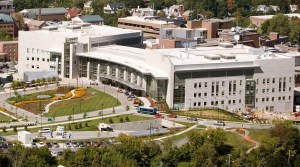
The UVM Medical Center is ranked No. 16 out of 104 in nationwide quality rankings, and the financial goal could include meeting the budget the hospital promised to the Green Mountain Care Board. That was about $1.1 billion in 2016, or about half of the money patients spend in hospitals in Vermont.
Historically, members of the senior leadership team at UVM have only received raises when the hospital has had a good year — even though the hospital hasn’t had a bad year since the 1990s, according to spokesperson Mike Noble. And if a CEO didn’t meet a budget promised to regulators at the Green Mountain Care Board in a given year, he’d probably get fired anyway, Ginn said.
“I think that (compensation) is very reasonable especially considering how successful we have been,” Ginn said. She said Brumsted, a trained obstetrician and gynecologist, has “done sort of everything in this hospital” and would do the right thing for the organization even if he didn’t get bonuses.
“As a board, we monitor it very carefully, and again, we want to be mid-pack,” Ginn said. “We want to be competitive enough to keep the right people, but I don’t want to pay more than I have to.”
For UVM Medical Center, the only comparable hospital serving Vermonters is Dartmouth-Hitchcock Medical Center in Lebanon, New Hampshire. Forty percent of the hospital’s patients come from Vermont, and it is the closest teaching hospital to southern Vermont residents. The hospital’s annual revenue was $987.4 million in 2013. That year, CEO James Weinstein made $1,034,293 compared. In 2012, he received $892,733 in compensation.
A representative from Dartmouth-Hitchcock was not available for an interview. A spokesperson said the board of trustees compensation committee sets CEO pay. The total amount spent on administrators, according to tax forms, was $16.3 million in 2013 and $12.9 million in 2012.
Thomas Dee at Southwestern Vermont Medical Center in Bennington is the third-highest paid Vermont hospital CEO and the 14th-highest paid Vermont hospital administrator. David Meiselman, chair of the board of trustees, said the hospital couldn’t replace the CEO for what they pay him.
In 2012, Dee’s base pay was $400,695. Another $81,000 in incentive pay and other benefits brought his total compensation to $554,898. In 2013, his base pay was $398,187, and he made $17,500 in incentive compensation. Other benefits brought the total to $522,673.
“I would venture to say that there are some CEOs that are overpaid at $200,000 and some CEOs that are underpaid at $400,000,” Meiselman said. He said that Dee joined Southwestern Vermont Medical Center around 2008, when the hospital was involved in a legal battle with its former CEO, and Dee helped turn the hospital’s image around.
“He could go two hours south and probably get two or three times what we’re paying him,” Meiselman said. “He could go to Boston and get two or three times what we’re paying him. He could go to Westchester County (New York) and get two or three times what we’re paying him.”

Southwestern Vermont Medical Center’s has another seven people on its executive management team, according to Kevin Dailey, the vice president of human resources. Five other administrators were listed on the 2013 tax form, and they were paid between $200,000 and $300,000, with compensation set by the CEO.
In south-central Vermont, Michael Dick, the chair of the Rutland Regional Medical Center board of directors, said the board does a performance review and salary review for Thomas Huebner, the fourth-highest compensated Vermont hospital CEO, every year.
The board of directors requires the human resources department to collect market data on CEO pay at comparable hospitals, plus market pay rates for each job at the hospital. The board negotiates with the CEO, who then has broader authority to set others’ pay scales.
In 2012, Huebner’s base pay was $424,268, and benefits brought his total compensation to $491,000. His salary was $432,740, in 2013, and benefits brought the total to $507,483. But the total compensation numbers don’t include any bonuses or incentive pay because Dick said making more money on patients shouldn’t be an incentive.
“There should always be a little tension between management and the board,” Dick said. “They typically would want more, and we don’t want to pay for all that. We of course want all the goods and services but at a better cost. We’ve reduced our second-level administration by two positions just in the five years I’ve been on the board.”
In 2013, Rutland Regional Medical Center had 11 administrators, including eight vice presidents who made $190,000 to $384,000. The chief medical director is the second highest-paid administrator in Vermont because he also works as an orthopedic surgeon. The highest paid employees listed on the hospital’s 990s are other orthopedic surgeons and cardiologists who make from $664,000 to $914,000.
“Our whole staff tends to get raises every year,” Huebner said. “They’re generally in the 2 to 3 percent range. But it’s dictated by market. If the market wasn’t going up, our salaries wouldn’t be going up.”
Down in Brattleboro, the community is largely served by a Medicare-dependent hospital. Peter Carvell, the chair of the Brattleboro Memorial Hospital board of directors, said the board takes its fiduciary responsibility to the organization “very seriously.”
In 2012, Steve Gordon was the second-lowest-paid hospital CEO in Vermont. The board has since been working to increase Gordon’s pay to the 75th percentile of comparable hospitals nationwide — his total compensation went from $240,000 in 2011 to $347,000 in 2013. His pay is now in the mid-range among Vermont hospitals.
Cavell said Gordon has a performance review every year and either gets a pay raise or a bonus, but not both. That’s in part because the hospital is often reimbursed pennies on the dollar for Medicare services, while the volume of care it performs is decreasing and expenses are rising, according to Cavell.
“I don’t think necessarily that a bonus incents someone to work harder,” he said. “If our CEO doesn’t get a bonus, I don’t think it’s going to incent him either way to do a better job. I think he’s going to do a good job regardless.”
Salary oversight?
At the federal level, the Internal Revenue Service has been monitoring for more than a decade whether 501(c)(3) organizations comply with federal laws regarding executive compensation.
The general rule is that compensation must be reasonable, and the executives cannot receive “improper personal gain” from the charity organization, according to the IRS. Compliance websites therefore recommend that nonprofits use market data and other resources to make sure the salaries they pay are “reasonable.”
In Vermont, the Green Mountain Care Board has regulated health insurance rates and hospital income from medical procedures for the past few years in order to rein in health care spending. But the board has no intention of telling hospitals how much they can pay administrators, doctors or nurses, according to Al Gobeille, chair of the board.
“What we’ve tried to do is work at a high level of overall growth and not micromanage the running of the hospitals,” Gobeille said. “I think that’d be a very dangerous path for the board to go down. I think that’s the role of the board of the hospital.”
“Whether they’re bank regulators or hospital regulators, there’s a proper role for regulation, and there’s a proper role for management, and you can’t confuse the two,” he said. “And that is not what people want to hear.”
Board chairs interviewed for this investigation generally agreed with Gobeille that the state should not be involved in setting hospital pay.

