

[B]URLINGTON — A federal grand jury last week indicted two New York City men on a charge of distributing a controlled substance that resulted in a death. The victim was Gary Bashaw, 54, of South Burlington. The fatal substance was fentanyl, a powerful synthetic opiate.
The two men charged, Sharif Cargo and Gary Delima, both 26 years old and from Brooklyn, are allegedly at the center of a case that extends from 2012 to March of this year. Prosecutors describe the two as being the “leaders of a significant drug trafficking organization” that operated in Vermont, Maine and New York.
U.S. District Court Judge John Conroy ordered Delima held during the pretrial period, but signed an order that resulted in Cargo being released last April. This week’s indictment is the latest in a series handed down by the grand jury.
The case provides a window into two troubling trends in the drug crisis in the Northeast: The rise in popularity of fentanyl and the extent to which criminal gangs from New York run operations in Vermont using a local network of drug users and other accomplices, often women.
Many of the documents in the U.S. District Court case are under seal, but the court released a heavily redacted 42-page affidavit to support a search warrant for Cargo and Delima’s seized electronic devices.
Law enforcement officials began investigating Cargo, Dilema and other members of a gang last year for allegedly bringing heroin and cocaine from New York City to Vermont and Maine, where law enforcement officers say those drugs command a higher price.
In addition to the drug dealing, Cargo and Delima are charged with trafficking women for prostitution — including a minor — and money laundering. The charge of distributing a controlled substance resulting in death carries a 20-year minimum sentence with a maximum sentence of life in prison. Several co-conspirators were also indicted on drug dealing and other charges.
Delima is also alleged to have orchestrated dog fighting exhibitions at a home in Copiague, New York, where he lived with his wife. Law enforcement found dogs and “dog-sized treadmills,” and his wife told agents there was dog fighting on the property.
Delima’s wife also told a Drug Enforcement Administration agent that her husband and Cargo are members of the Crips street gang, which was started in Los Angeles in the late 1960s and has loosely affiliated branches across the United States.
Associates with whom they were arrested in Maine earlier this year are being charged with credit card fraud. One of the credit card fraud victims was a Shelburne resident, court documents show.

The motivation for such crimes is clear: They can be very lucrative. Court documents show law enforcement seized “gross proceeds” of “at least” $100,000 from the gang’s criminal activities.
Conditions for Cargo’s release require that he submit to location monitoring and refrain from illegal activity. In a motion arguing against his release, prosecutors said that probation officers recommended Cargo be allowed to live with a girlfriend in New York City.
As evidence of the violent nature of their business, prosecutors allege a drug “runner” in the gang, who had made several trips to Vermont, was shot to death in New York City in February. That murder is under investigation.
Prosecutors describe Cargo as a “professional criminal” and said he should be considered a risk to the public because members of his gang are known to carry guns. In an intercepted phone call between Cargo and Delima, they discussed buying a firearm. Cargo was reportedly treated for gunshot wounds at a New York City hospital in December 2014, according to court documents.
The arraignment on the latest indictments is scheduled for Dec. 21 in U.S. District Court.
The ascendence of fentanyl
U.S. Attorney Eric Miller, whose office is prosecuting the case, described fentanyl as an “even greater public health threat than heroin,” because the potency is unpredictable and drug users often don’t know if it’s been mixed in with heroin.
DEA agent John DeLena, the assistant special agent in charge of the region covering Vermont, Maine and New Hampshire, says that fentanyl is a growing problem. Typically dealers cut it into heroin to extend their product and make more money.
However, increasingly drug dealers are using pure fentanyl cut with other substances and selling it as heroin, DeLena said. Fentanyl is commonly used intravenously for pain management in hospitals, and it can be 50 times more powerful than heroin, according to Health Commissioner Dr. Harry Chen.

Though DeLena hasn’t seen it in Vermont frequently yet, he said that drug dealers in the Northeast are starting to make fentanyl in clandestine labs similar to methamphetamine labs.
The substance is so deadly that the DEA advises agents not to field test it, because, according to DeLena, two grams of the homemade fentanyl can kill a 200-pound person through the skin. In labs busted in New Hampshire, law enforcement officers have found ventilators and other protective gear, he said.
Fentanyl made in labs is typically mixed with the cut substance in blenders and then pressed into 10 gram packages, known on the street as “fingers,” DeLena said. Agents have tested a finger of fentanyl in multiple places and found multiple different concentrations, suggesting that dealers don’t know what they’re selling and users don’t know what they’re shooting.
During two controlled drug purchases in July 2014, officers in Burlington bought what was supposed to be heroin from members of Cargo and Delima’s gang — two of 22 controlled purchases law enforcement conducted during the investigation.
The substance they bought tested positive for fentanyl. Within days, Gary Bashaw was found dead outside his Shelburne Road apartment of what an autopsy revealed to be “acute fentanyl intoxication.” Messages on the dead man’s phone show that he exchanged texts with a phone officers allege to be connected to Cargo and Delima’s gang, according to court documents.
Figures from the Health Department show that fatal drug overdoses that involve fentanyl are on the rise. In 2010 there were only two deadly fentanyl related overdoses in Vermont; in 2014 there were 17.
In the first nine months of 2015 there were 23 fatal overdoses in Vermont in which fentanyl was present, according to the Health Department figures.
Out-of-state drug dealers rely on local networks
In April of 2014, local law enforcement officers in Burlington working with a confidential informant sought to buy drugs from a dealer named “Jeff” — one of many pseudonyms used by Sharif Cargo, according to court documents.
The informant got into a green van on North Avenue in Burlington and bought crack cocaine from two street-level dealers, though the informant had requested heroin. Police took down the vehicle’s license plate number, and found it was registered to a local woman, the documents show.

In an unrelated incident later the same day, police responded to a disturbance near School and Loomis streets. There they found Cargo, who told police he was the victim of an attempted robbery at gunpoint.
Cargo was taken to the hospital to be examined, and while being interviewed by police, he showed them the registration for the green van. He said the van was his, but that he had the woman register it for him.
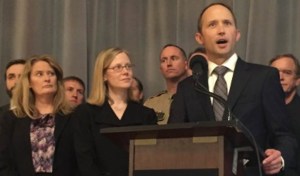
“No one deals drugs alone,” First Assistant U.S. Attorney Geni Cowles said last month when her office launched a media campaign to highlight the fact that drug dealers often coerce drug users, especially women, into serving as accomplices.
“For every dealer our office charges there’s a circle of people, charged and uncharged, who make that drug dealing activity possible and profitable,” Cowles said.
In a review of the largest drug cases prosecuted by the U.S. Attorney’s Office, Cowles found that women are more likely than men to support drug dealers by providing housing, cars, contact lists, transporting drugs and doing minor dealing. Often they are also being trafficked for sex, she said.
Seventy-five percent of the people who provided support to drug dealers are women. Sixty percent were under 30, some as young as teenagers, and almost all of them had addictions, most prevalently to heroin, Cowles said. One-quarter of the women reported having some kind of romantic relationship with their dealer.
The indictments against Cargo and Delima show that in 2012 and 2013 they brought two women from New York City to Vermont to work as prostitutes, using “force, threats of force, fraud and coercion.” In January this year, the indictment said they brought a third victim who was a minor to Vermont to work as a prostitute.
In July 2013, the clerk at the front desk of a South Burlington motel tipped off police that he had found a post on the classified website Backpage.com, which is frequently used for prostitution, advertising a woman available for sex at the motel.
Police recognized the women in the Backpage ad as an associate of Cargo and Delima’s. When they arrived at the motel room in the advertisement, Cargo and Delima were there with two women. A letter that appeared to be written by one of the women outlined her travels from New York City to work as a prostitute, according to police.
“Officers noted the toilet seat was covered with a white powdery substance, and a needle wrapped in a bloody tissue was on the nightstand,” court documents state.
A problem that can’t be solved through enforcement alone
DeLena, the DEA agent, said that drug dealing, especially heroin and other opiates, as well as related criminal activities, have gotten so bad in the Northeast that law enforcement have to “break down the silos” between different federal agencies and local police.
Federal agents with the DEA, Secret Service and Bureau of Alcohol, Tobacco and Firearms, as well as Vermont State Police, the Burlington and South Burlington police departments, and state and local police in Maine and New York all contributed to the investigation that led to the arrest of Cargo, Delima and a handful of their associates.
DeLena said he and his colleagues can’t arrest their way out of the drug crisis. “The depth of the problem with the addicted population in the Northeast is staggering,” he said.

Steps have to be taken to reduce the demand for opiates, according to law enforcement. U.S. Attorney Miller said a coordinated response involving greater resources for treatment and education around the danger of drugs is underway.
“There’s no question we need yet more of that,” Miller said.
DeLena said his experience has led him to believe that young people have fewer inhibitions about injecting drugs than ever before.
At the same time, the shame and stigma that their families feel in confronting addiction persists stubbornly even as public figures, such as Gov. Peter Shumlin, increasingly frame it as a disease and public health issue.
“The psychological fear isn’t there for the user but it is there for the parents,” DeLena said. “They can’t talk about it. That’s what needs to change.”
