

[F]or decades, aspiring TV stars who wanted to have their face beamed into nearby homes needed only to show up on the doorstep of one of Burlington’s three public access stations and learn how to use the equipment.
But would-be producers often turned up at the wrong station, according to Lauren-Glenn Davitian, the executive director of Channel 17/Town Meeting TV.
That’s because the city of Burlington has three public access stations: Channel 17 (CCTV), which focuses on government; Channel 16 (Regional Educational Television Network), which airs educational programming; and Channel 15 (Vermont Community Access Media), which broadcasts programs made by local citizens.
The three stations – which collect $1.9 million from cable subscriptions yearly – are in different locations, and “people get confused because it’s not clear, they go to the wrong place,” she said.
But the larger question, Davitian says, is how can Burlington continue to support three separate public access television stations?
In short, maybe it can’t. That’s the conclusion that leaders of all three public access stations can agree on. Just how they will consolidate, however, remains an open question.
Since late 2013, the stations have been engaged in a feasibility study to identify services, programming, facilities and other operational areas that can be consolidated.
The study is underway as Comcast, the major provider of PEG funding, faces a state license renewal this fall.
“Essentially these organizations are doing the same work,” said Davitian. “There may be different emphasis in the kinds of training and there may be different emphasis in what we’re doing, but we all do the same work.”
The so-called “PEG” stations (Public, educational and governmental access channels), are funded by commercial cable companies and regulated by the Federal Communications Commission.
Content for the Burlington PEG stations comes from the public in almost all cases, and each of the three stations provides the public with training and free-to-borrow equipment.
Davitian says those services are duplicative. And if viewers can’t tell the stations apart, she questions whether they’re really fulfilling their mission, especially as more viewers pull the plug on cable services and move to online subscriptions. She says in an era of collaboration the PEG stations should “serve the customer better, serve the community better, and save money and provide better service.”
Seth Mobley, executive director at VCAM, said public access stations across the state need to better define their place in the media landscape as the Internet supplants television as a primary source of information and news.
Vermont is served by 26 access management organizations, and all of them are facing declining revenues. Burlington’s arrangement, with three separate entities, is unlike the other organizations, which operate as all-in-one PEG channels.
PEG channels are paid for by cable service providers in exchange for using the public right of way to bury cable lines. In Vermont, Comcast provides cable service to 81 percent of households, according to 2010 data.
Comcast passes on the cost of the PEG stations to customers in the form of a 6.5 percent franchise fee for the stations and their capital projects.
The company’s license renewal process started with community hearings last month. The Public Service Board will hear feedback from invite-only focus groups, and then the public, about Comcast’s service and offerings. Customers and public can weigh in on their experiences with Comcast, as well as share ideas and experiences with how well-served they are by the public access stations the cable company pays for.
Burlington’s access stations will be represented in the hearings by the trade group Vermont Access Network, which hopes to gather and present evidence that local TV continues to benefit the community.
The license renewal hearings, which will help the state build an idea of what various communities’ needs are, may spur new language in the license – which is called a certificate of public good. They also may help answer some of the questions Mobley’s industry faces, he said.
“The future of public access media is unknown, and we’re stronger together than we are alone,” said Mobley. PEG organizations across the U.S. are looking at mergers, or partnerships with arts or theater groups, he said.
“Centers are really looking toward the future and trying to maximize their community impact,” he said.
Davitian said while revenue from cable isn’t yet taking a nosedive in Burlington, as it has in other parts of the country, viewers in general are moving online and eventually the PEG stations will be affected.
“We need to grapple with the fact that we have to look at diverse revenue sources, and it makes no sense for us to compete with each other for those dollars,” Davitian said.
“Cable revenue … it’s not growing, but it’s not declining in these communities.”
Scott Campitelli, executive director of RETN, said that Comcast’s expanded TV offerings like pay-per-view and seasonal sports packages, have kept the stations’ incomes level, but he isn’t counting on that trend continuing.
“Everything is going to change, we don’t know exactly what the future looks like, but mostly these communities really depend on the work we do and we respect that. And we don’t want to put that in jeopardy,” he said.
Viewership numbers are hard to glean for television, but he said the last media analysis they did showed “70 percent or more of people who have cable TV watch one of the channels at least, if not all of them.”
Real-life feedback – what he calls “the Hannaford poll,” or when local elected officials talk to the stations about being approached around town about an appearance on public access TV – shows they have a robust audience, he said.
While all parties agreed that no major changes were yet in motion, the three TV stations have begun to synthesize their Information Technology departments into one hub they’re calling a Tech Core.
Davitian said the existing IT staff for each channel now work together and are building a room to handle all of the video the channels have collectively amassed online.
“Ultimately they’ll be working as one team, not just thinking about their individual organizations, but thinking of the broader organizations. It’s really a collaborative project that ideally will lay the foundation for a deeper partnership,” she said.
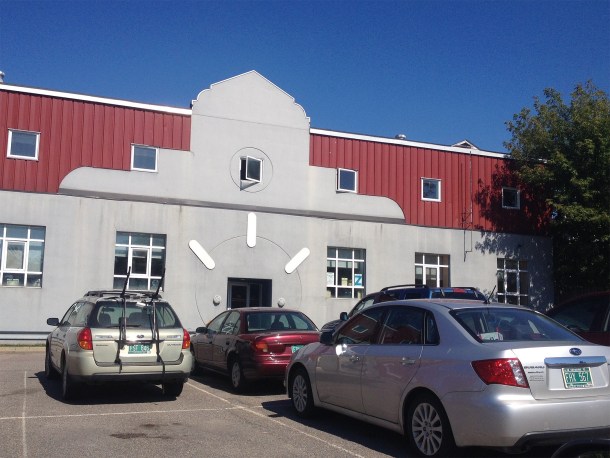
RETN and VCAM already share some studios and facilities, at 208 Flynn Ave., and together are currently building a multipurpose room for screenings, discussions and workshops as a capital project.
Decisions about what a merger will look like would be ironed out in the feasibility study. At this point, Davitian says staff cuts would be unlikely. The purpose of the consolidation effort is to hone the PEG stations’ public service mission, she says.
“This feasibility study is really meant to determine if it makes sense for just to keep going,” Davitian said. “Are we better together? Or should we just keep working in silo-ed way?”
Campitelli doesn’t envision a full merger that would consolidate all three channels into one.
“I feel it’s too early to presume that conclusion,” he said. “I may feel really differently in six to eight months. Right now we’re having such productive, detailed discussion, I don’t see the conclusion right now, but I know we’re getting there.”
On Oct. 21 the Public Service Board will hold a public hearing on Comcast’s certification in a live simulcast, at 7 p.m. across the state. For locations near you visit their site. For more on what to expect, visit CCTV’s website, which has an outline on how to testify.
Editor’s note: The operating budget numbers for VCAM were updated Oct. 5 at 10:25 a.m.
