

[F]ood security in Vermont is not improving, according to a new report by the USDA.
A study by the U.S. Department of Agriculture shows that 12.6 percent of Vermont households had low or very low food rates of security between 2012 and 2014.
But Marissa Parisi of Hunger Free Vermont says that what is most notable about the USDA report is that the situation is not changing.
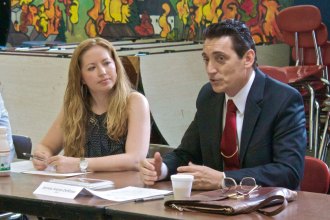
“We have an ongoing issue with income inequality and making sure that people can work and have wages that cover their basic needs,” Parisi told VTDigger on Thursday.
According to the report, the rate of food insecurity has remained more or less steady since the previous three-year period, between 2009 and 2011, when 12.8 percent of Vermont households experienced limited access to food and nutrition.
Meanwhile, the USDA report shows that people living in rural areas tend to experience higher rates of food insecurity than people living in cities. Families headed by a single parent are also more likely to be food insecure, according to the report.
Cost of living is high in Vermont, where families need to stretch their incomes to meet transportation, heating and housing costs, Parisi said. When rent or utility bills go up, she said, a family’s food budget is often stretched.
“If we’re talking about long term food security, we really need to talk about how to make sure that people have the income to lead a stable life in the state of Vermont and afford all their family’s needs,” Parisi said.
Parisi said that Vermonters have access to a number of programs that help to meet the immediate needs for families with limited budget for food.
She pointed to 3SquaresVT, Vermont’s branch of the federal Supplemental Nutritional Assistance Program that provides benefits to purchase food to families and individuals that qualify based on their income.
However, Parisi sees a need for Vermont find ways to address the root causes of food insecurity — pointing to income inequality.
“It’s a bigger picture of economic security,” Parisi said. “I think there are a lot of people who are working and they don’t consider themselves living in poverty.”
However, Parisi is optimistic that change is possible in Vermont. This academic year, she said, 48 Vermont schools are running food programs that provide free meals to all students regardless of income. That will be approximately 12,000 Vermont kids getting access to breakfast and lunch, she said.
“We shouldn’t lose hope that we aren’t making progress,” Parisi said.
Sean Brown, who heads the Economic Services Division of the Department for Children and Families, said that 3SquaresVT is just one of many efforts the state makes to help Vermonters access food and nutrition.
Brown said that in recent years, the department has seen decreasing caseloads for people on the upper end of income eligibility for 3SquaresVT.
But, that is not the case for people with at lowest income levels, he said. “While the economy might be improving, it’s not improving for them.”
