

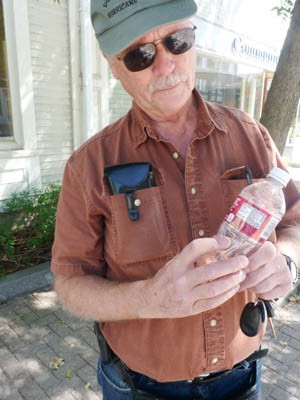
[S]am Frank of Orange buys and drinks a lot of seltzer. He calls the drink a healthier alternative to soda, as it has no added sugar or sweeteners.
So when Vermont’s newly implemented soda and sweetened beverage sales tax was applied to a black cherry Schweppes seltzer Frank purchased at an Irving convenience store in South Barre last week, he said he was confused.
“It was kind of expensive, so I asked, ‘Why is this so much?’ and they said ‘Well, we have to tax it,’” Frank recalled. “I said, ‘I don’t think so.’”
While Schweppes sells drinks that do qualify on the state’s list of taxable beverages, Frank’s favorite seltzer is concocted simply of carbonated water and natural flavors.
Guidelines issued by the Tax Department state that a drink is not taxable if it is “plain or flavored club soda or seltzer water with no sweeteners.”
Frank said the sales tax has been improperly applied to him at a number of stores over the past weeks, and provided VTDigger with a receipt from a Cumberland Farms store that applied the tax to an unsweetened black cherry seltzer.
Jim Harrison, president of the Vermont Retail and Grocers Association, described a similar experience he had while purchasing unsweetened Polar seltzer at a Price Chopper outlet.
“I called the headquarters, talked to the person and they were going to correct it,” he said.
Harrison said the confusion surrounding what beverages are and aren’t taxable is the result of Vermont’s membership as a streamlined sales tax state. The Green Mountain state is one of 24 states that share the same definitions for all taxable items, from clothing to computers.
Harrison said the streamline guidelines are convoluted, and make it hard to know exactly what drinks qualify. He said he wished the state offered a longer list of specific beverages that should be taxed.
“The Legislature passed a definition that is hard to administer and understand,” Harrison said. “It is very confusing for the consumer and the retailer.”
Rep. Janet Ancel, D-Calais, chair of the House Committee on Ways and Means who supported the sweetened beverage bill, acknowledged that while there are gray areas in the definitions, many other states have successfully taxed with the same streamlined guidelines.

“We know other states have used the definition successfully,” Ancel said “And if issues arise, Vermont has a delegate on the streamline governing board that can help with those issues.”
Ancel said tax officials have committed to focus more on education and less on implementation as retailers grapple with the new tax.
“I think these are anticipated transition issues, and I know we will get through them,” she said.
The Tax Department has been getting a steady stream of comments from Vermonters reporting instances where the new tax has been misapplied, according to Candace Morgan, policy director at the Department of Taxes.
“We’ve really been trying to be proactive and follow up with businesses directly after we are alerted to these issues,” she said.
At the Champlain Farms gas station on State Street in Montpelier, items that qualify for the sales tax are entered at the Champlain Farms remote offices and applied at all of the Champlain Farms outlets.
Mike Werner, who manages the Montpelier outlet, said that when customers have presented beverages that are improperly taxed, he alerts Champlain Farms and they update the pricing system.
“There is some confusion, but if a tax is wrong we call the office and they update the system,” he said.
Grand Isle Sen. Dick Mazza, who was a fierce opponent of the bill and owns a convenience store in Colchester, said he has had to review the taxable guidelines a dozen or so times with employees at his business.
“It’s the most confusing tax policy I have ever come across in all my years in business,” Mazza said.
Rep. George Till, D-Jericho, was the lead sponsor of a failed excise tax bill that would that would have applied taxes on sweet beverages and candy that would have been included in shelf prices.
Till said that while the passed sweet drink sales tax bill was a good start, it was not high enough to reduce consumption of unhealthy foods.
“While I don’t oppose putting a sales tax on the drinks, it makes it harder to do what we really need to do, which is to fight the obesity epidemic,” he said.
