


[O]ne woman paid premiums for months only to find out she didn’t have coverage, while another woman hasn’t paid a premium this year but is covered.
These are two of the Kafkaesque stories that have come out of people’s experience with the Vermont Health Connect exchange. Its incomplete technology has created an array of problems for customers that are as varied and diverse as their lives.
There are 34,000 people in Vermont who don’t have employer-sponsored health insurance or Medicaid, the government’s low-income health care program. These individuals have no choice but to use the exchange or go uninsured and pay a federal penalty.
Customers who are not receiving a premium tax credit subsidy will have an option to enroll directly with the insurers next year. But the 65 percent of individual market customers receiving a subsidy won’t have that option.
A top health care advocate in the state recently described the exchange’s problems as “hellish” for consumers. The majority of subscribers’ issues are rooted in the manual work that has long been required to make changes for customers and renew people’s coverage.
Technology improvements in the last two-and-a-half months have reduced, but not eliminated, the need for data to be entered by hand. That has slowed the rate at which new issues are created, and sped up the rate at which old ones are resolved. But the state has more work to do in order to resolve its ongoing issues and regain the public’s trust.
The woman who paid premiums but wasn’t covered
Elizabeth Gibson, 64, is a freelance editor who lives in Pawlet. She bought a Blue Cross Blue Shield of Vermont policy for herself and her son in January 2014. She kept detailed notes on her interactions with Vermont Health Connect.
When her son found a job that offered health insurance five months later, she called to have him removed from her policy. “That’s when the trouble started,” Gibson said in an interview Monday.
Gibson was told that her July invoice would reflect that her son was no longer on the policy. She never received an invoice in July, and continued to pay her premium at the previous level as a precaution. Vermont Health Connect personnel assured her she was still covered. They told Gibson her account would be credited for any overpayment, so she continued to pay the higher premium.
In October of last year, she was informed that her son had not been removed from the policy. Gibson was told to keep paying her premium, and the issue would be resolved the following month. She received no invoice for December but continued to pay her premium.
In January, she was told she would be issued a refund and assured once more that she was covered. In March she received a refund of $2,400 with no explanation of what it was for. Gibson assumed it was the additional premium she had paid for her son’s coverage in the months after requesting he be dropped.
Then she stopped receiving invoices all together. When she called in June to ask what was happening, she was told her policy had been terminated retroactively in June 2014.
Instead of removing her son, they had canceled her policy.
Gibson was informed that she had been without coverage for nearly a year. The $2,400 refund was for the entirety of her premium payments during that time.
In August, Gibson was told to reapply and request a new policy for just herself. The Vermont Health Connect employee wanted to backdate her policy to January. Gibson argued that she shouldn’t have to pay that many months of past-due premiums.
A supervisor agreed the policy could be back dated to April, and Gibson paid the three months’ premium. She said Monday that she’s mostly frustrated that she was told numerous times she had coverage, only to find out months later she that she didn’t.
“That’s what really bothers me is to be told one thing on the phone repeatedly and then to find out that’s not the case,” Gibson said.
Gibson said she supports “the direction that the state has been trying to move in with health insurance,” but her experience with Vermont Health Connect has raised concerns for her about how it’s being managed. Her perception is that managers don’t understand the “nuts and bolts” of the technology underpinning the system, she said.
“It’s making it difficult for me to feel comfortable as a consumer that my health insurance is even in place,” she added.
Federal law allows people to go without insurance for less than three months without facing a penalty for being uninsured. Gibson is working with Vermont Health Connect officials to backdate her policy in a way that will avoid a penalty for 2015. However, it’s likely she will pay a penalty for being uninsured during much of 2014.
Trinka Kerr, lead attorney for Legal Aid’s Office of the Health Care Advocate, said it’s possible she will. Kerr encouraged Gibson and other people in similar situations to call her office, and seek help from the caseworkers there.
“Back when she requested the change they couldn’t easily do them,” Kerr said.
In many cases it still can’t. Blue Cross Blue Shield of Vermont recently told a legislative panel that Vermont Health Connect is still unable to transmit information involving multiple changes to one account.
In Gibson’s case, dropping a dependent triggered multiple changes to her policy. Her income level changed, and she no longer receives a premium tax credit subsidy. The exchange then had to issue her a new policy, which, according to Kerr, is another distinct step.
“A lot of the things that sound like they would be simple aren’t,” she said. For people like Gibson, who had complicated issues dating back to last year, the exchange’s manual solutions often resulted in a compounding of their problems, Kerr said.
Data entered manually could contain errors, or the requested change could get miscommunicated. Customers may have then requested new changes before the old ones were processed, or any permutation of similar snowballing events could occur, Kerr said.
Still, Kerr says things are improving. The technology is working better, and employees are better trained, Kerr said. From her vantage point, communication between Vermont Health Connect, its third-party premium processor and the insurers is improving as well.
June and July were the first two months in the exchange’s 22-month existence when it was able to process more requests for coverage changes than it received, according to state officials.
More than half of the 10,000 change requests that were backlogged in May are now processed. However, it’s likely that the remaining requests are complex cases that could be difficult to resolve.
And there are still other problems stemming from the latest open enrollment period that relied heavily on paper applications and data entered by hand.
The woman who is not paying premiums but is covered
Carol, 27, of Montpelier, who asked to be identified by a pseudonym in order to feel comfortable sharing personal health details, said she hasn’t received an invoice from Vermont Health Connect in 2015.
She purchased coverage in early 2014 when she took a new job that didn’t offer health insurance. Carol renewed her policy for 2015 over the phone and was told the process was complete.
She received her new Blue Cross Blue Shield of Vermont policy information and an insurance card. Initially the lack of invoices concerned her, and Carol called to inform the exchange that she had changed her address.
“What they told me was they hadn’t caught up with their billing cycle for 2015, and that I would be receiving a bill in April or May. Now it’s August,” Carol said. She still hasn’t received an invoice.
Kerr was at a loss to explain what’s happening to Carol. “They were behind on the renewals, but I thought they were caught up on that sort of stuff,” she said.
“If she hasn’t been paying, you don’t get it for free. It’s possible they haven’t caught up with billing, but she’s going to owe the back premium,” Kerr said.
Carol is aware that she will be billed for the back premium, and is prepared to cover that cost. But chasing down the people that should be billing her isn’t something she’s interested in.
“My job is more than 40 hours a week, and at the end of the day the last thing I’m going to ever remember to do is call Vermont Health Connect,” she said.
A larger problem, and one that Carol did not anticipate, is that her coverage could be retroactively terminated because of the unpaid premiums. That could leave her on the hook for claims associated with her account.
Carol visited Planned Parenthood and later an urgent care center in the first half of 2015. At the urgent care center they suggested she go to the emergency room, but already concerned about the cost, Carol chose not to. Both clinics accepted her insurance without issue. It appears Blue Cross paid those claims, because Carol has not received a bill from the providers.
Vermont Health Connect and Blue Cross are in the midst of reconciling their books for 2015. The two parties just reconciled for 2014 last week, and the state has agreed to pay the insurer $1.6 million in uncollected premiums and claims associated with the unpaid accounts.
Carol’s account may be among many that will be canceled for nonpayment as a result of the same process for 2015. The exchange retroactively terminated thousands of accounts from 2014 for the same or similar reasons.
“Expected to pay” despite problems
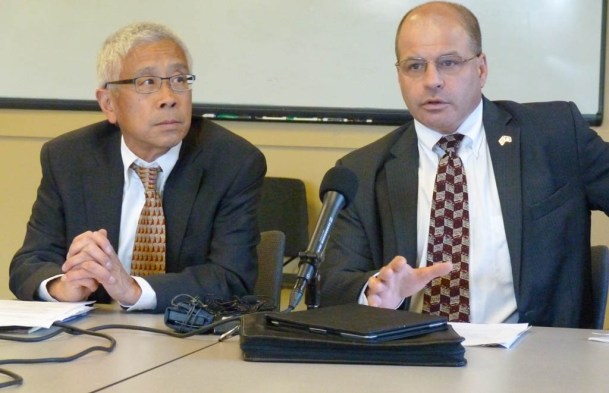
State officials are left striking a delicate balance. They don’t want to send the message that people can get away with not paying premiums as result of the system’s struggles, but they also don’t want to penalize people for the exchange’s problems.
“If people have premiums due, we’ll certainly look to have those paid,” said Lawrence Miller, chief of Health Care Reform, in a recent interview. Miller was responding to questions about whether the state will seek payment from individuals to help cover the $1.6 million it owes Blue Cross. “I don’t think we’ll go back to old accounts, but current customers are expected to pay,” he added.
Both Kerr and Miller encouraged Carol and others in a similar position to work with the Health Care Advocate’s office or Vermont Health Connect if they aren’t receiving invoices. Even though it’s a hassle, addressing the problem is better than the alternative, according to both.
“She definitely needs to get it sorted out before she’s terminated and could really owe money,” Kerr said.
Carol’s situation is likely the result of the exchange’s reliance on paper forms and call center employees during the last open enrollment period when customers renewed their coverage. It was expensive, (costing $800,000 per month for additional staff), and also created greater possibility for errors than would exist in an automated system.
Gov. Peter Shumlin said the state will release new technology in October to automate the renewal process for the upcoming open enrollment period.
The state has acknowledged that not meeting that deadline will necessitate higher staffing levels and is likely to cost $3.5 million — not to mention the additional problems that it could create for customers.
Shumlin has also said if his administration is unable to meet the October deadline it will engage with the Legislature to find an alternative to Vermont Health Connect.
Correction (Aug. 24, 10:38 a.m.): An earlier version of this story misstated the length of time an individual can be uninsured and not face a federal penalty. People must be uninsured for less than three months or they will face a federal penalty for being uninsured.
