

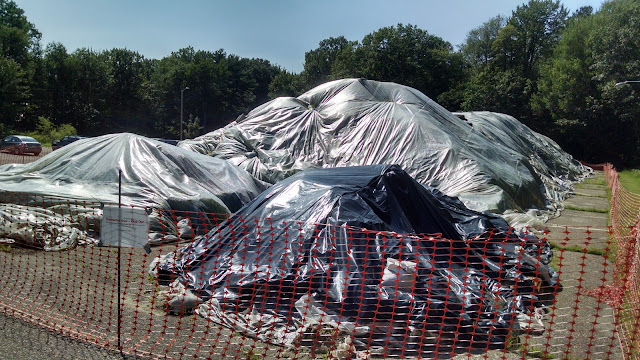
[B]urlington city officials were aware of the possibility that a massive pile of soil was contaminated before they began moving it to a parking lot in Leddy Park last year.
As several news sources have reported, the stockpiled soil, left over from excavation for the bike path at a Waterfront Park site closed off by the Department of Environmental Conservation, was moved there on Oct. 3, 2014. The soil has been sitting untouched ever since.
The soils have since been tested and found to have various levels of polycyclic aromatic hydrocarbons, polychlorinated biphenyls, lead, arsenic and total petroleum hydrocarbons – which only came partially as a surprise to city officials.
PCBs, arsenic and some types of PAHs are classified as carcinogenic to humans by the International Agency for Research on Cancer, while lead has been classified as probably carcinogenic and, according to the Centers for Disease Control in Atlanta, high exposures to TPH can cause death.
Jesse Bridges, director of the Department of Parks and Recreation, said that while the city was aware that there was a possibility the Leddy Park soil was contaminated, officials were not aware of the degree to which it was contaminated.
The Waterfront Park, where the soil came from, was previously a heavily industrialized railroad site, Bridges said. Such areas are now commonly known as brownfields.
The site had been investigated by the DEC in 1992 after elevated levels of PAHs were found in soil tests, according to a Nov. 10, 1992, letter from Robert Finucane, the then-chief of the Sites Management Section of the DEC.
Finucane ultimately took the location off the active hazardous sites list, after determining that similar levels of PAHs could be found in the surrounding environment of the city. But he warned the city that this would not release them from any past or future liability associated with contamination at the site.
There are now four soil piles sitting in the Leddy Park parking lot. They have names: Pile A, Pile B, Pile C and Pile D. The difference between the soil piles is where they originated from and the time, Bridges said. Pile A is by far the biggest pile, and was excavated first, he said.
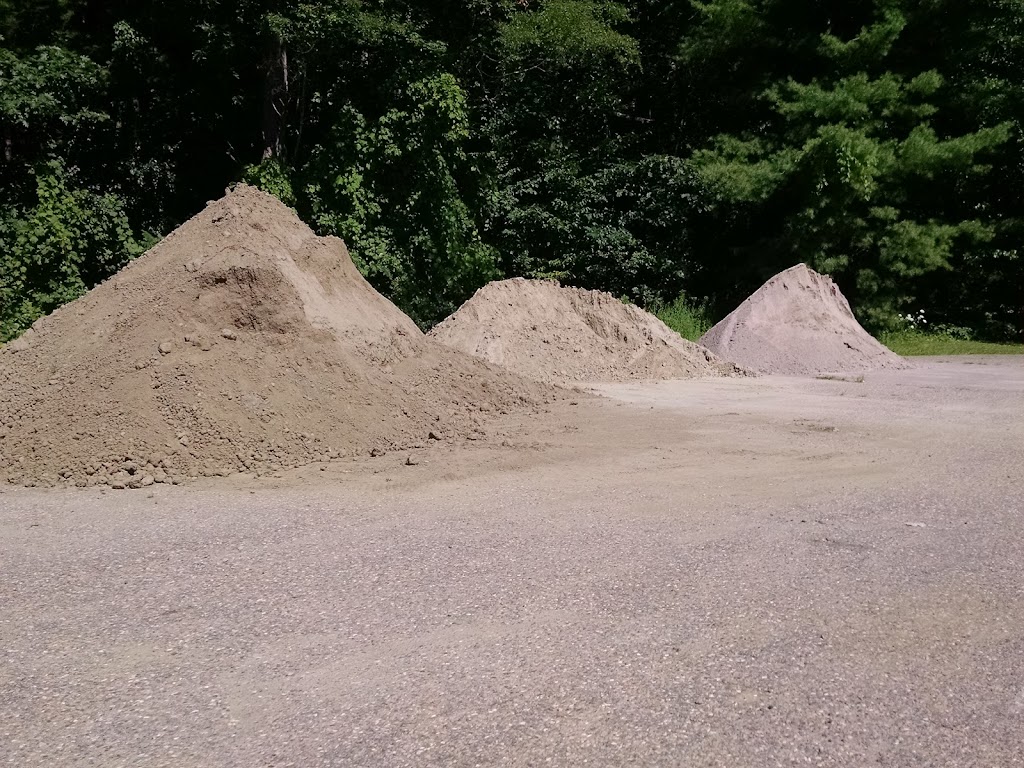
Two of the five samples taken from Pile A contained PCB levels exceeding the state’s limits as set by the Agency of Natural Resources.
Arsenic, lead, TPH and PAHs were found among samples of the other piles, according to a Feb. 25 email from Paula Miller, structural engineer at the consulting firm for the bike path project, Vanasse Hangen Brustlin. The email included a summary of the results from the tests of the soil piles.
Maintaining the piles
George Opalenik, a resident of the new North End who lives near Leddy Park, has voiced concerns – echoing other residents’ worries – regarding the contaminated soil. In discussion boards on Front Porch Forum and to Bridges directly, he’s complained about what he’s seen.
“In the parking lot of a public park, I observed runoff going down the gully, heading toward Lake Champlain, which we spend thousands, if not millions, of dollars trying to keep clean,” Opalenik said, adding that it affects residents’ drinking water supply. “It is almost inconceivable that the people running our city would do something like that.”
Opalenik said that he and the other concerned locals didn’t know each other before this, and aside from the fears of toxic exposure, only had residency in the new North End in common. The pile was not maintained at all before they started working together, he said.
“There were trees growing through it,” Opalenik said. “The runoff was horrible.”
Once residents coalesced, the pile was maintained properly, Opalenik said. It’s now covered with dark plastic, so vegetation won’t grow through, and there are bales of hay around it to prevent some of the runoff from going into the lake, he said.
The hay bales and plastic covering were added during an inspection July 29 and July 30, according to the July 31 inspection report.
Evidence of runoff from the soil piles was reported to be found during the inspection, but it was said to have collected in a vegetated swale between the parking lot and bike path, according to the report.
Bridges – in a July 9 email to city and state officials – said that a resident had been posting inaccurate information in regards to the soil piles and “attempting to instill fear in the neighborhood.”
The inaccurate information posted on Front Porch Forum which Bridges was referring to was that the soil came from the Moran plant (a now-vacant former coal-fired power plant off the bike path) and that it was industrial soils that “were removed from the Waterfront in order to make way for ‘development,’” Bridges said.
The resident also insisted that the city knew of the soil’s PCB contamination before they moved it to Leddy Park, which is false, Bridges said.
Bridges said that PCBs were not on the list of known contaminants for the area from which they excavated the soil, according to DEC records. PCBs were also not added to the International Agency for Research on Cancer’s list of known carcinogens to humans until March 2013, according to their classification list.
Disposal comes at a cost
Originally, the city of Burlington wanted to re-use the soil they were storing at Leddy Park as they continued the Burlington Bike Path Rehabilitation project, a state DEC manager said.
Hugo Martinez-Cazon, who manages hazardous sites for the state, said that the soil’s initial removal for the project, and the safekeeping of it, fell under the city’s oversight.
Martinez-Cazon said he did not approve the city’s request to re-use the soils, due to the high amounts of contaminants found after testing, according to a May 13 letter from him to Jen Francis, the parks planner at the Burlington Department of Parks and Recreation.
Under regulations by the Vermont DEC, soils that are not suitable to go back in the construction hole need to be sampled before determining where they go for disposal, Martinez-Cazon said.
The cost of disposing the soils at the state’s only landfill, in Coventry, would be approximately $300,000, Bridges said. That cost is mostly to do with the shipping of the soils, but there will also be a high tipping fee, as the soils are considered solid waste and because of the contaminants, he said.
“They’ve got soil that you know that’s bad, you know it’s not in the budget, and now you’re going to take $300,000 out of the taxpayers’ money to fix your screw-up,” Opalenik said. “I’m very upset with our administration, with Mayor Miro Weinberger – with his idea of what the city should be versus what the rest of the city’s opinion of that is.”
“It’s tough. It’s tough to swallow,” he said.
The soils have not yet been disposed because PCBs are monitored under the Toxic Substance Control Act program of the Environmental Protection Agency (EPA). Once PCBs are found, then it becomes the EPA’s jurisdiction, Martinez-Cazon said.
The soil work plan was submitted by Vanasse Hangen Brustlin and the City of Burlington Aug. 10, a full 20 days before it was due. The plan calls for additional testing to the Waterfront Park as well as additional testing to the piles at Leddy Park, Bridges said.
Martinez-Cazon said that the plan will help determine disposal options for the soil. It will require the decision of whether or not fed’s regulations for PCBs would give them jurisdiction over the piles. The test results will be looked at by both the EPA and the Vermont DEC, he said.
“The EPA will make a determination on jurisdiction once the results are available to them,” Martinez-Cazon said.
Soil sampling to determine jurisdiction is scheduled to take place no later than Sept. 30, and analytical results will be received no later than Oct. 30. It will be possible for a decision to be made on whether the soil will be disposed of or reused no later than Dec. 15, according to a July 16 memo from city officials. All efforts will be taken to complete these tasks within an earlier timeframe, according to the memo.
