

[I]n January a nurse at the University of Vermont Medical Center accidentally administered too much of an anesthetic to a patient in the intensive care unit, causing an overdose that killed him a short time later, records show.
Seven weeks after his death, the hospital had not made changes based on its analysis of the root cause of the incident, and it wasn’t until after inspectors found the hospital out of compliance with federal regulations — a potential threat to its federal funding — that new practices were put in place, VPR first reported.
Hospital officials said they were in the midst of a 90-day internal review of the event, and changes were being discussed when inspectors showed up in mid-March to investigate a complaint about the event. The hospital has now updated its practices and made changes intended to prevent similar mistakes in the future. Those changes have been accepted by regulators.
“If (inspectors) showed up at 91 days we would have had a complete plan in place that was fully implemented, with maybe a few loose ends that needed to be tied up,” said Dr. Steve Leffler, chief medical officer at UVM Medical Center. Inspectors arrived 49 days after the incident.
There are roughly 20 incidents that trigger root-cause analyses at the state’s largest hospital each year, Leffler said. Going forward staff will report on those analyses to a Patient Safety Committee after 30 days, so that corrective action can be taken more quickly, he said.
“We take patient safety extremely seriously and do everything in our power to ensure that we provide the highest quality care possible,” Leffler said, “We learn from events like this to become a better institution.”
The daughter of the patient who died has retained the Burlington personal injury firm Maley and Maley to pursue a wrongful death case. Attorney Christopher Maley said the hospital agreed Thursday to enter mediation this September to negotiate a settlement.
As a policy UVM Medical Center does not discuss legal matters, a spokesman said.
An accidental but avoidable ketamine overdose
Gregory Davis, 55, arrived in the UVM Medical Center emergency department Jan. 27 after several days experiencing shortness of breath. He was obese and had a history of chronic alcohol use and heart disease, according to his death certificate.
As Davis’ condition worsened, an X-ray showed fluid in his lungs. Emergency medical staff decided he should be moved to the intensive care unit. Doctors chose to intubate Davis and use a mechanical ventilation device to help him breathe.
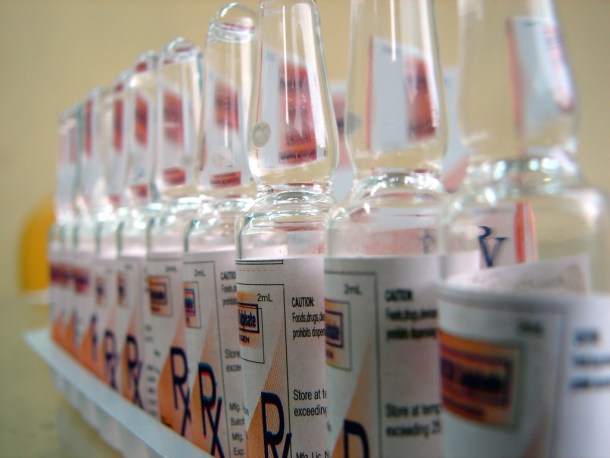
The treating physician ordered a nurse to administer a muscle relaxant and the anesthetic ketamine. The physician ordered 100 milligrams (mg) of ketamine for Davis. Vials used in the ICU at the time held 500 mg of the drug. Despite the physician’s order, the nurse chose to fill the syringe completely, anticipating they might need successive doses of the painkiller to achieve the desired effect.
When the nurse administered the ketamine through an IV, she forgot it was filled all the way and injected Davis with all 500 mg of the drug, the inspection record shows.
“In the moment I thought I only had 100 mg in the syringe,” the nurse told inspectors during an interview in March. Minutes later Davis went into cardiac arrest. The nurse realized he had overdosed on the ketamine and took immediate action, starting chest compressions and notifying the physician and lead nurse.
Additional cardiac drugs were administered, but those and other resuscitation efforts were unsuccessful. Davis was pronounced dead roughly 30 minutes after being injected with five times the amount of ketamine the doctor ordered. His death was ruled an accident, the certificate shows.
In an interview with inspectors, the nurse explained that he or she had followed the practice of drawing more medication than a doctor ordered throughout their time working as a critical care nurse. The ICU Nurse Manager confirmed to officials that drawing up more medication than ordered is a common practice, especially in emergency situations, the inspection report shows.
UVM Medical Center’s Vice President of Nursing Services told inspectors that overdrawing medication orders is against hospital protocol. The Medical Director for Adult Critical Care acknowledged to inspectors that overdrawing medication in emergency situations creates “a potential for error,” the report shows.
It’s also unclear why emergency boxes in the ICU, containing commonly used emergency medicine supplies, still contained 500 mg vials of ketamine until recently. The ICU never uses concentrations greater than 200 mg, according to the report.
A nationwide shortage of ketamine in 2009 left UVM Medical Center stocking the 500 mg vials throughout the hospital because that’s all that was available. However, the shortage ended in 2010, the report shows, and the hospital never revisited the ketamine vial sizes available in the ICU.
Leffler, the chief medical officer, said he was not sure why that practice was never revisited, but there were protocols in place to avoid an accident. In Davis’ case they weren’t followed.
The hospital’s pharmacy manager told inspectors that “if asked in January 2015 to make a change in ketamine vial concentrations” doing so would be possible, since other concentrations “were and still are available.”
“In 2010 we made a change. I don’t think providers were aware that the smaller doses were available again,” Leffler said. The hospital’s root cause analysis initiated Jan. 29, less than two days after Davis died, identified the “size and concentration of multi-dose ketamine vials” as an issue.
An action plan called for the hospital pharmacy to evaluate making alternative ketamine vial sizes and dose concentrations available. That process was complex, and required input from experts throughout the roughly 40 venues at the hospital where ketamine is administered, Leffler said.
That work was not complete when inspectors arrived, but changes were made within days of the complaint investigation, the report shows. Now the smaller-dose ketamine vials are in the ICU emergency boxes.
The hospital also created a new training module for nurses that reinforces the practice of only drawing up the amount of a drug ordered, and repeating aloud medication orders. Staff was put through that training within days of inspectors arriving in March, the report shows.
In addition, Leffler said the teams that work on root-cause analyses triggered by events like an avoidable death will share their findings with the Patient Safety Committee after 30 days — rather than 90 — so that solutions can be implemented more quickly.
