

 [T]he prospects for a payroll tax to finance Gov. Peter Shumlin’s health care reform plan are fading as attention shifts to the Senate.
It’s too late for the proposal to go anywhere in the House, which is trudging forward with its own, more modest health care package that could hit the floor late next week.
That makes the Senate the only place for the governor to resurrect the payroll tax, but Senate Pro Tempore John Campbell, D-Windsor, said Thursday the upper chamber has little interest in the tax.
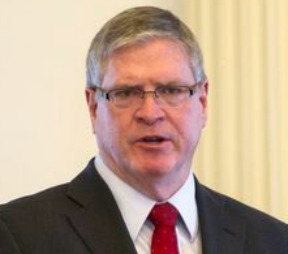
Campbell worries about the burden the tax would place on companies at a time when the state’s economy is slower than expected. Too many businesses, he said, are still recovering from the Great Recession at this time.
“I just can’t support a payroll tax at this time,” Campbell said Thursday. “While I respect the governor’s view, and I think that his desire to do something about the [Medicaid] cost shift is admirable, I just don’t think there’s an appetite for it in the Senate.”
Shumlin has said the 0.7 percent payroll tax would be offset by reductions in premium growth for businesses and individuals. The $90 million tax would generate premium savings of 5 percent, the governor has said.
No other state has a payroll tax to support health care, according to an analysis from the Joint Fiscal Office.
The governor unveiled the plan for boosting the Medicaid reimbursement rate for doctors and hospitals in his budget address, less than a month after dropping his signature single-payer health care program because he said it would be too expensive. That decision was announced on Dec. 17, leaving little time before the legislative session for the Shumlin administration to come up with an alternative health care reform plan.
Since the budget address, the governor hasn’t changed his tune, even as the odds grow longer for the payroll tax. At a Wednesday news conference, Shumlin brushed off questions about whether his proposal has any supporters in the Senate, and delivered the same pitch he’s made numerous times on radio programs and in other public appearances.
Raising Medicaid rates will increase access for people in the program, he said. Currently, many providers limit the number of Medicaid patients they see because they can’t afford to take a lower payment for services. Medicaid reimburses at 60 percent; under Shumlin’s plan, the rate would be 80 percent (the same rate as Medicare). Increasing the rates would allow the state to draw down a large amount of federal Medicaid match money, the governor said.
Shumlin has said businesses would see their payroll tax liability offset by a reduction in the growth of health insurance premiums.
Despite the best efforts of Shumlin’s health care reform team, lawmakers are not convinced the payroll tax would result in lower insurance premiums.
Al Gobeille, chair of the regulatory Green Mountain Care Board, said the board is willing to make its best effort to ensure that premiums grow by less than they would otherwise, if the plan went forward, but all year he has maintained that’s not something that can be guaranteed.
House health care package stalls
Meanwhile, the House health care package, H.481, is languishing in the Appropriations Committee, where many observers expected a vote earlier this week. Two Democrats on that committee voiced discomfort with the package Thursday, because of they are opposed to the taxes that pay for it.
The House Health Care Committee passed a 0.3 percent payroll tax paired with a sugar-sweetened beverage tax for a $52 million package, but the House Ways and Means Committee struck the payroll tax and modified the beverage tax. The package was lowered to $22 million.
The House plan pays for increased subsidies on the Vermont Health Connect exchange, and increased Medicaid rates for primary care, substance abuse and mental health providers, among other smaller initiatives. The money for the package comes from an excise tax on sweetened beverages, an increase in the tax on tobacco products and the elimination of the sales tax exemption for dietary supplements.
“I make no bones about the fact that I hate end-use, regressive sweetened beverage or sales taxes,” said Rep. Matthew Treiber, D-Bellows Falls. Rep. Kitty Toll, D-Danville, said she can’t support a package financed with a sweetened beverage tax. With four Republicans on the committee, finding the six votes necessary to pass it could be difficult.
House Speaker Shap Smith, D-Morristown, said he’s confident H.481 will make it out of Appropriations, and he expects a vote before the end of next week.
“I think it can get through Appropriations, I just want to make sure if it comes to the floor it has the appropriate amount of support,” Smith said.
Depending on what happens in the House, Sen. Jane Kitchel, D-Caledonia, chair of the Senate Appropriations Committee, said her committee may try and incorporate any new health care spending back into the budget.
Kitchel said she also wants to see if there is money currently being spent on health care that can be reallocated or used more efficiently to pay for some of the initiatives identified in the House bill.
Kitchel is among the lawmakers who find the governor’s payroll tax suspect. She said the proposal “hugely complex,” and questioning whether it could actually reduce premium growth to the extent the administration suggests.
Sen. Claire Ayer, D-Addison, chair of the Health and Welfare Committee, said she would like to pull any health care package that emerges from the Senate back into the budget.
Separating the health care spending from the budget makes it easier to “pick off” when legislators are making difficult choices with limited resources, she said.
Campbell said he’s not convinced of the need for a health care package at all. If there’s spending initiatives that aren’t “core to the function of state government they have to take a back seat at this time,” he said.
