

Updated at 6:52 p.m. Thursday.
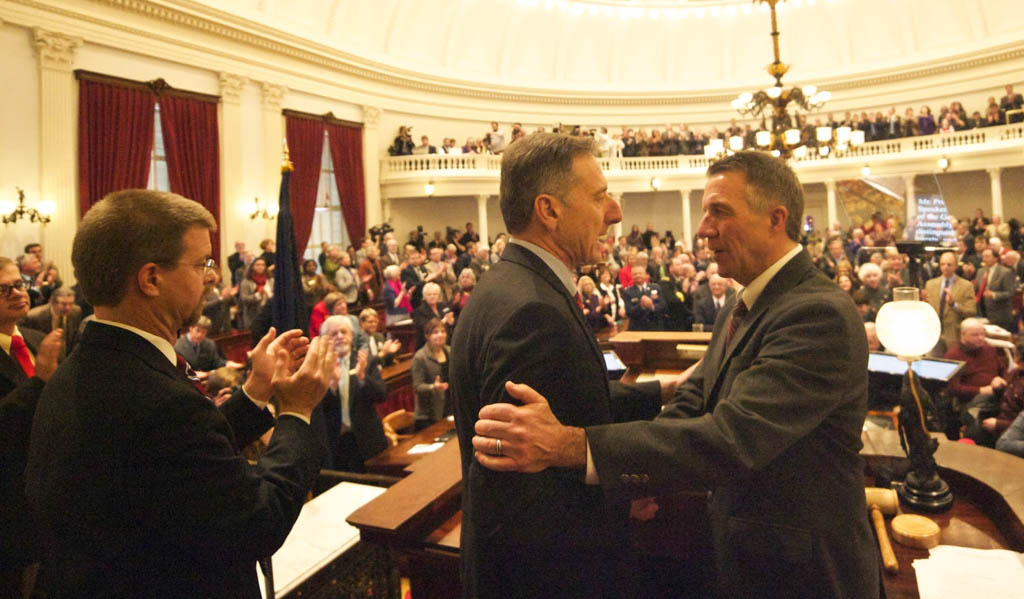
In an anticlimactic end to the protracted gubernatorial election, Gov. Peter Shumlin was re-elected to a third term Thursday morning in a secret ballot by a joint assembly of the Vermont Legislature.
Shumlin defeated Republican Scott Milne in a 110-69 vote. The vote happened in the morning, a few hours before protesters disrupted Shumlin’s inaugural address with singing and banners hung from the House gallery, boisterous demonstrations that punctuated the opening ceremonies and angered many lawmakers.
Milne said he was disappointed not to have won but believes the election process was good because it demonstrated that every vote matters. Shumlin said he was honored and humbled to have been elected a third time.
In a rare but not an unprecedented procedure, the Legislature chose a governor Thursday morning because no candidate garnered more than 50 percent of the vote in the Nov. 4 general election.
Shumlin beat Milne by 2,434 votes but because of votes for third-party candidates, neither frontrunner received a majority. Shumlin won 46.4 percent of the vote, while Milne received 45.1 percent. Milne acknowledged that Shumlin received the most votes but did not concede the race.
Under the Vermont Constitution, if no candidate wins the plurality, the Legislature votes by ballot. Lawmakers on Thursday chose between the top three vote-getters: Shumlin, Milne and Libertarian candidate Dan Feliciano. Feliciano, who drew less than 5 percent of the vote in November, received no votes from lawmakers Thursday.
These circumstances have happened before in a Vermont gubernatorial election, most recently in 2010 when Shumlin was first elected governor against Brian Dubie, but traditionally the second-place candidate concedes and asks the Legislature to support the winner.

Lt. Gov. Phil Scott, Senate president, presided over the vote. Lawmakers voted on anonymous green ballots by checking one of three boxes.
The vote took place in the House chamber, with senators filling ceremonial red seats across the front of the room.
In weeks approaching Thursday’s vote, debate swirled over whether lawmakers should be forced to reveal how they voted. Controversy also ensued over whether lawmakers should vote according to their conscience, party line or choose the candidate who got the most votes in their district.
Senate Secretary John Bloomer, however, relied on historical precedent that interprets the word ballot to be secret.
No lawmakers made speeches before the vote except Republican minority leader Don Turner. He said the unusual circumstances of this election were healthy for Vermont democracy.
Turner said he had heard from more constituents in the past two months than he had in the past eight years.
“It has shown people that every single Vermonter and their vote does count,” Turner said.
Shumlin’s near-defeat also demonstrated that Vermonters want a leader who can relate to their needs and stay in touch with constituents, and it showed that you don’t have to be a career politician to win, Turner said.
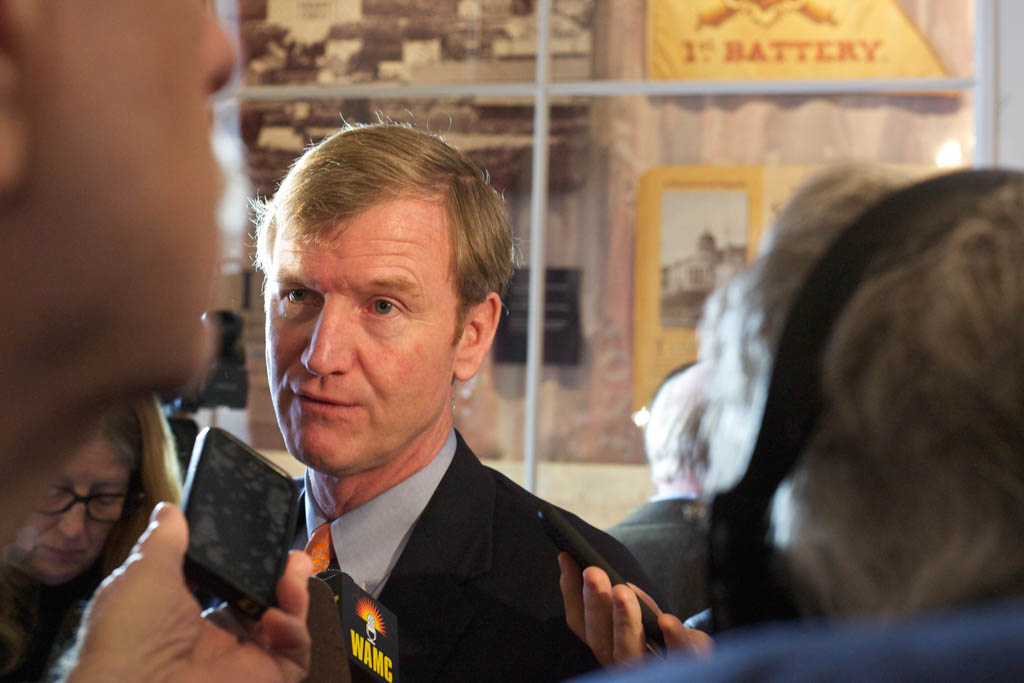
Milne, who listened to the results just outside the House chamber, echoed many of the same sentiments in comments after the vote.
“I hope one of the legacies of my campaign is that Vermonters realize that it’s possible to get involved and make a difference,” Milne said.
Milne said he was not surprised by results, calling victory a “tall order.” He acknowledged that he “came out of nowhere,” but pointed out that he nevertheless nearly defeated an incumbent governor in a Democratic state.
In the event that he had won, Milne said he had prepared an inaugural address that focused on his central theme of slowing down and thinking through financial consequences of policies before acting.
“What I think is there’s an awful lot of Vermonters who realize there should be more balanced, moderate government,” Milne said, adding that he will work toward that whether it’s part of a campaign or not.
Milne declined to say whether he plans to run for another office in the future. A year ago, the probability he would run for governor was less than 1 percent, he said, so anything is possible.
Milne said he plans to get back to his travel business, Milne Travel, which he left for the past seven months to campaign.
Milne said he believes the secret ballot was the correct way to vote and he does not believe lawmakers should change the Constitution because of one election, since it was such an anomaly. Legislators should have voted for the candidate they believed would make the best governor, he said.
Milne said he might have won if he had spent a little more money before the election, but said he was proud not to have relied heavily on fundraising beyond friends and family.
In the weeks leading up to the Legislature’s vote, a group called Vermonters for Honest Government ran TV and social media ads urging voters to ask their representatives to vote for Milne.
The group’s spokesman, William Round, said Thursday that the group is disappointed with the results.
“(Vermonters for Honest Government) hopes Gov. Shumlin will be disciplined in his recent commitment to listen and be more accountable to Vermonters,” Round said in a statement.
Shumlin issued a statement following the vote. He said he expects this will be a productive session addressing issues including the economy and job creation.
“It’s been an incredible honor to serve as Governor of Vermont, and I am so grateful for the opportunity to continue serving this state I love,” Shumlin said in the statement.

