


Editor’s note: This story is by Nancy Graff, of Montpelier, who is a freelance writer and editor. In This State is a syndicated weekly column about Vermont’s innovators, people, ideas and places.
[S]everal miles up a dirt road in Marshfield, Mary Leahy’s driveway swings up a modest rise on the right. In the wake of a recent snowstorm, ice, clumps of snow, ruts, and shattered branches have created endless road stubble. Traffic is infrequent. Leahy hasn’t seen Camel’s Hump, a breathtaking view normally framed by her house’s large west-facing windows, for almost a week due to stubborn low-hanging clouds. No other structure or human being intrudes.
In this isolated spot, Leahy has spent 20 years thinking through what it means to be literate. She believes it all comes down to creating communities that welcome everyone.
Two years ago Leahy, a Montpelier native, retired from Central Vermont Adult Basic Education after 34 years as co-director and four years before that as a field tutor. Throughout her tenure, she says in her soft voice, she worked to make adult literacy programs “as inclusive as any other form of education, so that everyone could become part of the cultural community.”

Leahy is sitting in her living room, her telltale shock of white hair the same color as the walls inside and the snow piled outside. She can tell hundreds of stories about people she has encountered over the past decades. One woman holds a special place in the evolution of her thinking. According to Leahy, when this woman came to be tutored in reading, Leahy asked her why she felt the need to learn now, long after she had left school. She replied that she had a big maple tree in her front yard, and a dream that one day when she finished her chores, she would take a book and sit under that tree and read it.
“That became the beacon for the rest of my work,” Leahy says.
One book in particular provided more inspiration. A middle-aged man under Mary’s tutelage asked if they could read “Black Beauty” together. “’Why that book?’” she remembers asking. He had shown no interest in horses. He explained that “Black Beauty” had been popular when he was in school, but he could never join in the discussions about it because he couldn’t read. He wanted to know how it ends.
“I think ‘Black Beauty’ was the most formative book I read as a child. It taught me about being compassionate. I read it over and over and over,” she says.
And then there was a favorite nun at Leahy’s college, St. Catherine University, in Minneapolis. She taught Leahy that “work has to serve the world.”
After graduating and returning to Vermont, Leahy briefly tried her hand at farming before she started working in literacy.
“Literacy took up my imagination,” Leahy says. “It took up my heart, and I could see the changes in people’s lives.”
Soon, however, she began to see that being able to identify a letter, being able to associate that letter with a sound, stringing letters into words, and understanding the meaning of the words were not enough. She recalls men at a local electric company who were afraid to requisition a part to fix a machine they could run with their eyes closed because they were unable to fill out the form needed to get the part. They learned the fundamentals of reading for their jobs, but until they could engage with ideas they remained outliers in the world’s cultural community.
“They needed to be included,” Leahy says. And that meant being able to help their children with schoolwork, being able to articulate their ideas and opinions, being able to teach themselves to learn.
Bringing the newly literate into the life of their families and home communities, into the community of ideas that explore our humanity and world, became Leahy’s goal.
These days CVABE serves approximately 600 clients, down from a high of 800 a few years ago. Leahy is quick to praise the people with whom she has worked over the years and other organizations that have made literacy work possible, especially the Vermont Council on the Humanities, with its emphasis on teaching reading not just as a vital skill but as a revelation of the human condition.
Each student presents unique challenges. Some are well-educated immigrants who need to learn English to work in their field. Some have learning disabilities that weren’t addressed. Others have lived in such chaotic situations that school wasn’t a priority. Still others have come from such poverty that illiteracy was a legacy passed from generations.
When she began working for CVABE, the organization stressed one-on-one in-home tutoring. ABE itself was a feature of the war on poverty that was an extension of the Department of Education. Leahy’s job was to develop tutoring programs by recruiting students and volunteers. To find students, she went door to door asking if anyone needed literacy assistance.
Being illiterate is not something people want to admit, she says. “There’s a chronic fear of being found out that you can’t do what everyone else can. You think you’re alone in not being able to do this.”
And so she met them wherever they felt comfortable. She tutored in homes, in restaurants, in libraries, sometimes in her car.
Eventually, the Department of Education pushed the ABE program to move toward a more center-based structure. So Leahy oversaw that change, as well as many others, including gaining independence, forming a board, fundraising, starting an alternative high school program for teens, and very important, from her perspective, hosting reading and discussion programs. In 1989 she helped organize the first statewide conference for Vermont’s newly literate, ABE students who had once believed their opinions did not matter.
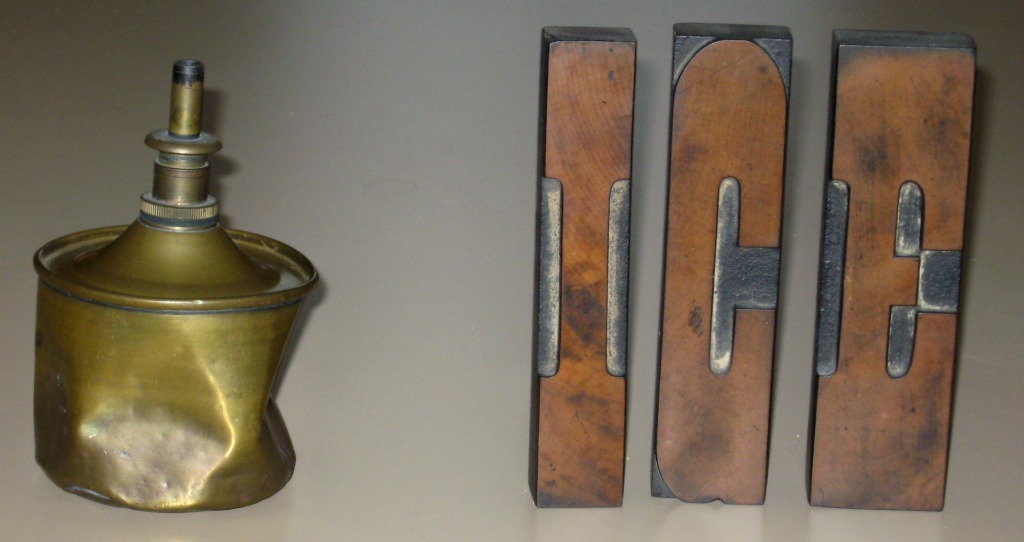
Leahy learned early in life what it means to be part of a community. Her father, a printer, had a shop near the Statehouse, and like her brothers (one of whom is Vermont’s U.S. Sen. Patrick Leahy), she regularly delivered printing jobs to the capitol. In the process she learned about government and politics and the obligations of citizenship. She learned about history and immigrant communities through their Irish and Italian ancestors, including one grandmother who was illiterate. These interests have carried over into her current volunteer work for the Friends of the Vermont State House, the Vermont Historical Society, and the Marshfield Historical Society. She wants everyone to have full access to communities like these that will enrich their lives.
According to Leahy, her students were a joy to teach because they were so motivated. With her eyes tearing up she tells the story of a man who wrote a letter to his first grandchild. “Things are going to be different than they were for me and your mother,” he wrote. “Your mother would bring papers home from school, and I’d keep my distance because I didn’t want her to know. But things will be different with you and me.” That change in one family’s quality of life, says Leahy, will resonate for generations. Another student was 93 when he learned to read. He had vowed to learn to read before he died.
These Vermonters and all the others whose lives Leahy has touched in her life’s work are no longer outliers.
“We all belong to a very special group of people,” she says. “We can read and write.”
