Editor’s note: Mark Bushnell is a historian and writer who lives in Middlesex.
[F]ormer Vermont Superior Court Judge Stephen Martin is out to remove a historical dark mark on the reputation of Newbury. The town has lived under something of a cloud since strange events unfolded on Dec. 31, 1957.
That morning, local farmer Orville Gibson followed his usual routine of rising early and at 4 a.m. walking to his barn. Then he disappeared. For months, people speculated about what had happened to him. Police suspected foul play. When they fished Gibson’s bound body from the Connecticut River in late March 1958, they were sure of it.
The police quickly developed a theory that Gibson, who had made enemies in town, had been the victim of local vigilante justice. Two men were eventually tried for helping kidnap and kill Gibson. When both were acquitted, the press attacked the townspeople of Newbury, saying that they were protecting the real killers. When anniversaries of Gibson’s death pass, the press renews its suggestion that people in Newbury are hiding a dark secret.
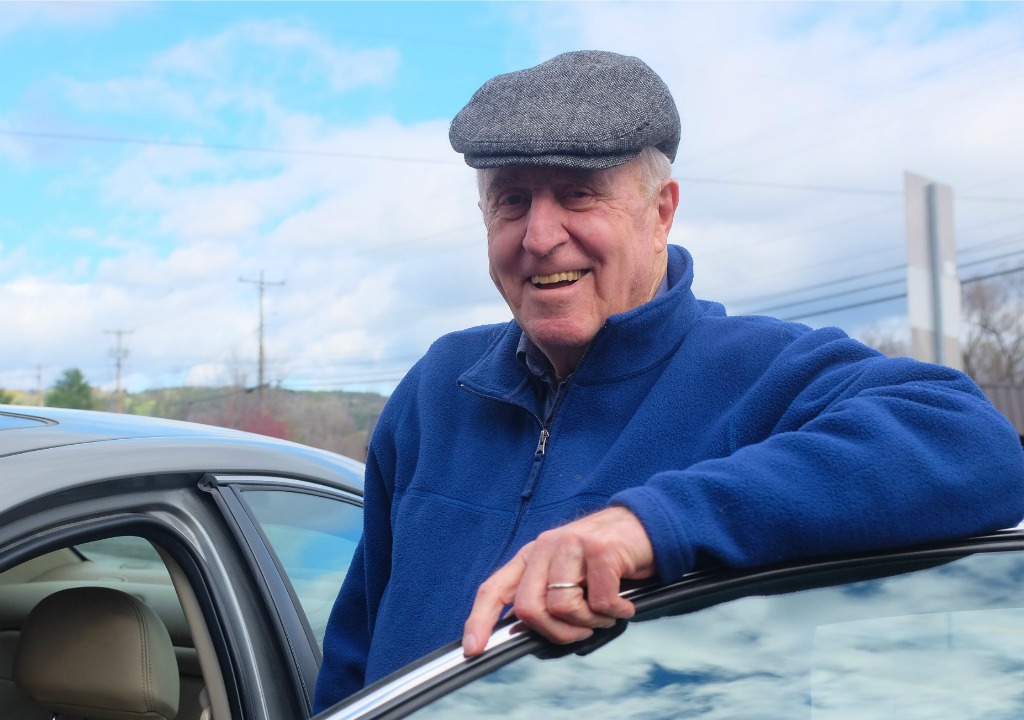
But Martin, who helped defend one of the accused, believes he knows who killed Gibson: It was one man, not a mob. It was Gibson himself. Martin lays out his theory in a new book on the incident. He titled his self-published book, “Orville’s Revenge: The Anatomy of a Suicide,” because he believes Gibson may have planted clues he hoped would mislead investigators into thinking he had been murdered. If that was Gibson’s intent, he would have been thrilled with the results.
“My thesis is that the investigative team got off on the wrong track right away,” said Martin over lunch recently at the Wayside Restaurant in Berlin. Martin, 82, talked animatedly about the case, recalling minor details with ease. He observed the kidnapping and first-degree murder trial of defendant Robert Welch, and as a young lawyer helped defense counsel Dick Davis represent Frank Carpenter in the second trial.
In writing the book, Martin immersed himself again in the details. He read the transcript of Welch’s trial at the Vermont State Archives in Middlesex. He also read the only existing copy of Carpenter’s trial transcript. Dick Davis considered writing a book about the case and paid the court stenographer to type up her shorthand transcription. It came to 1,200 pages. But Davis died of lung cancer in the 1990s, never having written that book. So the job fell to Martin.
The last day of December
When Orville Gibson didn’t return for breakfast, his wife, Evalyn, walked to the barn to check on things. She found the new hired hand, who said he had arrived at about 5 a.m. and hadn’t seen Gibson. Frightened by the news, Evalyn dashed home and phoned the state police. Then she called Freeman Placey, her former boyfriend who was now married to her sister.
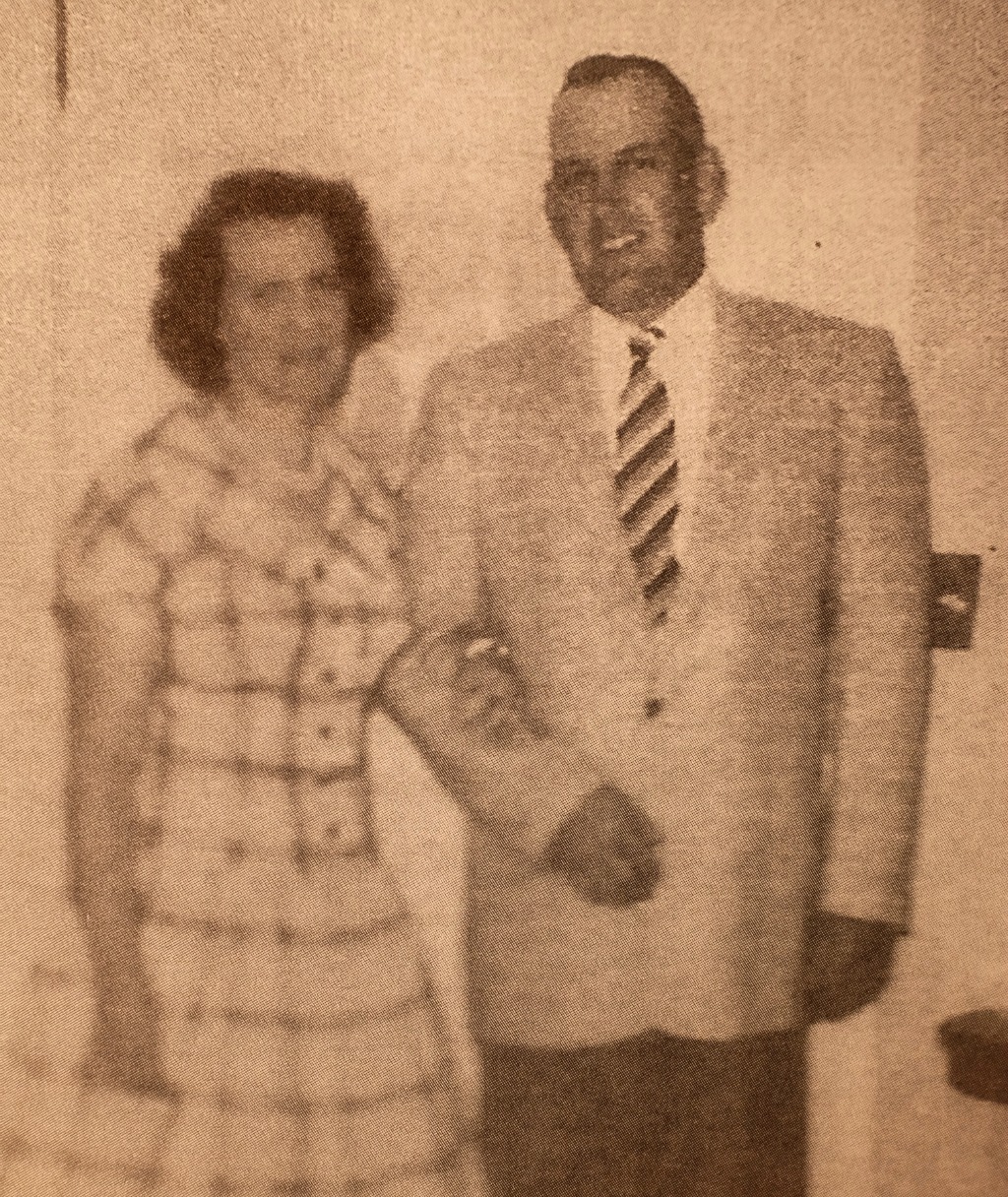
Placey arrived first and searched around the barn. He noticed a crushed tin pail and a trail of silage, a type of animal feed, leading from the barn to the road. Placey could picture what had happened: There had been a scuffle. Several men had overpowered Gibson and dragged him to a waiting car. Placey explained his theory to the trooper who responded to the scene.
The men searched the barn and later drove a half-mile to a bridge over the Connecticut River. In the center of the bridge, they found silage resembling Gibson’s distinctive mix. Whoever had abducted Gibson must have tossed him in the river, they reasoned.
“By noon, the vigilante theory was born,” Martin says.
Gibson had a bad temper and made enemies easily. Two hired hands had recently quit. George Cushing had left in November 1957 after Gibson accused the teenager of killing a deer out of season and threatened to report him.
Then on Christmas Day 1957, Gibson’s other farmhand, 57-year-old Eri Martin (no relation to Stephen Martin), had accidently spilled milk he was wheeling to the milk house. Gibson flew into a rage, punching and kicking Martin viciously. Martin reported Gibson to police. Curiously, Gibson was scheduled to appear in court on the day he disappeared.
Townspeople sided with Eri Martin, who weighed 70 pounds less than the burly Gibson. People were tired of Gibson’s bullying. They collected money and food for Martin, who was bedridden. Some stopped by his house, which was next door to the Gibsons’.
One local man made an anonymous threatening phone call to the Gibsons’ home. When Evalyn answered, he told her that some men wanted to treat Gibson like he had treated Martin. The call lent credibility to the vigilante theory.
Investigators, however, couldn’t figure out who the supposed vigilantes were. More than 60 Newbury residents agreed to take lie-detector tests, but still investigators had no concrete leads. Then, seven months after Gibson’s disappearance, Dr. John Hooker told police that he remembered that early on the morning of Dec. 31 he had driven past a car that he was positive was Carpenter’s. The car sat idling near Gibson’s barn, Hooker said, and inside he recognized Carpenter and Welch.
Investigators decided they had two of the perpetrators. No matter that the lights were off inside the car and that Hooker had passed it driving at least 40 miles per hour. He was sure of what he’d seen.
The trial
The Welch trial was a disaster for the state. The case’s flaws are too voluminous to catalog here, but here are some highlights: Welch’s lawyers produced several witnesses who drove past Gibson’s barn during the time of the supposed assault and saw nothing amiss, and no idling car. Several of Gibson’s neighbors remembered hearing cars drive past that night, but none heard Carpenter’s car, which had a broken muffler and so was well known in this small community. Furthermore, investigators found no traces of silage in Carpenter’s trunk.
The evidence was so scant that the judge threw out the case.
But the state still proceeded with the case against Carpenter, though it reduced the murder charge to manslaughter. The court set up several roadblocks that made the defense team’s job difficult. Davis wanted to depose key prosecution witnesses, but the Vermont Supreme Court ruled he couldn’t. Davis couldn’t risk asking questions in open court — such as whether Evalyn Gibson suspected Orville had killed himself — if he didn’t already know the answer. So for much of the trial, the defense team was flying blind.
“The real culprit in this case in my opinion was the Supreme Court,” says Martin. “If we had been using today’s rules and today’s scientific techniques, neither case would have been tried. This was a 20th century case and the Supreme Court was applying 19th century rules.”
Martin believes Davis was the state’s best defense attorney of the 20th century. In his book, Martin walks readers through the trial, witness by witness, chronicling how Davis dismantled the state’s case.
Prosecutors never mentioned the silage on the bridge, since none had been found in Carpenter’s car. Martin believes Gibson planted it there to make his death seem a murder rather than a suicide.
Most interesting is how Davis dealt with the fact that Gibson had been tied with his hands behind his knees. Davis had learned that a month after Gibson’s body was found prosecutors had interviewed two urban medical examiners, Dr. Richard Ford of Boston and Dr. Joseph Spelman of Philadelphia, showing them photos of Gibson’s body and the autopsy report. Both had the same reaction: suicide. The medical examiners said that in their work they saw multiple suicides by drowning each year that involved victims tying themselves up first in a similar manner. Despite this expert opinion, the state proceeded with the trials, and didn’t call either examiner to the stand.
But Davis did. Their testimony was vital. On the stand, Ford even demonstrated that he could tie himself up like Gibson in less than a minute.
In pursuing Freeman Placey’s vigilante theory, prosecutors failed to heed the advice of Sherlock Holmes, Martin writes: “Don’t theorize before you have all the evidence. One begins to twist the facts to suit theories, instead of theories to suit facts.”
The jury found Carpenter not guilty.
The state and national press smelled a cover-up: the people of Newbury must be protecting the real murderers. The state assigned state police Sgt. Henry Vautier to re-examine the case, looking for anything that had been missed.
Vautier found several interesting clues that pointed to suicide:
• Emma Sherwin, Orville’s sister, said that her brother “had some idea of the affections of Freeman Placey towards his wife” and “also knew of her affections towards” Placey. Indeed, Sherwin had happened upon Evalyn and Freeman holding hands in the dark a week after Orville’s disappearance;
• Evalyn mentioned finding $120 and some checks in a drawer that her husband had removed from his wallet shortly before his drowning. The discovery made her fear he had killed himself;
• Orville repaid a lingering debt to former farmhand George Cushing the day before he died.
But still Vautier only suggested that Gibson might have killed himself. To state it more strongly would have gone against the conventional wisdom about the case.
Over the years since, the incident has continued to stir debate and inspire creative works. In 1970, novelist Gerald Jay Goldberg used the case as the launching spot for “The Lynching of Orin Newfield,” which some Vermonters remember being assigned in high school. John Stark Bellamy II notes in his 2007 book, “Vintage Vermont Villainies,” that no one was convicted in Gibson’s death, but adds chillingly that some older residents of Newbury might know who killed him.
Vermont musician Banjo Dan Lindner wrote a song in 2006 titled “Who Killed Orville Gibson,” which I’m guessing is not one of Martin’s favorites. It has a verse that Martin has heard as a refrain too many times over the years: “Now half a century has come and gone, the case is cold as death. The book on Orville Gibson should be closed. But folks around that little town will tell you to this day, that somewhere, somehow, someone out there knows.”