

The legislative Joint Fiscal Committee got a double dose of bad news Wednesday: the state faces shortfalls in the current budget cycle, and an anticipated $100 million gap for the next fiscal year.
That estimate is subject to change — and is likely to increase, further tightening the financial straits most agencies are facing as the state’s budget continues to grow faster than Vermont’s revenue base.
Four months into the fiscal year, overall General Fund revenue is $12 million short, Secretary of Administration Jeb Spaulding reported Friday.
Higher than expected spending this year will require legislative action through the Budget Adjustment Act, to be taken up immediately when newly elected representatives and senators convene the next legislative session in January. And the $100 million gap for Fiscal Year 2016 will be taken up in 2015, too.
But Spaulding said he intends to address current revenue shortfalls immediately by way of an obscure statutory authority, which he says allows Gov. Peter Shumlin’s administration to cut up to about $14 million in spending without legislative approval. The administration has already cut $31.5 million from the current year budget to make up for a revenue downgrade that was announced in July. That rescission was approved by the Emergency Board, which is made up of members of the House and Senate budget and tax committees.
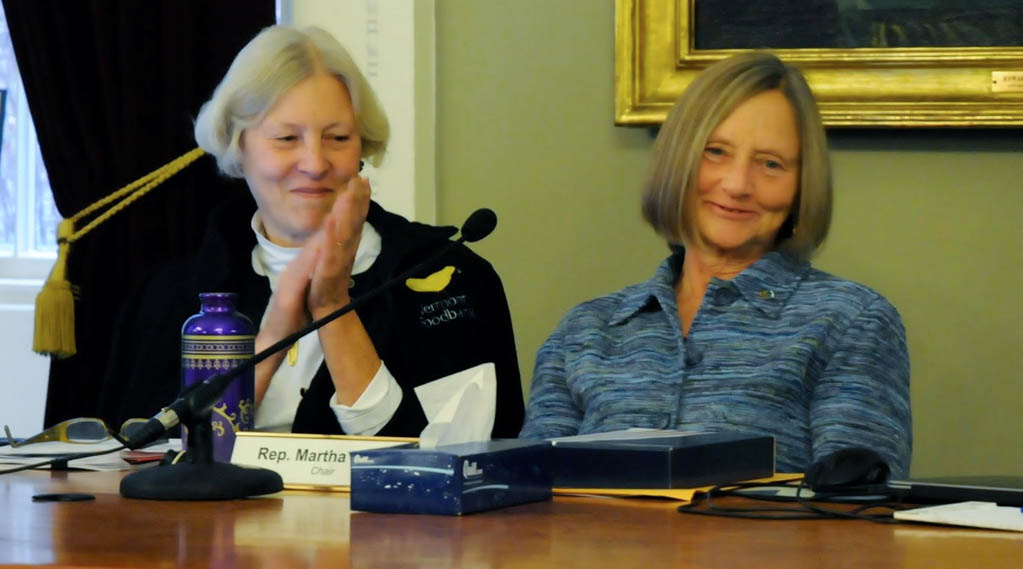
The lawmakers did not accept his assertion at face value. Retiring Chair Martha Heath, D-Westford, asked for an opinion from Legislative Council.
“I think we need that yesterday, quite frankly,” Heath said.
She and other members of the committee said they understand the administration’s sense of urgency: Cutting spending early allows the pain to be spread over a longer period of time before the fiscal year ends.
But too much is “squishy” about the authority Spaulding is claiming, they said.
Spaulding said he is empowered to make interim cuts by 32 V.S.A. § 704, a section of state law dealing with budget and appropriation adjustments between legislative sessions.
“If the Secretary of Administration determines that the current fiscal year revenues for the General Fund, Transportation Fund, or federal funds are likely to be reduced from the official revenue estimates by less than one percent,” the statute reads, “the Secretary may prepare and implement an expenditure reduction plan, and implement appropriations reductions in accordance with the plan.”
In an interview Wednesday evening, Spaulding said the statute had been invoked during the Great Recession, under the administration of Gov. Jim Douglas. The current version of the statute, he said, actually limits the administration’s unilateral authority, which previously had been applied more broadly.
But Chief Fiscal Officer Steve Klein told the committee earlier Wednesday that Spaulding’s proposition did not match his understanding of the revised legislative intent.
Rep. Janet Ancel, D-Calais, wondered what happens if revenues fall more than 1 percent behind their forecast.
“If the projected shortfall is $20 million, can they do a rescission of $14 million, but not the final $6 million?” she asked.
The question is particularly relevant because Spaulding himself reported that he’s heard an estimated revenue shortfall ranging from $5 million to $30 million by January, when the Emergency Board is next scheduled to meet to review the economic forecast.
Should the state’s income be only $5 million short, what would be done about the extra $9 million Spaulding already would have cut, perhaps unnecessarily, Heath asked.
That question went unanswered. The committee plans to meet again to discuss a legal opinion of the statute and how it can be interpreted.
In the meantime, lawmakers left the meeting sobered by a budget preview that shows state funding falling short, even after previous cuts to the current year’s budget. A hard-fought measure to increase the Medicaid provider rate, for example, went by the boards.
Lawmakers must backfill about $8.5 million of one-time funds that were used to cover the July rescission of $31.5 million when the revenue forecast was downgraded. Medicaid is facing a $35.8 million challenge due to caseload increases, changes in federal funding and he drying up of the tobacco fund that’s been tapped to help plug its holes.
Salary increases from the Pay Act and an increase in the cost of health care benefits, plus retirement and pension obligations, add up to about $28.2 million of pressure related to state employees and public schools teachers.
Meanwhile, Spaulding said, the forces causing personal income taxes to come in below projections are still a mystery. He said the Tax Department and the Department of Finance and Management are working with the Joint Fiscal Office and the state’s economists to analyze available data.
