


Vermont’s GMO labeling law is being challenged by trade groups representing food manufacturers, but retailers worry that the law will affect them more than expected.
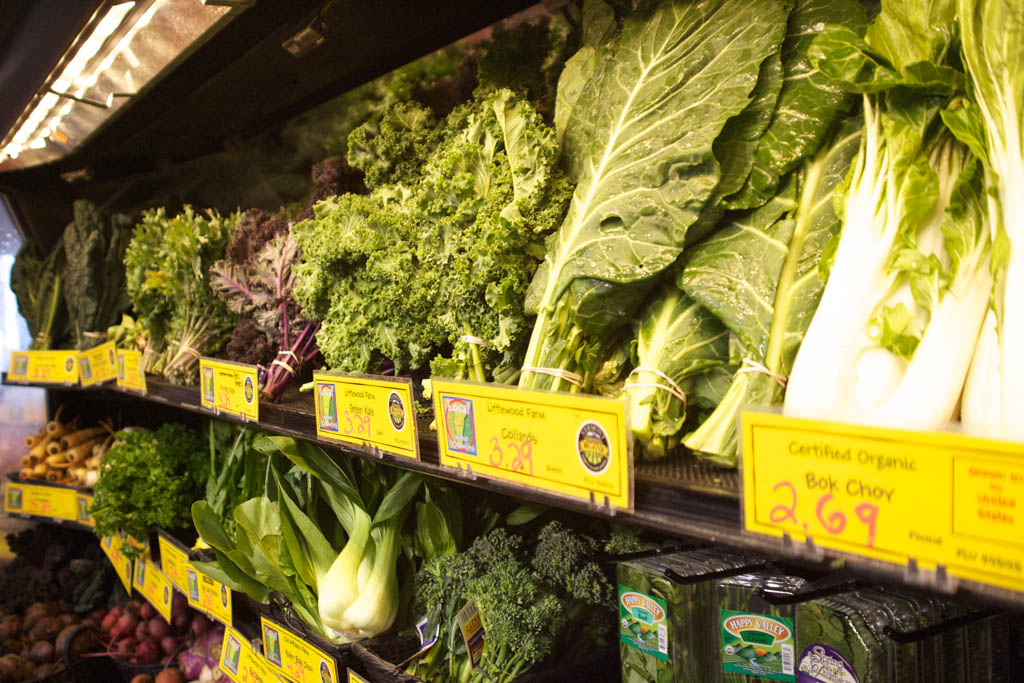
Manufacturers will be required to label packaged products that contain genetically modified ingredients, but retailers will be responsible for non-packaged products such produce, bulk items and prepared foods.
Some are willing to implement the law to provide customers with more information about their food. But so far, the extent of their responsibilities is not clear.
The GMO labeling law is to take effect in 2016. By 2015, the Attorney General’s Office will draft rules to implement and enforce the law.
“What is starting to surprise retailers in general is the amount of items that they may be responsible for labeling,” said Jim Harrison, president of the Vermont Retail and Grocers Association. ”It’s much more broad than just the packaged groceries on the shelf.” Harrison’s group represents about 350 retail members operating some 600 stores.

The Attorney General’s Office recommends that certain deli and bakery products to be labeled, such as unpackaged salads and baked goods, despite an exemption in the law for food “intended for immediate consumption.” That’s because the proposed rules define this phrase, in part, as any taxable meal.
Prepared foods in the deli and bakery sections of a grocery store may or may not be subject to the meals tax. According to Assistant Attorney General Todd Daloz, it is difficult to know how many bagels, for example, a consumer will purchase and whether it will be a taxable meal. Therefore, the Attorney General’s Office is recommending that these products be labeled.
“They need to get that information at the point when they are determining whether or not to purchase the item,” Daloz said, rather than at the cash register. Under the current proposal, he said retailers cannot avoid disclosing the information by assuming that prepared foods will be purchased under the exemption.
The national Grocery Manufacturers Association, and other trade groups, are suing the state over its GMO labeling law, arguing it is unconstitutional and could raise food prices.
Harrison said he prefers a national approach to GMO labeling rather than state-by-state requirements, but wants to work with the state to ensure the rules are clear and simple to administer.
“We are not parties to the lawsuit. That is the law and we have to find a way to make it work,” he said. “And we will continue to work with the Attorney General’s Office to help put in place a law that works.”
Daloz said the Attorney General’s Office is still accepting input on the new rules for the next couple of weeks. He said the state is trying to implement the law in a way that provides accurate information to consumers and minimizes the burden on the regulated community.
Kim Crosby, the owner of Vermont Roots, Inc., a specialty foods company based in Rutland, opposes the labeling law, but fully intends to ensure the products she sells are appropriately labeled.
“If somebody is telling me something, then I want them to support it with the documentation before it goes on my shelves,” she said. She said about 95 percent of her vendors are Vermont companies, but many source their ingredients from across the country.
Under the proposed rules, retailers can rely on a “sworn statement” from their distributor that the products they deliver are GMO-free. Daloz said retailers are not required to verify statements, but cannot simply ignore the labeling requirement if they know the product contains genetically engineered ingredients. Retailers will also have 30 days to label a product following any notice of a violation.
Sean Buchanan, president of Black River Produce, a regional wholesale distributor of a wide range of products based in North Springfield, said he supports the labeling law. In fact, he said it is important for Vermont to step out in front of the issue of food transparency.
Nonetheless, he said the law does not apply to many of his products. He said the law is directed at manufactured products that use ingredients derived from genetically engineered crops, like corn syrup, sugar beets and canola oil.
“Not very many of them fit into this,” he said about his clients. “None have jumped up and said they are terrified.”
