

State’s attorneys in some parts of Vermont are still reluctant to charge 16- and 17-year-olds in juvenile court, despite significant improvements recently in how prosecutors across the state treat young offenders, a study released this summer found.
In addition, there are geographic differences in the juvenile justice system because each county’s state’s attorney has wide discretion over how to charge teenagers, the study found.
A state-commissioned task force asked for the study as a follow-up to one in 2011 that found a need for standardization on whether state prosecutors charge
The new study’s overarching conclusion was that some obstacles that discourage prosecutors from charging 16- and 17-year-olds in juvenile court persist, but they arise primarily from lack of resources, rather than a need to change the law.
In Vermont, the 14 elected state’s attorneys each decide whether to charge juveniles in adult or juvenile court and practices vary across counties.
The law that granted that authority dates to 1981, and was passed during a special session of the Legislature called after a 12-year-old girl was raped and murdered and the suspects, two boys ages 15 and 16, couldn’t be tried in adult court for the crime.
That summer the Legislature give judges discretion to try youths ages 10 and older in adult court for serious crimes.
Meanwhile, research has shown that teenagers show better long-term outcomes that focus more on treatment and restoration than punishment.
Since then, several attempts to encourage prosecutors to charge teenagers in juvenile court have had limited success, the studies show. The new study, however, finds much improvement.
Three years ago, only two counties had formal policies on where to charge 16- and 17-year-olds. Now seven counties have formal policies and four others have unwritten policies, the latest study found. Two counties make decisions on a case-by-case basis.
The first study led to passage of a new law, Act 159, designed to address some of those obstacles.
Among many changes, it extended juvenile jurisdiction in family court until age 18 and a half. However, that hasn’t solved all the issues, attorneys said in the study.
One prosecutor said it is still nearly impossible to charge older teens in sexting cases. Sexting, sending sexually explicit messages by cell phone, is only a crime for people under the age of 18. But it can take so long to analyze electronic devices that the person turns 18 and can’t be charged with the offense.
Prosecutors describe advantages to adult court including that often cases are resolved more swiftly, use less resources and involve less work on the part of the defendant.
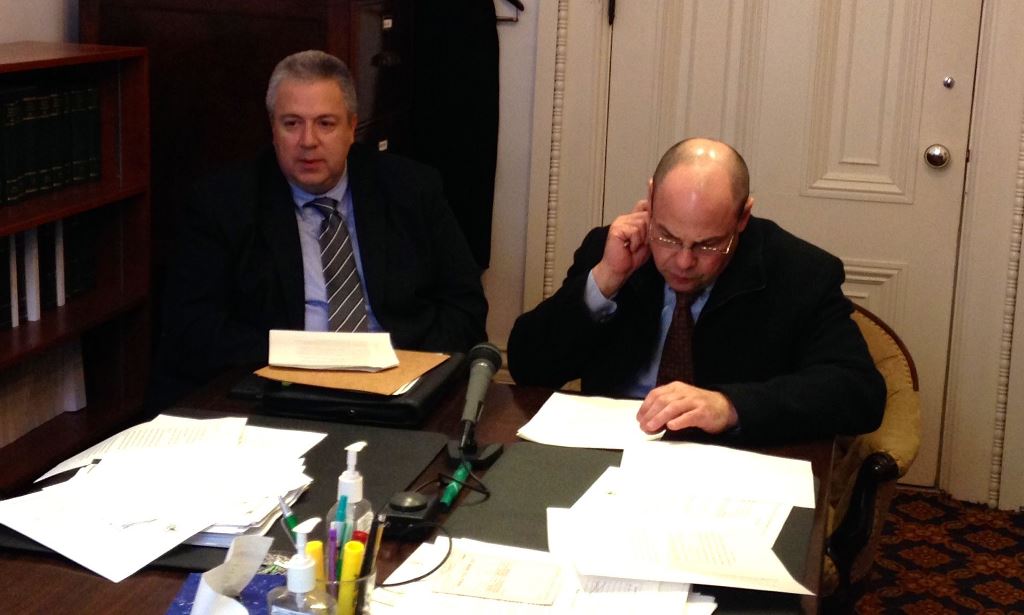
Defender General Matthew Valerio said many juveniles would rather be tried in the adult system because they know the adult system does not consider them a high priority, Valerio said.
If they can successfully complete probation with no new charges they will be discharged, but in the juvenile system they could be forced to attend counseling, treatment or other types of restorative justice programs, he said.
“It is more intense, intensive and it takes up your time and effort,” Valerio said.
Attorneys on both sides agree that research shows those types of programs are better for youth, but most still file in adult court, he said.
“Everybody knows that’s the clinically right thing to do, but politically we’re stuck,” Valerio said.
The study mentioned limited access to juvenile courts, which in some counties is held only once or twice a month.
“It doesn’t have the same impact if you call the juvenile in three weeks later – the punch has been lost,” one state’s attorney is quoted in the study. Some advocated for a more speedy process for certain types of juvenile cases.
Although more counties now have formal policies, none of the counties with a previous policy or practice of citing 16- and 17-year-olds in adult court made a shift to juvenile court, the study found.
Washington County State’s Attorney Thomas Kelley said he decides where to charge 16- and 17-year-olds on a case-by-case basis, depending on the individual, the charges and the existing programs in the county that could help that person.
“I think it’s based on the record of the accused and the kind of crime that it is and that’s true of all charging decisions,” Kelley said.
Practices in other counties are different, the study shows.
Chittenden County charges all 16- and 17-year-olds charged with misdemeanors in juvenile court except motor vehicle offenses, partner domestic assaults, stalking, assaults on law enforcement officers and other serious crimes. Bennington County charges all 16- and 17-year-olds in adult court, the study says.
The study also addressed inconsistencies in alternative justice options and use of those options by prosecutors. In general, referrals to court alternative programs increased over the past three years, as state’s attorneys’ philosophies evolve and the ability of alternative justice options has grown, the study found.
All counties have court diversion programs, and referrals are made by state’s attorneys. Caledonia, Chittenden, Orange, Orleans, Washington, Windham and Windsor counties have pre-charge programs, where most often police make referrals.
While Act 159 allows the court to refer youth directly to a community-based provider such as a Balanced and Restorative Justice Program, only one state’s attorney has done so with frequency, the study found.
A number of state’s attorneys also expressed “significant concern” about the Department for Children and Family’s ability to meet the needs of older youth, the study found. The concerns were not criticism of DCF staff but of an over-taxed, over-burdened system. In Vermont, DCF oversees juvenile delinquents.
Prosecutors said DCF is not necessarily designed to serve older youth and caseworkers have fewer tools at their disposal for older youth.
The delinquency side of DCF is ill-equipped to deal with “savvy juveniles” who understand that there are few consequences for not complying with the juvenile system and don’t take probation seriously, state’s attorneys said in the study.
However, the study found prosecutors increasingly take advantage of a statute known as the “youthful offender statute,” which allows youth to be charged in adult court then have the case transferred to juvenile court. If a youth successfully completes whatever is required, the case is dismissed and expunged in adult court.
The study, published in June by Montpelier firm Erica Garfin Consulting, recommends it be used as the basis for more research on filing practices and the outcomes they produce.
