

Editor’s note: VTDigger asked the primary candidates for governor to submit bio information and to answer questions about their stances on key issues. Responses were limited to 200 words on each issue. Two Republican candidates, Steve Berry and Scott Milne, did not respond to our request. The candidates are listed in alphabetical order.
Cris Ericson
Party: Independent
Hometown: Chester
Age: 62
Occupation: lawyer, freelance artist
Education: University of Massachusetts, Amherst, 1976; University of California, Los Angeles, 1991; Paralegal/Corporate Law, Professional Career Development Institute, 1996
Family: Widowed
Ericson declined to respond to VTDigger’s request for information.
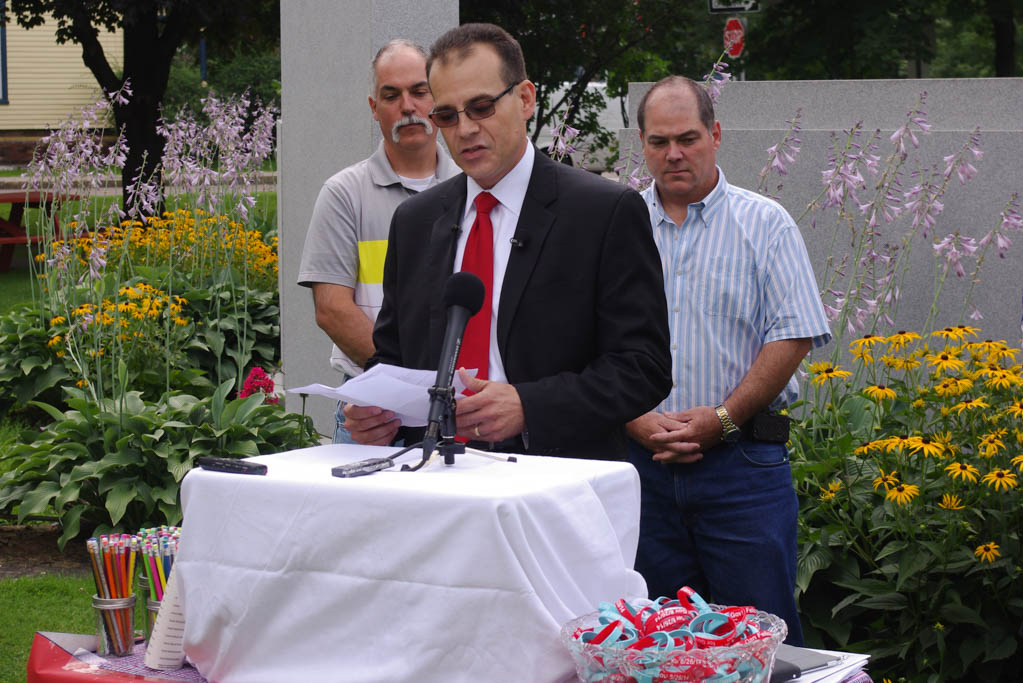
Dan Feliciano
Party: Libertarian
Hometown: Essex
Age: 51
Occupation: Strategy and Change Consultant – Continuous Process Improvement Manager
Education: Virginia Commonwealth University – School of Business, BS, Business
Family: Married to Carol Feliciano, three children
On the Issues (200 words or less on each question):
Why are you running for governor?
Vermont has experienced four years of an active Democratic governor and two-thirds Democratic majorities in the House and Senate. We now see where the policies of that governor and his allies in Montpelier are taking Vermont. A lot of Vermonters are distressed at that prospect. Vermonters want to see the incumbent governor made to defend his policies, statements, and actions. They want to see a vigorous debate over the path to a Vermont future that our taxpayers can afford, where our economy can flourish and our liberties are secured.
I intend to use my skills to fix issues that are maiming our state.
My priorities are:
1. Reining in state spending and reducing the state budget by making government more efficient
2. Lowering taxes, including the property tax
3. Empowering parents by providing parental school choice
4. Closing Vermont Health Connect
5. Ending Governor Shumlin’s march to single payer health care
Do you support a single payer, publicly financed health care (why or why not, what would you do instead)?
No, single payer as laid out will not decrease health care costs. On the contrary, single payer will drive up health care costs, limit choice and destroy jobs.
I will lower the cost of health care through choice and competition. Allowing Vermonters to buy insurance across state lines and repealing health insurance mandates on both the insurance provider and the consumer. To bend the cost curve I believe insurance policies should encourage and reward health living and reward consumers for their lifestyle choices.
How would you pay for education in Vermont schools?
Property Tax Rise: For me, the obvious solution is to let tuition money follow the child to wider range of educational offerings that they and their parents prefer. Most of those choices will cost less than what is delivered to the politicized, top-down Act 60 public school system. The teachers union will object to any disruption of their present deal. Vermonters more concerned about their children and their wallets will have to stand up to them.
Towns that have enacted school choice have higher property values, lower costs and are the rare places in Vermont that see increasing class sizes. We could start with the Cleveland voucher model. Students from a public non-choice district get a 80 percent tuition voucher to attend the school of their choice. The public school teaches one less student, but keeps 20 percent of the tuition, thereby reducing both the student:teacher ratio, improving quality, and increasing the funds:student ratio.
How would you reduce the current budget deficit?
The Legislature supposedly balances state budgets, but we do it with Obama stimulus money, one time funds, increasing business fees all while only making a tiny annual contributions to the two state retirement systems that together are over $3 billion out of actuarial balance. The honest solution is to start backing off from state spending that goes beyond the state’s core functions and Vermonters ability to pay. We cannot continue to grow spending by 5 percent a year. We must rein in spending and get Vermont’s financial house in order.
As governor, I will thoughtfully and with precision cut state spending. While we do need to take immediate action, the most important action we can take is to make a long-term sustainable budget. I will take action to make Vermont more welcoming to business so we can grow the overall pie for all Vermonters.
I have the experience to get Vermont on a secure and stable footing while making government efficient and reducing spending without compromising the quality of the state’s core functions.

H. Brooke Paige
Party: Democrat
Hometown: Washington
Born: Feb. 18, 1953 (New Orleans, Louisiana)
Occupation: Business consultant, former president and CEO of Remmington News Service
Family: My wife Donna and I have been married for 37 years and have called Vermont home for the last 27 years.
Why are you running for governor?
I think a better question in my case is: “Why didn’t any well known Democrats (or Republicans) choose to challenge Peter Shumlin in 2014?” Many Democrats must be wondering: “Why isn’t Shapleigh Smith or John Campbell on the ballot?” Likewise, Republicans must be pondering why Randy Brock, Heidi Scheuermann or Joe Benning haven’t challenged Shumlin.
I decided to run after no serious candidates stepped forward to question Gov. Shumlin’s reckless authoritarian reign. Acting more like an emperor or potentate than the governor of Vermont, Shumlin seem to be herding his fellow citizens toward uncertain and troubled “waters” without regard for their needs or desires. I have ventured into the breach to make sure that the issues are raised and questioned with hopes (really prayers) that by some act of divine intervention I might be able to “best” Mr. Shumlin in the primary election and go on to challenge the remaining five opponents in the general election.
My desire is to run a campaign on the issues to demonstrate the difference between governing for the “common interest” instead of the “special interest.” Further to prove that, at least in state politics, it isn’t “all about the money” even if the “press” believes it is and measures political success by the size of the candidate’s war chest! Of course, the press has already chosen their “golden boy” and is doing everything in their power to deride, diminish and dismiss those who dare to challenge Emperor Shumlin. Who cares about issues and solutions?
Do you support a single payer, publicly financed health care [system] (why or why not, what would you do instead?)
I support the goal of “universal care” — making sure that all who wish to have insurance to insulate themselves from the devastating financial consequences of severe illness or injury are able to obtain it. This is very different from “single payer” which is government’s appropriation of control over health care decisions for the population at large (excepting wealthy fee-for-pay customers).
Ultimately, “single payer” transforms into single provider as the government exercises greater and greater control over the health care provider marketplace – dictating what services/procedures) will be offered, who will be allowed to avail themselves of the services and where/when those services may be obtained.
For an excellent example of how this works take a look at the Veterans Administration and then picture Green Mountain Care making your health care decisions for you. Before all of this chaos began, Vermont’s health care was considered one of the best in the nation. Vermont has always had exemplary treatment and care. We had (and still have) a modest problem with health care financing.
In Vermont it was postulated that about 5 percent of Vermonters lacked health care insurance, though most could obtain care at low or no cost provided they could demonstrate their inability to pay. In fact the number of uninsured, who were not making a conscious decision to go “bare” was approximately 10,000. These Individuals could have been easily accommodated through an expansion of Catamount Care or a similar assistance program. It wasn’t broken to begin with and can be easily restored to “good health.”
How would you pay for education in Vermont schools?
The real question is how we can reduce the cost of operating our locally governed schools. Most of the ever-escalating costs of public schools can be traced directly to unfunded state and federally mandated policies and requirements, especially those related to special education and mainstreaming of special needs students. While these requirements fulfill worthy objectives, it should be the government agencies that impose the mandates that should accept the financial responsibility relating to those requirements.
Recent studies have confirmed what most involved in local schools and school boards have always known: consolidation of local schools, especially kindergarten and elementary classes will not reduce the costs (and may well further increase costs). Further, such consolidation will destabilize the early education experience as small children are transported farther away – increasing their risk of injury in-transit and making it more difficult for parents (especially poorer parents who lack transportation) to quickly come to the aid of their children who may need them during the school day.
The current taxation system that relies upon property taxes, moderated by Act 60 (and Acts 68 and 130) and further supplemented by the Vermont Lottery provides an equitable mechanism for education financing. Other approaches currently circulating, most notably financing through personal income tax is ill conceived and will only act to drive taxpayers, especially retirees and the wealthy from the state. We must look at the current education model and seek new innovative ways to invigorate the educational experience and outcomes while reduce costs.
How would you reduce the current budget deficit?
Vermont is in a critical position as it relates to expenditures and revenues. In the current budget year, we will spend over $5 billion while we will take in about $1 billion (some estimates place revenues as low as $748 million). The remaining $4.1 billion is provided by the federal government, less than an ideal situation. Uncle Sam, Vermont’s “sugar daddy,” is financing our cash infusion with huge deficits that cannot continue and when the cash from Washington starts to dry up there will be no option except to drastically reduce expenditures everywhere! Simple mathematics informs us that $5 billion divided by 600,000 Vermonters works out to almost $10,000 for every man, woman and child in the state. While some of Vermont’s wealthiest citizens currently pay amounts on the order of $20,000 to $30,000, we are contemplating that burden for every citizen. Take the poor out of the equation and the prognosis for state taxes in the 40 percent range may be the only way to avoid bankruptcy! The real “first” that Mr. Shumlin is leading us toward is: “The first state to go bankrupt!”
In the near term we must ferret out every bit of waste, corruption (in Vermont labeled cronyism) and fraud – which I believe could easily save Vermont taxpayers 20 percent of current expenditures. We have gotten ourselves into “hot water” over a period of time and it will take time to reverse the damage – hopefully we will have the time to do so, but we must begin immediately!

Emily Peyton
Party: Independent, Republican primary, Progressive/Libertarian/Liberty Union/Democrat write-in
Age: 56
Hometown: Putney
Occupation: Civil Activism
Education: Life long, no big degrees, master’s level understanding of Monetary Systems and their effect on economics, undergrad degree level understanding of alternative medicine, graphic artist, composer, and videographer.
Family: Two sons, one partner, multiple animals.
Why are you running for governor?
I run for governor because I don’t see the point in running for representative in a broken system. Why sign up to crew on the Titanic?
Health care: I support a Direct Care system that weeds out parasitic for-profit motives of non-healers, it looks different than single payer or Obama care, both of which are financially oppressive and inappropriately use our dollars for corporate interests not directly involved in healing. I also support addressing root causes of ill health, toxins in the food and environment, and financial stress. Lastly I support a reward system for self directed good health.
Education: I support independent school choice and money following the pupil, and money for homeschooling. Freedom from federal mandates is important, here in Vermont we are ahead of the rest of the country in getting the human to nature connection. It is this genius we need to build on, not the poor excuse of corporate mindset that comes from Washington. I find sound bite answers to important in-depth policy questions offensive.
State budget: By making every dollar do double work, contracting in state, requiring all government personnel making $60,000 and above to reduce their salary by 5- 20 percent for highest paid public servants. The job of government is to look after the economic peace and wellbeing of the people, and until they have achieved that they do not deserve better than the people, in my book. If they want to leave their job, we will find ones more eager to work for the public. Please refer to my monetary policy position page for full details on my website.
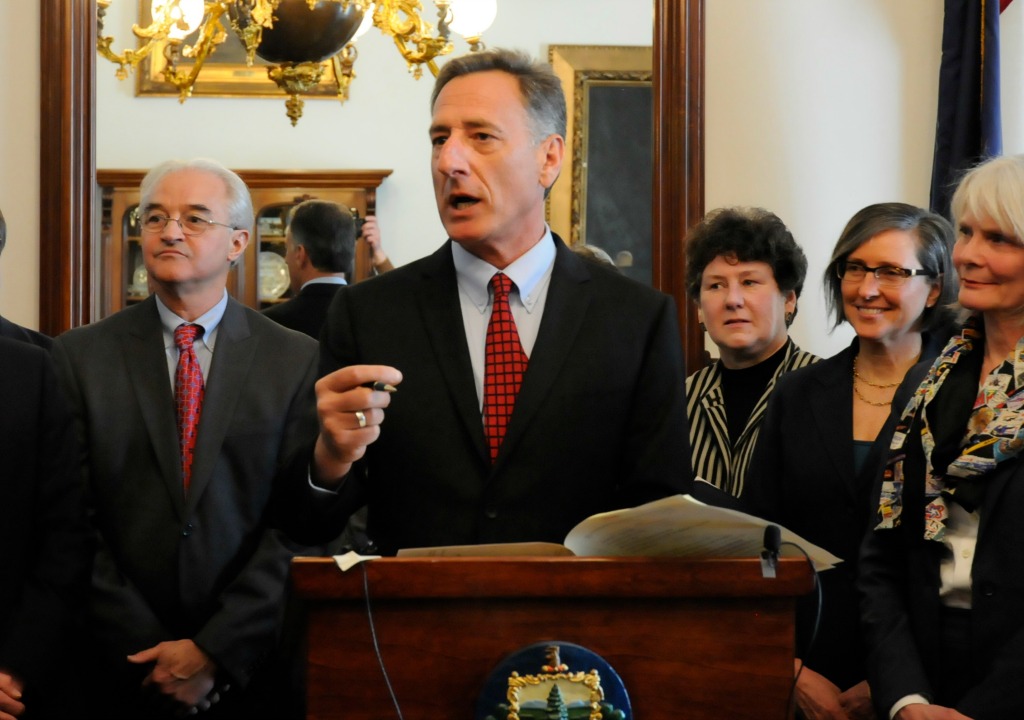
Peter Shumlin
Party: Democratic
Hometown: Putney
Age: 58
Occupation: Governor
Education: Wesleyan University
Family: Daughters Rebecca and Olivia
Why are you running for governor?
In the past four years, Vermont has worked hard to rebuild after the worst recession since the Great Depression and the worst natural disaster in a century. We’re making
great progress. Vermont has one of the lowest unemployment rates in America, we lead the nation in solar job creation, our quality of life continues to be the envy of other states and we have a bright future that is full of opportunity. The challenge now is to seize that opportunity and keep moving forward.
While the federal government stagnates, I believe Vermont should continue to be an example of progress for the country. We can build the next great tech companies in Vermont if we continue to expand broadband, revitalize our downtowns, invest in Vermont entrepreneurs and ensure more Vermonters can access and afford a higher education. We can lead the energy revolution in this country by continuing to invest in solar and other renewables that are growing jobs right here in Vermont. And we can be the first state in America to get health care right, guaranteeing coverage to every Vermonter while cutting costs and freeing businesses to focus on creating jobs.
Vermont has always been a state of doers. Together we can seize the future and continue to move our state forward.
Do you support a single payer, publicly financed health care (why or why not, what would you do instead)?
Yes. Vermonters spend nearly 20 cents of every dollar on health care. If costs grow at the same rate in the next decade as they did in the last decade, that number will double.
No Vermont business or family can afford for us to sit back and do nothing.
Our task is to create a system that guarantees quality health care to every Vermonter regardless of how much money they make or where they are lucky enough to work, allows businesses to focus on hiring Vermonters and not running complicated health plans, and slows the unsustainable rise in health care costs that are threatening to bankrupt businesses, families and the state. That’s not an easy task, but it is one that when we get right will make Vermont a more attractive place for businesses to create jobs and young people to work and start a family.
How would you pay for education in Vermont schools?
I’m proud that Vermont has some of the best schools and most progressive school funding system in America, making this state a desirable place to live, work and raise a family.
Our challenge is that we are now educating 20,000 fewer students than we were 10 years ago, yet spending more money. With enrollments continuing to decline, that is clearly not sustainable for property taxpayers. It’s also not conducive to maintaining quality education. There is such a thing as too small, and when class sizes drop to only four or five students, learning opportunities begin to diminish and educational quality suffers.
To maintain quality education at a price Vermonters can afford, it’s imperative that we find a way to right-size the system. There is no easy solution to this challenge, and it is not one that Montpelier can or should dictate. What Montpelier can do is work with local schools and communities, provide all the data and support they need to make informed decisions, and partner with them to make the changes that make sense for communities, families and children.
How would you reduce the current budget deficit?
Since becoming governor, I am proud to have proposed and signed balanced budgets that don’t raise broad-based taxes on hardworking Vermonters.
Vermont’s economy is growing and we are creating jobs. While we are seeing a steady recovery, we are not immune from the lingering effects of the Great Recession slowing growth nationwide. When adjustments to the budget are necessary, as they are now, we’ll meet the need by reducing spending, not raising taxes on hardworking Vermonters. We will not tap the State’s Budget Stabilization Reserve, and we will continue to meet our debt service and retirement fund obligations. We also will keep the General Fund transfer to the Education Fund intact so that we do not balance the budget through our already overstretched property taxpayers.
The adjustments we will make will be targeted first at increases passed this fiscal year, so that in most cases reductions will result in no more than level funding from last year. We will spread the adjustments broadly across state government but work to maintain core services for Vermonters. We will not require furloughs or layoffs, and we will ensure Vermont will end the fiscal year with a balanced budget, matching the money Vermonters pay to the spending of state government.
