


A House panel wants the state to increase the minimum wage to $10.10 per hour by Jan. 1, 2015. Gov. Peter Shumlin proposed the same increase — over a three year period.
Minimum wages for tipped employees would be set to half of regular hourly wages, which would increase annually with the cost of living starting in 2016.
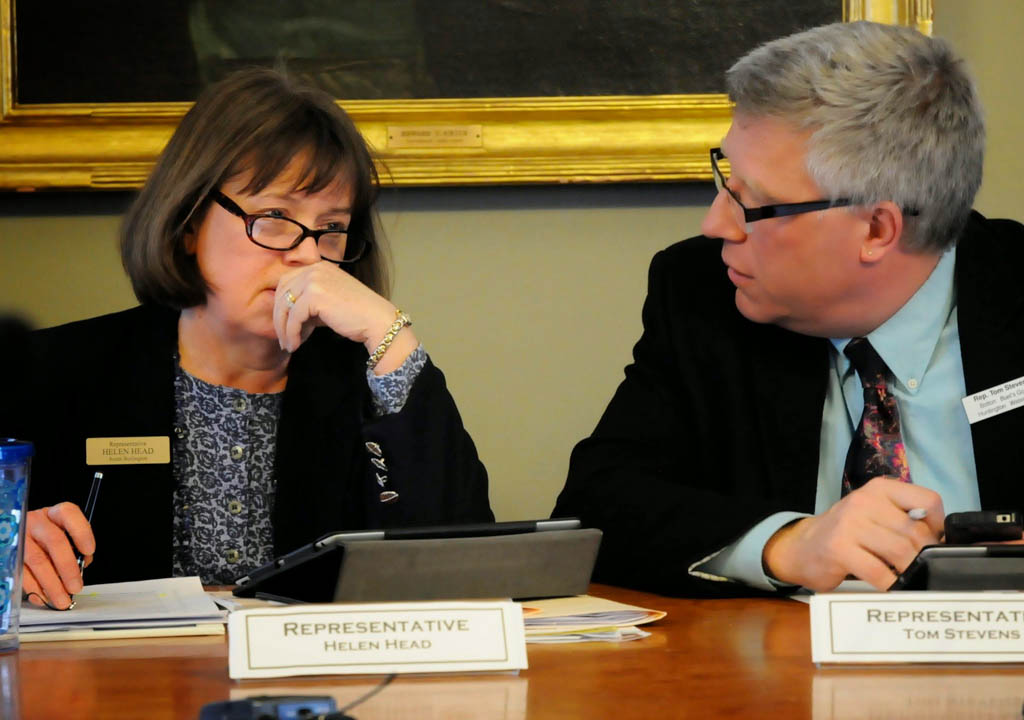
Members of the House Committee on General, Housing and Military Affairs voted 6-2 in favor of the higher minimum wage Tuesday afternoon. H.552 will go to the House Committee on Appropriations before it is voted on by the full House.
The state’s minimum wage now is $8.73 per hour for most employees, compared to the federal rate of $7.25 per hour. Vermont has the highest minimum wage in New England.
In March, Shumlin joined President Barack Obama and three other New England governors in calling for a gradual rise to $10.10 by 2017. The nearly 16 percent increase pales in comparison to rates of $15 per hour requested by witnesses at a public hearing in March.
Republican Reps. Brian Savage, R-Swanton, and Warren Van Wyck, R-Ferrisburgh, voted against H.552. Both said they also would have opposed a three-year step-up to $10.10 if that had come to a vote.
“I think it’s too much of a jump even in 2017,” Savage said.
Van Wyck said during the committee discussion that an increase to $10.10 would widen the wage gap between Vermont and neighboring states.
“Unless there’s some sort of regional uplifting of the minimum wage, this could perhaps turn out … to be a jobs bill for New Hampshire,” Van Wyck said.
He predicts business owners will consider moving across the border to avoid high labor costs in Vermont.
Proponents of the bill cited a report by legislative economist Tom Kavet, who predicted “negligible” negative repercussions from a jump to $10.10 per hour. On the contrary, Kavet found it more likely that the boost “could be an important component in advancing some of the lowest income workers towards a livable income.”
The report steered lawmakers away from a $12.50 increase that had been contemplated earlier in the winter. A sudden 44 percent increase would be uncharted territory, Kavet cautioned.
But many committee members remain intent on getting there.
Along with the recommended increase to $10.10 per hour starting in January, the committee also tried to get traction on a “livable” minimum wage.
Lawmakers are given biennial reports on basic needs budgets and the livable wage.
Committee members Tuesday asked for an additional report, due by Jan. 15, 2016, to examine the potential financial impact of ramping minimum wages to “livable” standards.
The higher threshold is defined in state law as the full-time wages one person would need to pay for half a household’s basic needs — accounting for two adults and no children, and assuming the adults had employer-assisted health care. A 2012 report by the Legislature’s Joint Fiscal Office pegs the livable wage at $12.48 per hour on average for both urban and rural areas.
Calculations for different household types range from $15.81 for a single person in an urban area to $28.03 for a single parent with two children in a rural area.
The report would detail the possible positive and negative effects a livable wage might have on:
- low-wage working Vermonters
- Vermont businesses and jobs
- State and federal benefits
- Vermont’s economy as a whole

