

A 24-point letter from the Franklin-Grand Isle Counties Bar Association, objecting to parts of a bill on the guardianship of minors, has piqued the interest of the Senate Judiciary Committee.
The lawyers’ association said it does not oppose the proposed legislation, but asks for several changes.
The Senate Judiciary Committee is considering H.581 after the House endorsed it last month.
Senators on Thursday heard from a member of the Franklin-Grand Isle Counties Bar as well as a Colchester man whose two children were placed in with his mother.
The bill is intended to streamline the legal process for transferring guardianship of children to someone other than their parents and clarify a process that has not been comprehensively revised since the 1920s.
“While many of the goals of the bill are laudable, our committee … finds that the bill has many flaws,” said the bar association letter, sent March 10 by Michael Gawne to Judiciary Chairman Sen. Dick Sears, D-Bennington, and four other legislators
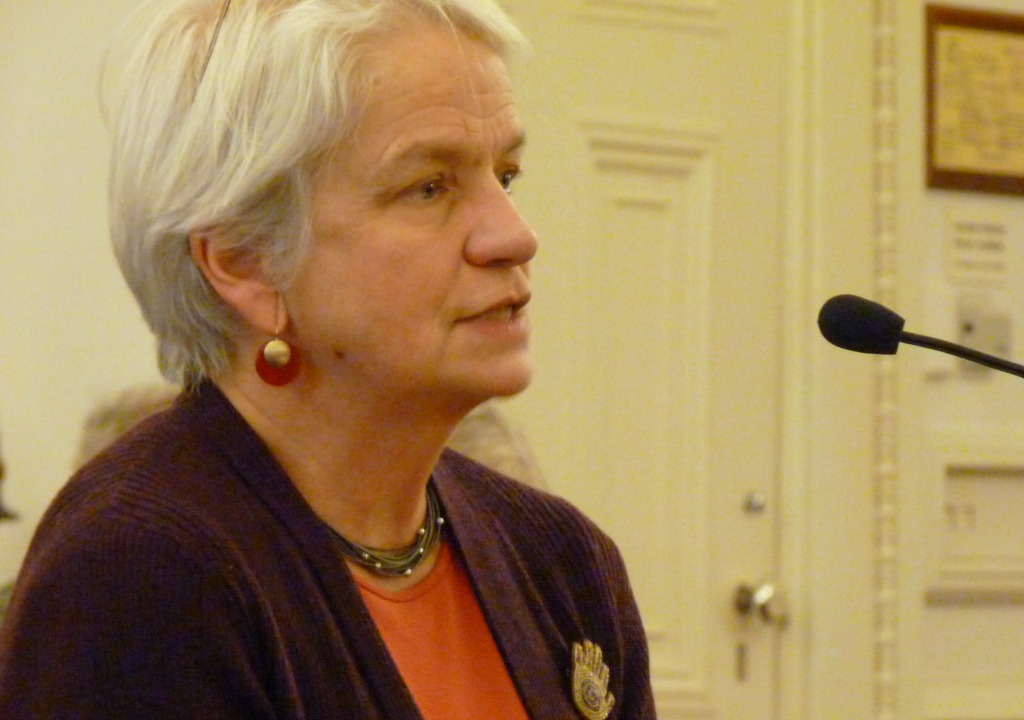
Davenport was absent Thursday but senators plan to ask her to testify.
The bill requires the formal rules of evidence to apply to court matters in cases of non-consensual guardianship and that troubles the lawyers.
Jesse Bugbee, an attorney with the bar association, said the group’s primary concern is that in rural counties, they deal with many people who lack a formal understanding of the law and don’t understand concepts like rules of evidence or the concept of hearsay.
“We see that as being fraught with real difficulty, primarily because about 85 percent of the people who appear in these proceedings … they are grandparents, aunts and uncles, other family members who try to do the right thing by the child but don’t have any familiarity with the formal rules of evidence,” Bugbee said.
Family advocates also testified before House lawmakers, asking that there be a provision for third-party groups to help guardians navigate the legal system.
The bar association also objects to a section of the bill that says when a parent asks to regain custody in non-consensual guardianship, it is up to the guardian to continue to prove the parent is still incapable of parenting.
Davenport’s response addressed the rules of evidence and burden of proof concerns.
About the burden of proof, Davenport said the Vermont Supreme Court has held that parents have a constitutional liberty to care for their children, therefore the guardian must prove that is unwise.
The bar also expressed concerns about sections of the bill that have to do with which court hears guardianship matters.
Petitions for guardianship should be filed in probate court, the bill says. A guardianship case should be transferred to family court if there is an open case in family court involving custody of the same child.
Anthony Smith, a father of three from Colchester, described the process of trying to regain custody of the two children he and his wife signed into custody with his mother.
At the time he was in debt and his wife suffered from depression, Smith said. They had an extremely difficult time regaining custody, he said, once they got their lives on track.
“The system is basically stacked against the parents, as it is now,” he said.
Parents need legal representation and should be educated about the guardianship process before signing away custody, Smith said.
Parents should also have the right to parent-child contact and they should not be charged with proving they are capable of regaining custody if they ask to terminate a guardianship, he said.
The bill would address some of those concerns but not all. Third-party family advocates have asked that they be consulted to offer legal advice to parents involved in guardianship cases. That is not part of the bill.
There are approximately 3,000 Vermont minors in guardianship situations in Vermont, experts said Thursday. In fiscal year 2012, 456 petitions for minor guardianship were filed in probate court.
The bill is the result of a 2012 study committee established to recommend changes to guardianship laws.
Trine Bech, executive director of the Vermont Parent Representation Center, told the committee that there are discrepancies among judges on guardianship matters.
“It is amazing the different approaches that the probate judges have, and some use very different law and you really never know what’s going to happen,” she said.
The law would give guardianship proceedings much-needed structure, she said, including criteria for when a guardianship should be terminated and a “family plan” that addresses parent-child visits.
Retired Washington County Probate Judge George Belcher also testified, along with Sandi Yandow, a family advocate with the group Vermont Kin-Kan.
Cynthia Walcott, deputy commissioner for the family services division of the Department of Children and Families, talked about the last section of the bill, which deals with cases in which DCF is involved.
She shared a 2013 policy that DCF adopted that instructs social workers on how to deal with guardianships.
In the past, DCF sometimes erroneously urged families to file for guardianship instead of filing a petition to remove the child from a dangerous home (a so-called CHINS petition,) Walcott said.
