

The state pledged to make 90 percent of health care payments “value-based” within five years, as part of its application for a $45 million state innovation grant.
Anya Rader Wallack, a consultant for the state who leads the team that is allocating the State Innovation Model grant award, said payments to providers must be in some way be tied to quality of care.
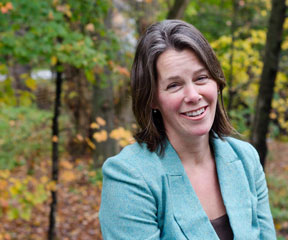
Jump-starting payment reform was the reason Vermont applied for the grant, and tying payments to the quality of care is reasonable, she told lawmakers on the House Health Care Committee on Thursday.
“I’m not sure what they’re going to do if we don’t make good on that pledge,” said Anya Rader Wallack, a consultant who leads the team that is allocating the money.
Rep. George Till, D-Jericho, said he was dumbfounded that the administration would make such a pledge.
“In actuality, only a very small portion of the payments received by the practice are based on the quality measures,” Till wrote in an email.
Wallack tried to reassure him, explaining that federal regulators’ definition of “value-based” payments includes Vermont’s payments to primary care providers through the Blueprint for Health.
The majority of Vermont’s health care providers have signed up with an Accountable Care Organization, and with Medicaid and commercial insurers beginning to offer shared savings programs to the organizations this year, the state is increasing the opportunity for value-based payments, Wallack said.
Shared savings payment programs are considered value-based because the amount of savings payers give back to the Accountable Care Organization is partially based on how well they do in meeting the payers’ quality measures.
Over the three-year lifespan of the federal State Innovation Model grant, a steering committee will work to develop pilot models for two other versions of value-based payment reform, Wallack said.
One is called episode-based care. In this model, payments are made for treating a specific condition over a period of time. The provider shares in savings based on the cost and quality of that care.
The other pilot programs will be based on a pay-for-performance model in which providers are compensated for meeting or exceeding quality thresholds.
Those pilots must be launched with enough time for the steering committee to evaluate and possibly modify them before the grant is up in 2016.
The steering committee is led by a core team that includes Wallack, Mark Larson, commissioner of the Department of Vermont Health Access, Al Gobeille, chair of the Green Mountain Care Board, Robin Lunge, director of Health Care Reform and Doug Racine, secretary of the Agency of Human Services.
That team must coordinate seven work groups with more than 300 people representing a wide array of stakeholders.
The work groups are exploring how these payment reforms will affect areas such as public health, the health care work force and disability and long-term services. They will then make policy recommendations to GMCB, DVHA and AHS for how to improve in those areas.
Another important component of the State Innovation Model grant is assisting the development of the state’s health information exchange, which is operated through a public-private partnership known as Vermont Information Technology Leaders.
A health information exchange will use analytics to guide providers and state’s decision-making, Wallack said.
Some major components in the SIM budget set aside $10.9 million for analytical systems; $10.3 million for personnel costs for people supporting the grant’s work; $3.4 million for provider grants; and $3 million for evaluating the reforms.
Requests for grant proposals went out to providers this month and are due by Feb. 14.
Rep. Mary Morrissey, R-Bennington, asked if the state would be left holding the bag for the new programs when the grant money runs out. Wallack said these were initiatives Vermont was already planning to undertake, and if implemented correctly should result in savings over time.
Rep. Doug Gage, R-Rutland, asked how factors beyond the scope of health care that affect people’s health, such as smoking or leading a sedentary lifestyle, are accounted for in value-based payments systems in which providers are compensated to some degree based on their patient’s health.
“It is more complicated than simply fixing health care delivery,” Wallack acknowledged.
The steering committee is exploring how incentives can be used to improve a population’s health.
“There are proven interventions,” Wallack said. “There’s also a lot of stuff that we don’t know how to get at in terms of changing behaviors and changing the environment.”
Dr. Karen Hein, a member of the Green Mountain Care Board, is leading the population health work group for the SIM steering committee. Hein will give more detailed testimony in the coming weeks on what mechanisms can be used to connect public health and health care.
This article was updated at 9:30 p.m. to clarify Rep. George Till’s reaction.
