


Editor’s note: Candace Page is a Burlington freelance writer. In This State is a syndicated weekly column about Vermont’s innovators, people, ideas and places.
SHELBURNE – Eileen Growald pulled gently on the reins to slow her team of horses as she took them for a spin recently on a snow-packed farm road near her home.
Motorists pulled over to photograph the classic scene: a pair of glossy Morgans, their bells a-jingle, pulling a 19th-century sleigh against a background of fields and wooded hills.
Those who came close enough could see an antique campaign button on Growald’s canvas barn coat: “Rockefeller for President.”
The button was a jokey Christmas gift, but its place on her lapel was symbolic. After years of living in the relative anonymity of the Vermont countryside, Growald, 61, has publicly embraced her identity as a great-granddaughter of John D. Rockefeller and one of the heirs to his dynasty’s fortune, fame and responsibilities.
Her memoir, “Being a Rockefeller, Becoming Myself,” was published last fall. It offers a startlingly frank portrait of a childhood in which the assets of great wealth – servants, limousines, homes in New York, Maine and St. Barts – were balanced by liabilities – an often absent father, a mercurial mother given to bouts of depression and outbursts of rage, and siblings sometimes estranged from one another.
Growald is the youngest of six children of banker and philanthropist David Rockefeller, 98, whose personal fortune Forbes magazine estimated last year at $2.5 billion.
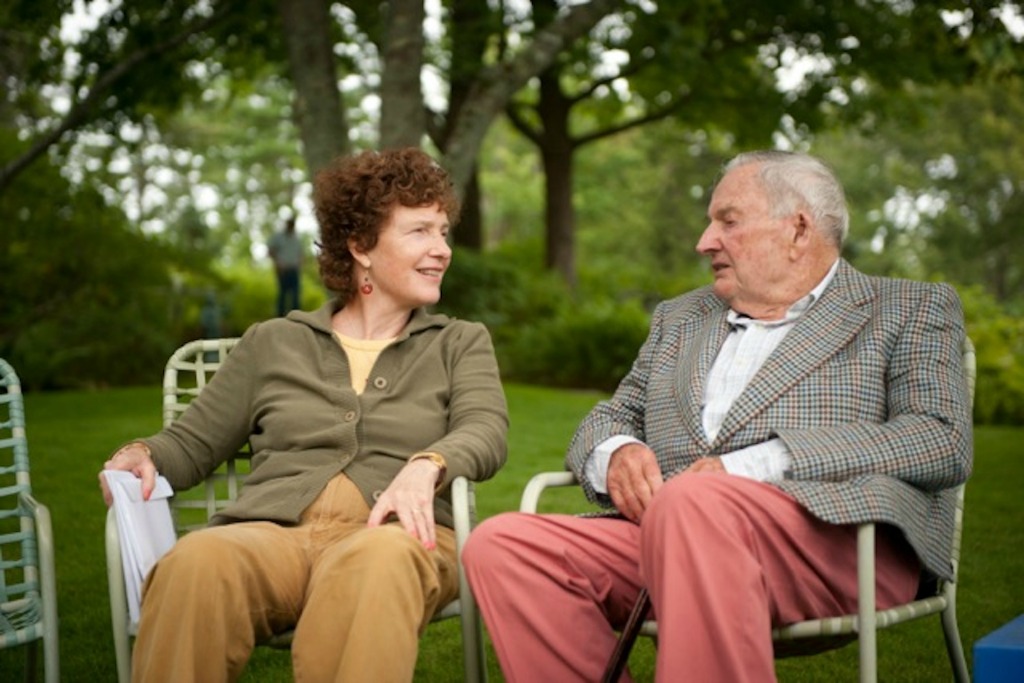
“I spent most of my childhood scared of making mistakes,” she writes. “I was teased by my siblings, criticized by my mother and shamed by my father. I can still hear their reproaches: ‘You’re stupid’ or ‘You’re too sensitive.’”
“Being a Rockefeller” tells the interior story of Growald’s self-discovery in adulthood and the exterior story of the good works to which she has dedicated part of her inheritance.
Much of that story has unfolded during her years in Vermont, where she has owned a home for 33 years and lived year-round for 17.
On a wintry Sunday near the turn of the year, she sat by a wood fire in the light-filled living room of the renovated farmhouse she shares with her husband, Paul. Growald has curly brown hair and an informal warmth that contrasts with the formal, wood-paneled room.
She’s down-to-earth – and not.
“I struggle with my weight. I am getting more lines in my face every year. I have fights with my husband,” she writes in the book. On a sleigh ride with friends, she harnessed the horses herself, dressed in a barn coat and slacks. She talked about family, farming, weather. But then she noted offhandedly that she was able to help Shelburne Farms replace the acres of copper roof on its farm barn. “I knew someone with a copper mine in South Africa,” she said.
A graduate of Middlebury College, Growald moved to Chittenden County as a young woman, planning to work as a weaver. She joined the non-profit Shelburne Farms organization in its early days, helping to design its education programs and acting as its first development director.
After her marriage, the Growalds lived in San Francisco for 15 years, where they had two children. There, she founded and helped fund a national organization that pioneered in the field of mind/body health.
“I had found my purpose as a catalyst and connector of people and ideas,” she writes of her founding of the Institute for the Advancement of Health.
The family returned to Vermont in 1997, where their home is surrounded by gardens that, with the help of their staff, supply all the family’s vegetables.
“I’ve always sought nurture in nature and Vermont has so much natural beauty it provides balance to my life of responsibilities, chosen responsibilities,” Growald said.
She is hyper-sensitive to the freight carried by a name synonymous with wealth, and the adjective “chosen” acknowledges her awareness that she is free of the necessity of work.
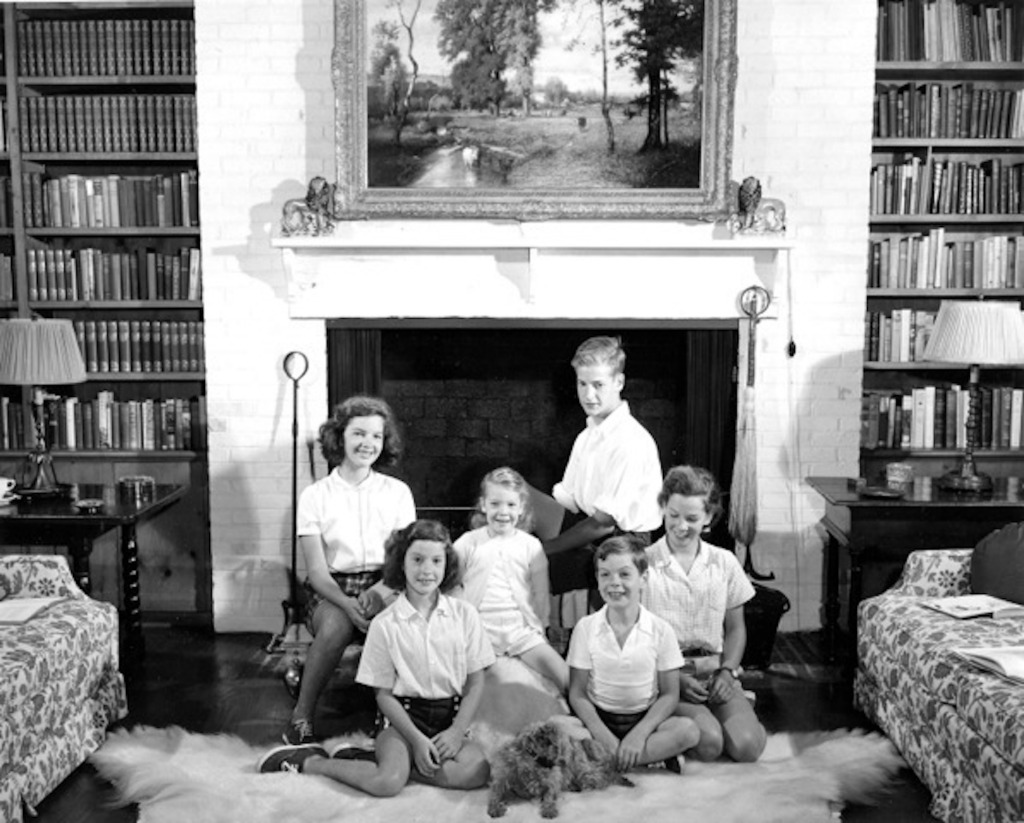
But work she does, collaborating with her husband on guidance of their philanthropy, the Growald Family Fund, traveling to speak about her book or about her interest in emotional intelligence.
“Eileen could take it easy and sit on the beach, but she and Paul are committed to doing a lot of good,” a friend, Kate Lampton of Charlotte, says of the couple. Lampton was director of the Champlain Valley Greenbelt Alliance, a five-year effort funded by the Growalds to protect scenic vistas along U.S. 7 between Shelburne and Middlebury.
Today, the Growalds’ philanthropy contributes to Vermont causes including hunger, conservation and historic preservation, but focuses primarily on fighting construction of new coal-fired power plants that contribute to climate change.
Eileen Growald declines to say how much her foundation grants each year, but notes in her book that Rockefeller descendants, “have inherited the values passed down from my great-grandfather, to give no less than one-third of our income away annually.”
Writing the book was a wrenching process she said, one that consumed six years.
The pages are full of anecdotes from a wealthy childhood – nannies, French cooks, limousine rides to school. How many teenage crusaders, hot to clean up the Hudson River, could photograph the pollution from their father’s helicopter and invite an uncle – then New York Gov. Nelson Rockefeller – to see the degradation?
But the writing also lays bare Growald’s struggles in school, her desperate need for attention from parents she adored, the near break-up of her marriage, disagreements with her siblings.
At the heart of the book is the story behind the second half of its title, “becoming myself.” In young adulthood, Growald writes, she began to recognize and value her own strengths – emotional intelligence, an entrepreneurial spirit – and to use the power of the Rockefeller name to help her causes.
Many 20-somethings might have an interest in mind-body interactions, but few could establish a groundbreaking institute by assembling support from top academics including the president of Rockefeller University, founded by her family.
“Family connections … were on my side,” she acknowledges in her memoir.
That family connection still helps, she says. Although her legal name is Growald, her book agent insisted that she write under her maiden name, Eileen Rockefeller.
“The Rockefeller name would sell books,” the agent told her. Coming out in the open about her identity had other benefits, she said. No longer does she have to wonder whether a new acquaintance knows who her family is, nor does that acquaintance have to wonder whether Growald knows that he knows.
“Now everybody’s on the same page,” she said.
More importantly, she said, “Like all the rest of my cousins I’ve lived my life under the radar, keeping a low profile. There’s this culture of hiding from our name.
“Part of my professional growth is living with all of who I am. Now, I’m claiming the Rockefeller piece.”

