ESSEX JUNCTION — Lawmakers might consider expanding the state’s bottle bill in the upcoming session as they prepare for a statewide recycling overhaul.
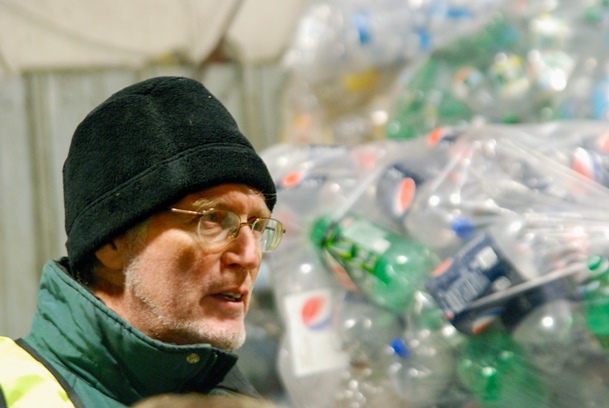
Vermont Public Interest Research Group (VPIRG) invited several lawmakers to tour the TOMRA recycling facility in Essex Junction on Tuesday. The event was designed to provide lawmakers a glimpse into the benefits of the state’s bottle bill, which some in the beverage industry oppose.
If fully implemented, the law would expand the state’s bottle bill to include noncarbonated beverage containers. Only carbonated drinks and liquor are redeemable under present law, which was originally passed in 1972 to address litter problems.
Some beverage distributors, however, want it scrapped all together to save on the handling fees paid to pick up their containers at redemption centers before sending the material to a recycling facility. Without the bill, consumers would send these bottles directly to the recycling facility with other recyclables at no cost to the distributor.
Rep. Curt McCormack, D-Burlington, is a member of the House Natural Resources and Energy Committee. He said he does not know it the bottle bill expansion will be taken up this session, which starts Jan. 7.
“It hasn’t been easy to get people’s attention on expanding it,” he said.
During the first half of the session, lawmakers introduced legislation expanding the bottle bill but did not vote on the expansion.
The Agency of Natural Resources released a 140-page report in October detailing the implementation of Vermont’s universal recycling law, established last year under Act 148, to expand statewide recycling, redemption and composting.
The largest cost associated with the bottle bill is the handling fee that beverage companies are required to pay, according to the report. Removing the handling fee would significantly reduce the cost of the program but may harm the redemption business, the report states.
“To do away with it [the bottle bill], would devastate my business and any other redemption centers in the state,” said Kevin Kittell, owner of Essex Discount Beverage, who took the tour Tuesday.
Some beverage distributors say the program is an unnecessary expense to their business. The bottle bill requires them to pay a 3.5 to 4 cent PER BOTTLE handling fee for their bottles to be picked up from redemption centers.
According to David Larose, Vermont and New York manager for Coca-Cola of Northern New England, the current handling fee for a 750-pound bale of plastic bottles is $510 at 4 cents a bottle. To reclaim the bale, the company gets 24.3 cents per pound, or $182.25, he said.
Some distributors say would be able to avoid the handling fee if bottles were sent directly to recycling facilities that have the technology to sort a variety of materials.
Advocates said Tuesday that the bottle law actually increases the value of recycled materials because it keeps them separate, which avoids cross-material contamination. Shattered glass contaminates other recyclable materials with its dust. It also loses its value when different tints are mixed, bill advocates say.
Michel Marquis, president of 2M Resources Inc., a glass recycling facility in Quebec, said recycling commingled glass costs his business money and sends glass and other contaminated materials to the landfill.
“In the glass industry, with the bottle bill, it is 100 percent recyclable,” Marquis said. “It’s a much higher value in the end than throwing everything into the commingle.”
Marquis said when different varieties of glass are mixed, manufactures that rely on certain colored glass cannot use the recycled material.
“We are just throwing everything away,” he said.
Joe Fusco, vice president of Casella Waste Management, said the real problem with recycling glass is its poor value as a commodity. Because of its weight, glass is expensive to transport, he said.
“Every material in this recycling stream is now a commodity, like oil, it has value that ebbs and flows,” Fusco said. “These are global forces that are affecting the value of this material.”
The bottle bill, he said, cannot make glass more valuable.
“Glass has bigger economic challenges that are beyond the reaches of the bottle bill,” Fusco said.
Currently, he said there is no available technology to separate glass of different colors, though it is being developed by eCullet, a glass processing company in California.
Casella currently uses a “zero-sort” machine to sort recyclable materials. Fusco said glass does not typically harm the value of other recyclable materials sorted this way. He said the percentage of contamination by glass is very small.
“It tends not to contaminate, it’s a challenge, but its not insurmountable challenge,” he said.
Lauren Hierl, an environmental health advocate for VPIRG, said the recycling rate in the state is about 30 percent for all materials while about 75 percent of the carbonated and liquor containers cover in the bottle bill are recycled through the redemption process.