

Tax-exempt organizations in Vermont can look at a one-year reprieve from legislative debate over how much they should pay in property taxes, but the delay brings the state’s Education Fund no closer to capturing new revenues to pay for its increasing needs.
Currently public, pious and charitable organizations, plus several other specific groups, do not pay the statewide property tax that funds public education in Vermont. But discussion is afoot to tighten the net on those exemptions and to start charging marginal tax rates to otherwise-exempt property owners.
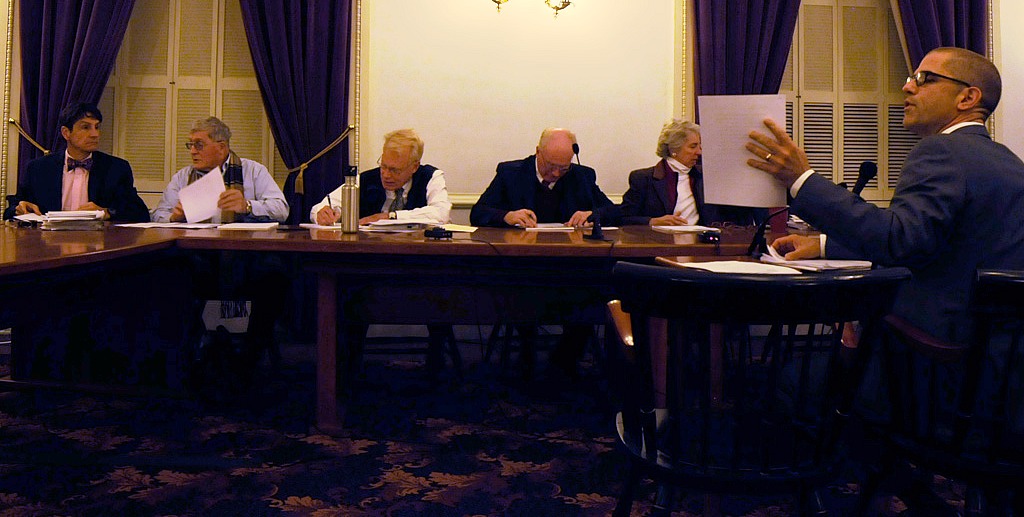
A committee of lawmakers, administrative staff and some stakeholders met Wednesday afternoon at the Statehouse to draft legislation to that effect. They settled on some provisions, but hit a technical snag that shelved the most controversial proposals.
No new taxes on exempt properties are being proposed as of now. But a majority of committee members expressed willingness to levy property taxes on groups ranging from Girl Scouts and humane societies to hospitals and churches.
Asked whether any other state has removed or partially lifted tax-exempt status for religious organizations, Peter Griffin of the Legislative Council said he was not aware of the precedent being set elsewhere. (Legislative Council advises lawmakers on the legal technicalities of their bills, but does not advise for or against their policy choices.)
Committee members recognized that proposing such a change may be a tough sell to fellow legislators, could be perceived as “dangerous” by the public, may spark strident opposition from around the country and likely would end up in a protracted court battle.
Still, all but Sen. Kevin Mullen, R-Rutland, and Bill Johnson, of the Department of Property Valuation and Review, voted to keep “pious” on the list of organizations to tax. Voting to include religious organizations in the tax net were Rep. Alison Clarkson, D-Woodstock; John Fike, president of the Vermont Assessors and Listers Association; and Steve Jeffrey, executive director of the Vermont League of Cities and Towns.
In addition to opposing a tax on religious property, Mullin said that he wanted the University of Vermont off the property tax table, too.
For all other organizations, the committee’s discussion moved from “whether” to “how much.” The property tax rate calculation would not change, they determined, but only a percentage of any exempt property’s value would be assessed. What started at 25 percent at times came down to 10.
Sara Teachout, of the Joint Fiscal Committee, had been asked to report how much revenue the exemption roll-back would generate if it were levied on 25 percent of the exempt properties’ value. She returned a “very, very, very” rough estimate of $17.6 million.
Because exempt properties are not taxed, listers in many towns do not collect property valuation data for them. Teachout compiled a comprehensive database of all known exempt property values in the state, but there is a lot unvalued property, she said.
Ultimately, the missing data that prevented a more precise revenue prediction also deflated the committee’s momentum. They felt they could not make an effective case for such a controversial proposal without hard figures of how much money the political risk would be worth.
Members had expected to get that data by April 1, 2014, thanks to a provision in Act 73 that requires all exempt organizations to report their “replacement” values to their listers in the spring. But technically, Johnson said, that requirement was written in a way that it will not go into effect until July 1, 2014 — not in time for the 2014 Grand List.
Johnson said nonprofits can voluntarily report their insurance values to their towns in the meantime, and he is working with listers to get them used to valuing property that is traditionally exempted from property taxes.
With the explicit tax proposal gone for now, less controversial legislative language remains that still holds important implications for the nonprofits involved:
- The definition of exempt hospital properties is refined.
- Municipal property tax exemptions are extended to utility fixtures such as sewer pipes and culverts.
- Property owned by a nonprofit must be operated for nonprofit purposes in order to maintain the property tax exemption.
- The state’s Department of Property Valuation and Review will take charge of certifying whether an entity is exempt.
- Colleges and universities will have to reach municipal service fee agreements with their host cities and towns.
What’s left of the committee’s draft legislation will be finalized and posted online in advance of a public hearing set for Dec. 16 at 1 p.m. Written testimony will be taken in advance to accommodate those who cannot attend the hearing in person.
