

The Vermont Fish and Wildlife Department has issued 30 fewer permits for moose hunting this year, an indication that the population is stabilizing, said Scott Darling, a wildlife biologist for the Fish and Wildlife Department.
Each year, the number of permits issued by the state changes according to the management goals set by the department, Darling said. The decision to issue fewer permits this year indicates that the moose population is beginning to stabilize, he said.
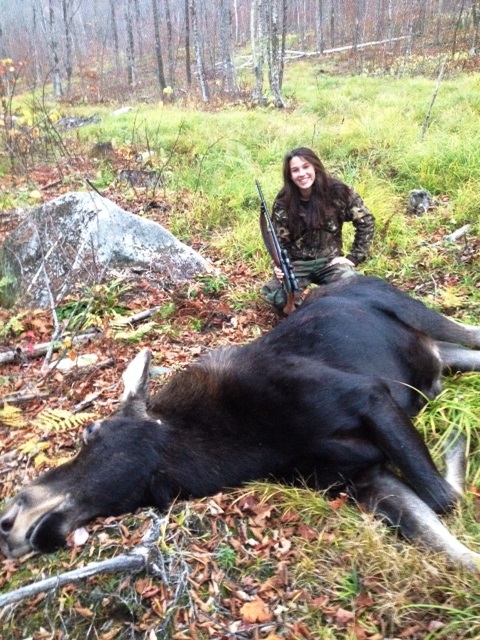
In 2008, the peak year for the moose population, Darling said the department issued 1,255 permits. This year, the state issued 355 regular season and 50 archery season permits to hunt moose.
Last season, 222 moose were taken, 17 during archery season and 205 in the regular season, according to Fish and Wildlife data.
While the harvest will continue this year, the “wildcard” for the future of moose hunting is the winter tick, Darling said, referring to a parasite that could threaten the moose herd.
“I think we have some of these other environmental factors, such as winter ticks or climate change, that we need to stay on top of,” he said.
That has been a problem is states such as Montana, New Hampshire and Minnesota, he said, where moose populations have noticeably declined in recent years as more pests and parasites survive shorter and increasingly moderate winters.
In Minnesota, wildlife officials have cut off moose hunting entirely, said Tom Rogers, an information specialist at the Vermont department.
Rogers said the department will study the effect of the tick population on the health of moose in the state. After the study, the department will issue a game plan, he said.
The department regulates the moose population to prevent collision accidents on the road and to reduce the pressure on plant species eaten by moose, Darling said.
The state routinely monitors the moose population and reproductive patterns to decide how many hunting permits to issue, he said. Next year, the department will conduct an aerial survey to track population densities in the Northeast Kingdom, he said.
Each year, the state holds two lotteries designed to allocate hunting permits, one for moose permits and another for antlerless permits. These permits are issued for the seven-day archery season, which runs Oct. 1-7, and the regular moose hunting season, which runs for six consecutive days beginning on the third Saturday in October.
Usually, several hundred permits are issued by lottery. About 10 percent of those permits are awarded to out-of-state residents, according the the department’s website. The price to obtain the permit ranges from $100 for residents to $350 for nonresidents.
Those not selected by the lottery have an increased chance in the following year if they choose to apply, known as a bonus point. Bonus points are lost if the applicant does not apply for a permit in the consecutive round of the lottery, as described on the department’s website.
