


The “fair” in fair market value is up for debate in the state’s flagship land conservation program.
Landowners who preserve their property for forestry or agriculture pay a lower tax rate than those whose land is open for development. Enrollment in “current use,” as the tax incentive program is called, is meant to be a long-term commitment. The state holds a lien on current use properties to help ensure that the lands are preserved according to plan.
But the penalty for withdrawing land from current use — often by building on it — was diluted around 2001 when its fair market valuation was changed. A coalition of foresters, farmers, conservationists and sportsmen have been trying for years to return the “teeth” to the penalty. And Rep. Alison Clarkson is hoping their third try will be the charm.
Clarkson sponsored a bill that passed the House in 2013 and will be taken up by the Senate in January. It’s very similar to a bill that died in that chamber previously, and one vetoed earlier, in 2010, by then-Gov. Jim Douglas. Clarkson also chaired a task force that studied the current use program in 2007.
“It reinstates a meaningful penalty,” Clarkson said. “It deters short-term enrollment of land not intended for long-term forest and agricultural use.”
That short-term enrollment, by which a would-be developer can save money on taxes until the time is right to build, is known as “parking.” Whether or not it’s a problem — and if so, how to fix it — was a matter of debate at a public hearing on current use Tuesday night.
A special Senate committee convened at Lake Region Union High School in Barton for the first of four public forums to be held around the state throughout the fall. Members of the public are invited to share their experiences with Use Value Appraisal, the current use program’s official name, and to offer their thoughts on its effectiveness, efficiency and fairness.
With three Senate committee chairs among its ranks, the committee is not short on influence: Bobby Starr, chair of Senate Agriculture, headed up the proceedings. Tim Ashe, chair of Senate Finance, and Robert Hartwell, chair of Senate Natural Resources, along with Sens. Mark MacDonald, Christopher Bray and Richard Westman, rounded out the panel.
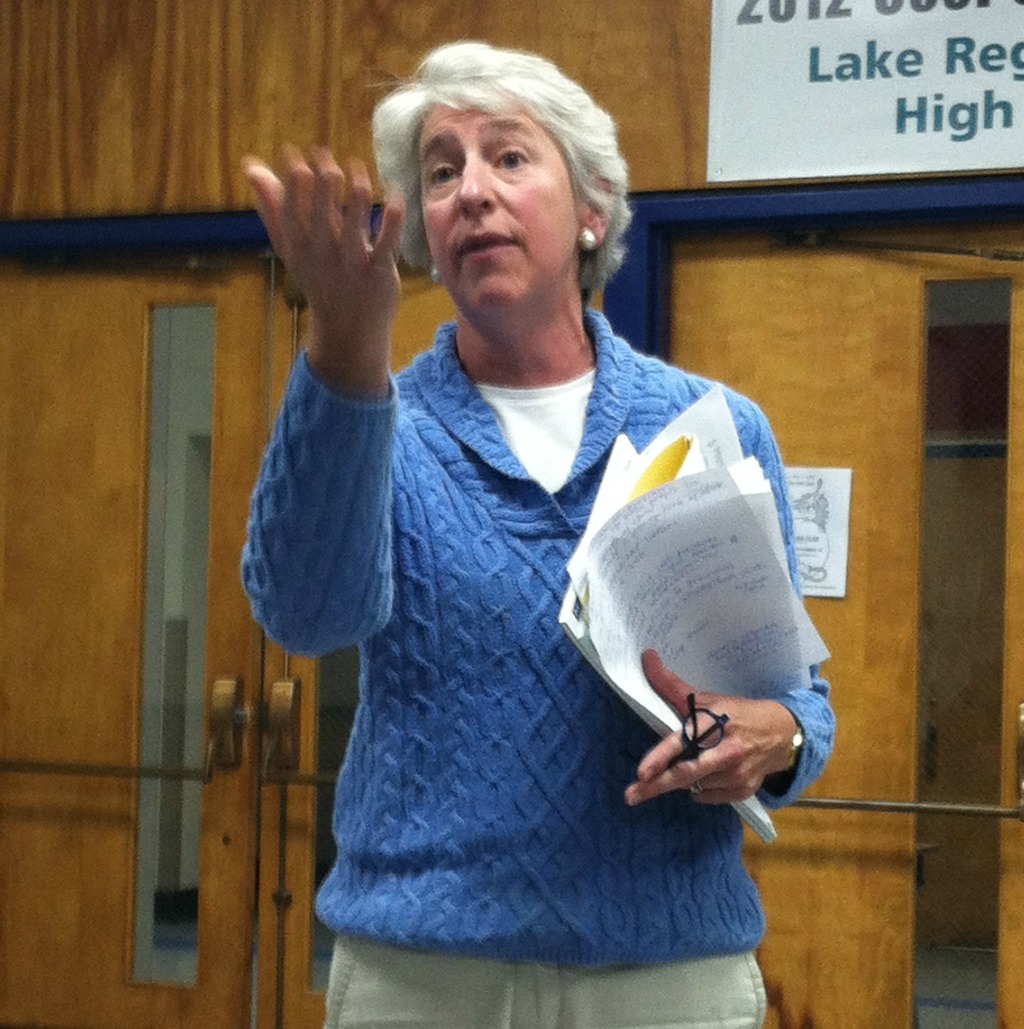
The senators stopped short of expressing their own opinions about current use, but some may have opened a doorway to their thinking. If a collective mindset among them has gelled, however, it wasn’t revealed Tuesday night. And if the comments of 14 members of the public, plus Clarkson, are any indication, the senators will have a lot to ponder before the start of the year.
Many in attendance, but not all, were associated with the Current Use Tax Coalition, on whose consensus position Clarkson’s bill is based.
Among other topics, they complained of inconsistent or inflated property appraisals by town listers, testified to the farms that would be out of business from the burden of property taxes were it not for current use, touted the ancillary economic benefits of the current use program, and suggested that the value of wild land should be considered alongside the productivity of harvested farm and forest land.
Some dairy farmers and others simply encouraged the senators to “not fix what’s not broken” and to not “muck” with the program too much.
But by far the most prominent theme of the evening was the penalty that property owners face for taking their lands out of current use — and whether it’s fair or effective.
Fair market value
Suppose you own a 100-acre parcel of land. At fair market value, your property may be worth $1,000 per acre. Whatever the tax rate may be in a given year, it’s applied to $100,000 worth of property.
But your tax bill would be significantly less if that land were enrolled in current use. In the 2013 tax year, each acre would be valued at just $265 per acre for agricultural land, or $119 per acre for forest, according to Elizabeth Hunt, of the current use office in the Department of Taxes. Forest land far from Class 1, 2 or 3 roads receives even more of a discount, resulting in $89 per acre of current use valuation.
So, imagine you enrolled your land in current use back when the program was started in 1978. Now, you might be looking for college funds for your children, or trying to build up your retirement savings. Perhaps you find yourself short on cash, ready to start a new business, or helping a family member in need. Or maybe you want to get out of farming, cash in your chips and move to Florida.
The penalty owed to the state to take your land out of current use is 20 percent of its fair market value (or half that if your land has been in current use for at least 10 years). If only a portion of the land is developed, rather than the whole lot, then the penalty is pro-rated for just the portion that’s removed from the program.
“If five acres are coming out,” Hunt hypothesized, “we don’t look to see if the five acres have a beautiful view, or if they’re wetlands that you can’t build on.”
In other words, the penalty for taking 5 percent of your land out of current use is a simple percentage calculation. No one goes back out to your property to re-appraise that five-acre plot you want to sell, in order to see how much it’s worth on its own and base the penalty on its fair market value — which could be significantly higher than the mathematical ratio of its value within the broader property.
“That’s one of the criticisms of the current formula, but it makes it easy to do the calculation,” Hunt said.
The current formula has been in place since around 2001, but the year is hard to pinpoint, said Mark MacDonald, who both sits on the special Senate current use panel and owns land enrolled in the program.
Previously, Clarkson said, the penalty would be calculated using the fair market value of the specific property to be sold, not a pro-rated version of the total enrolled land’s worth.
Clarkson understands why the state’s Department of Taxes would want a simple formula that can be figured from a desk. The office isn’t staffed and funded to send appraisers out with “boots on the ground” to re-evaluate every parcel that may come out of current use, she said.
But that doesn’t mean she likes the new system. “Now you’d pay the pro-rated value of the whole land,” she said. “It’s totally diluted over the whole parcel.”
And it certainly doesn’t mean she intends to let it stand without a fight.
In some states, Clarkson said, landowners who pull their property out of current use have to pay back all the taxes they saved in the years their land was enrolled. She’s not suggesting such an extreme penalty, but she cites the example for comparison’s sake.
“In Vermont, you pay this diluted, pathetic penalty,” she said. “We need to improve and strengthen current use to make it fairer and financially more sustainable.”
