

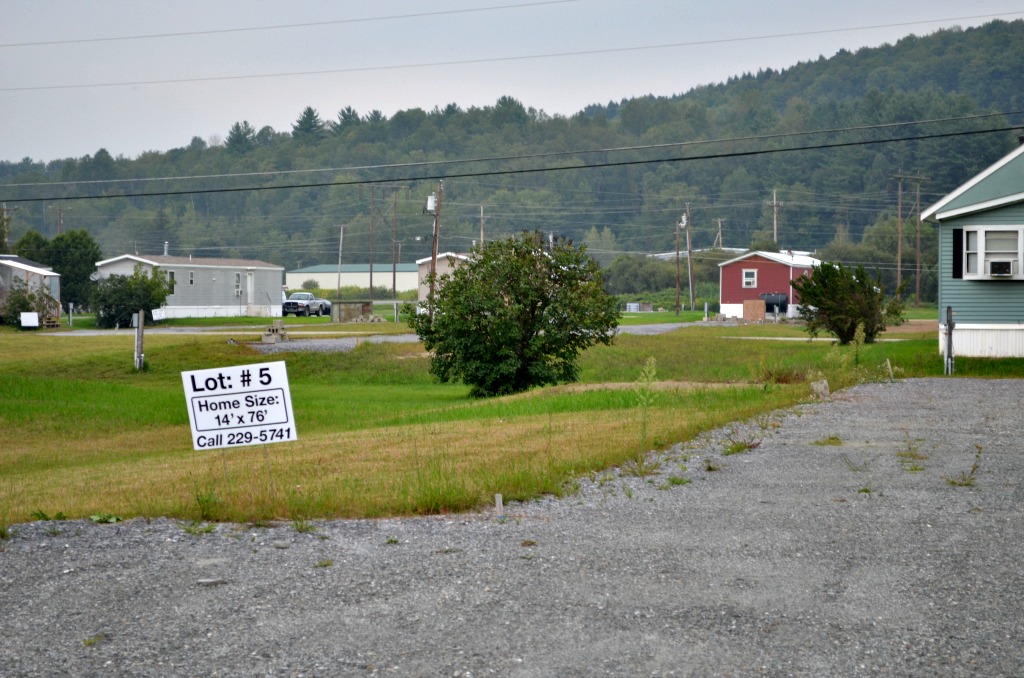
Jean Shepard is back at the Berlin lot on Weston Road where she’s lived since 1976. A cat, one of two that she lugged to higher ground when Tropical Storm Irene hit, lies sprawled on the floor of her mobile home.
Shepard’s home was destroyed in the flood; she stayed at her sister’s place until FEMA provided her with enough money to purchase a remodeled mobile home. Robin’s egg blue, it sits in the exact location as the washed-out one it replaced, but even so, Shepard said, “It will never get back to the way it was.”
It’s been two years since Irene, but in some of the mobile home parks that fell in its path, the tropical storm’s impression is still visible in the form of empty lots, outstanding loans and absent neighbors.
Irene damaged 17 of the state’s roughly 250 mobile home parks, flooding 218 homes and destroying 137, according to a University of Vermont study. Whalley Trailer Park in Waterbury and Green’s Trailer Park in Sharon shut down after the storm; the rest are open, though some have had to downsize — Patterson Park in Duxbury, for instance, had 19 lots before the storm but currently only four are filled.
At the Weston Mobile Home Park, there are two neat rows of refurbished mobile homes and newly seeded grass. But beyond them are mounds of dirt and construction machinery where, pre-Irene, other homes were located.
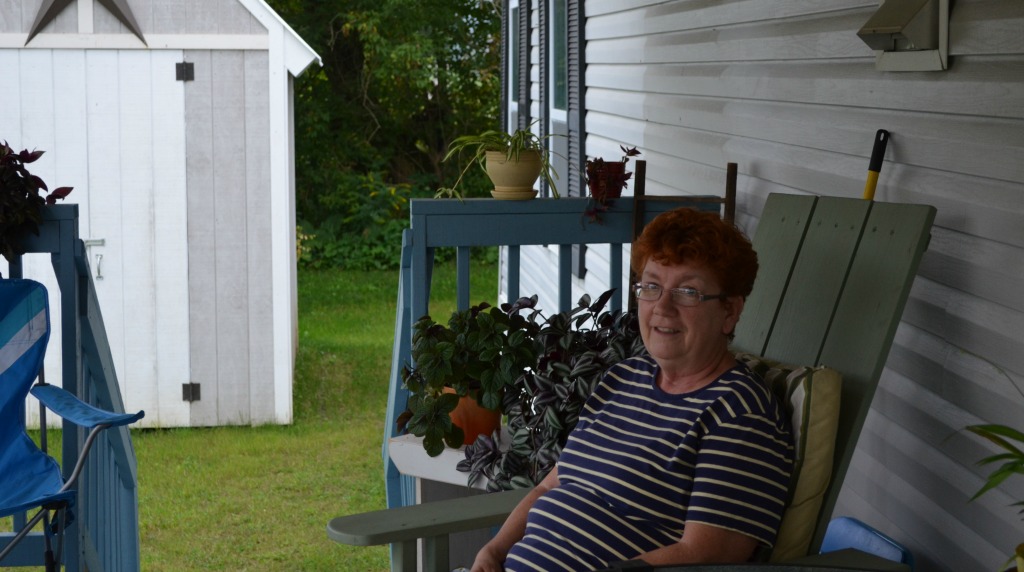
Shepard is nearly finished paying off a loan she took out to hold her until the FEMA money came through, and she’s repaired doors and repainted the entire interior of her home — “it was orange and pink and green and every cabinet was a different color,” she recollects with a grimace. But, she said, there’s still a lot of work to be done.
Shepard’s neighbor, Clint Campbell, is in a similar situation. Campbell’s original home flooded before Irene; shortly after he moved to Weston, Irene displaced him and his wife again. He recalls seeing a photo of his Ford truck — with a log stuck in the windshield — plastered across the news for days. Campbell got a $30,000 grant from FEMA for a new home, but he estimates he lost $60,000 in the storm.
“I still have a lot of stuff that I haven’t been able to replace,” Campbell said. Asked how his neighbors were faring, he replied, “They are all struggling.”
Sandy Gaffney, another Weston resident, said it was last winter when things got back to normal for her. Some of her friends haven’t fared as well — one couple used the money they got after Irene to take out a mortgage to buy a home, but two years later they are struggling to make payments.

Weston, Patterson and other parks that have rebuilt their lots have taken required steps to avoid flooding in the future — using pads to elevate the homes, for instance — but state officials and a number of their nonprofit partners are still concerned about how they’ll fare in the event of another Irene-scale natural disaster.
According to research done by the UVM and the Department of Housing and Community Development, as of 2012, 32 percent of parks have some portion of their property in a floodplain and 12 percent of the mobile home lots in parks are located in a flood hazard area.
Deputy Commissioner Jennifer Hollar said the department is still looking for opportunities to move mobile home parks out of floodplains, but they’ve learned that they can’t force the matter.
“It has become clear that it takes time. You have to look for opportunities to make those changes because these parks are neighborhoods and these are people’s homes. And it’s hard to find sites. We will continue to work with owners at those sites, when a park comes up for sale or there are infrastructure challenges, you can use that opportunity to reconfigure or relocate.”
The state bought out Green’s Park in Sharon, and it attempted to buy out Patterson Park in Duxbury, but its owners turned down the offer.
Ed Patterson operates that park along with his 88-year-old mother and his brothers.
Despite discouragement from the state, Patterson has been determined to rebuild the park, which, in addition to being an important source of income, has belonged to his family for decades. His father built the park in 1957, his mother, Mona Patterson, ran it for the 19 years since his father passed away, and, with her health now failing, he and his brothers have recently assumed the responsibility.

Though only four of the original 19 plots are occupied, Patterson said he plans to finish five more plots within the next few days. It’s been a slow process because the Pattersons have paid for the reconstruction out of their own pockets.
“Being just a family operation, we don’t have the same resources, so we do it as we can.”
The state, he said, has been more of a hindrance than a help. “It seemed liked they wanted to fight us more than they worked with us.”
The town, on the other hand, pitched in, according to Patterson. “Duxbury was fantastic to work with. They helped guide us through a lot of bureaucratic red tape.”
On Tuesday afternoon, one Patterson Park resident was tinkering with a van parked outside his home, which he purchased with $29,000 from FEMA. Like Shepard and Campbell, he said he’s still a long way from getting his lot back in order. A few months ago, he got a letter from FEMA informing him that he needed to return $1,700 because the original evaluation of his damaged property had been incorrect. He contested the claim, but several days ago he got a second letter dismissing his objection.
More work ahead
Programs to ease the purchase of mobile homes, increase preparation for natural disasters and even come up with a affordable manufactured house as an alternative to mobile homes have stemmed from Irene.
The Vermont Legislature passed Act 137 in 2012, which, among other things, established a loan program that makes it easier for people to finance the purchase of a mobile home.
Operated by the Champlain Housing Trust, the program lets owners borrow up to $35,000, with no interest. Most of the beneficiaries have already taken out mortgages, but the loan — called a “soft second”— helps them fund down payments.
According to staff member Emily Higgins, the trust has closed on eight loans, about half of which involve Irene victims; another 20 are being negotiated. The trust hopes to offer 20 loans a year for at least the next three years. Finding participants hasn’t been a problem, according to Higgins. “We have not had to do a lot of marketing. Word of mouth has spread rapidly.”
A pilot program, spearheaded by several groups including the Vermont Housing and Conservation Board, the Upper Valley Housing Coalition and the High Meadows Fund, is building energy efficient, low-cost homes in the hopes that they can replace mobile homes with a more resilient model.
“A lot of this came out of Irene and the philanthropic community, which said, ‘Of course we want to get Vermonters back in safe housing but can’t we find a more resilient housing option?’” said Gaye Symington, executive director of the High Meadows Fund.
According to Symington, the state’s mobile housing stock is aging, and a significant number of homes will need to be replaced. When that time comes, Symington says, the groups hope there will be a “truly affordable” alternative that’s built from sturdier materials and has lower operating costs.
The current design for what’s being called a “High Performance Manufactured Home” costs roughly $90,000, a price that will put it out of reach of many mobile home owners. But Symington says the team is optimistic they can bring the price down.
The Mobile Home Project, which is operated by the Champlain Valley Office of Economic Opportunity in collaboration with UVM, is developing a guidebook with tips on how households should prepare for future natural disasters. According to resident organizer Sarah Woodward, the project has also been working with several parks to make sure they have emergency procedures in place.
The state also has a hand in several of these projects. Hollar said her department has been working with UVM and the Mobile Home Project to map the state’s mobile home parks, identifying which are at the greatest risk and what steps they can take to mitigate that risk. A report on that is due out soon.
